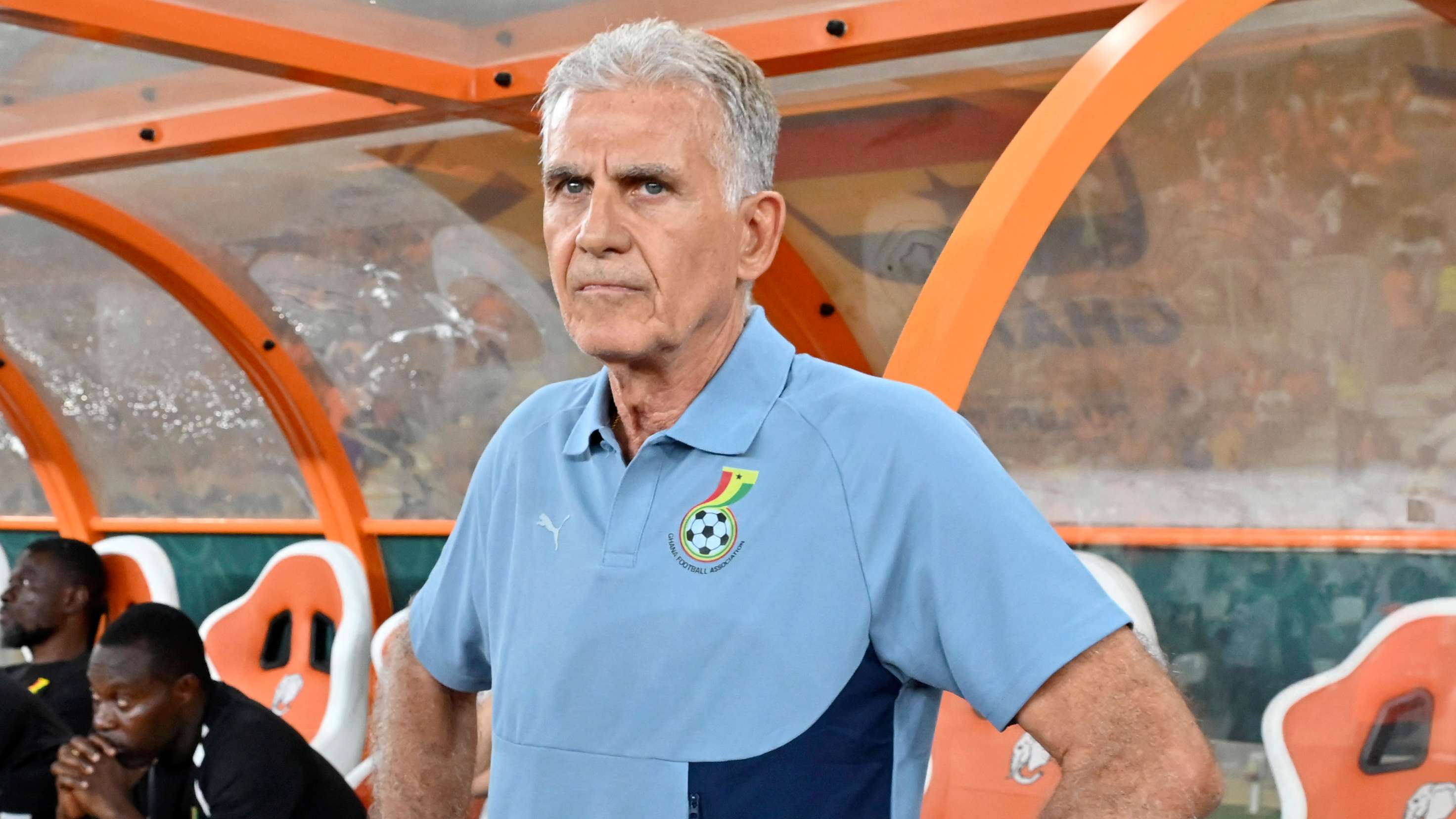

Portuguese Coach Carlos Queiroz Resigns as Ghana National Football Team Head Coach Amid Challenging Start to AFCON Qualifiers
The Ghanaian football fraternity is experiencing a significant transition following the recent departure of head coach Carlos Queiroz, a highly regarded Portuguese tactician known globally for his extensive coaching career. The Ghana Football Association (GFA) officially announced the mutual termination of Queiroz’s contract, marking a pivotal moment in the Black Stars’ journey toward qualification for the 2027 Africa Cup of Nations (AFCON) and beyond.
Understanding the Context: Why Did Queiroz Leave?
In an official statement issued on Thursday, the GFA expressed gratitude for Queiroz’s efforts, emphasizing that the decision to part ways came after thorough discussions conducted in an atmosphere of mutual respect. While acknowledging the difficulty of the choice, both parties agreed it was the most appropriate course of action given the current circumstances surrounding Ghanaian football.
“Carlos Queiroz’s commitment to Ghana and his unwavering focus on the nation’s football interests have always been evident,” said the GFA. “He prioritized Ghana’s progress above all else, even amid challenging results that ultimately contributed to this decision.”
The Portuguese coach himself reflected on his tenure, revealing that recent performances and the overall environment influenced his decision to step down. He emphasized his dedication to Ghana’s football development and expressed hope for the team’s future success.
Recent Results and Their Impact on the Coach’s Tenure
Since taking charge in April 2023, Queiroz’s stint was marked by high expectations and intense scrutiny. His primary objective was to steer Ghana toward a strong showing at the upcoming AFCON, as well as to prepare the team for the 2026 FIFA World Cup scheduled for North America.
However, the Black Stars’ start to the 2027 AFCON qualifiers was far from ideal. Ghana suffered a 2-0 defeat at home against Ivory Coast, a result that immediately put the team on the back foot in Group Three. The situation worsened following a shocking 4-2 loss to Gambia, where Ghana threw away a two-goal lead, raising questions about defensive frailties and tactical discipline.
These setbacks left Ghana rooted at the bottom of their group after just two matches, with no points and a goal difference of -4. The team’s shaky start was compounded by conceding six goals in these early encounters, highlighting defensive vulnerabilities that need urgent rectification.
The Challenges Behind the Scenes
In post-match interviews, Queiroz acknowledged several factors that hampered his team’s performance. The absence of key players due to injuries, suspensions, or club commitments, coupled with squad rotation and tactical adjustments, contributed to inconsistent results. Despite these hurdles, the coach expressed optimism about the talent pool available and called on fans to remain supportive.
“I apologize to the supporters for these results. We worked hard, but sometimes circumstances beyond our control affect performance,” Queiroz stated. “Our focus now is to learn from these setbacks and build a stronger team.”
Brief but Impactful Tenure
Queiroz’s arrival in Ghana was part of a short-term plan to guide the Black Stars through the 2026 World Cup and the initial stages of AFCON qualification. His contract was initially set for four months, covering Ghana’s participation at the World Cup, where the team advanced to the Round of 32 before narrowly losing 1-0 to Colombia.
Following the World Cup, the GFA extended Queiroz’s stay with a new agreement, allowing him to oversee the team during the September international break and the start of the AFCON qualifiers. His leadership during this period was marked by meticulous tactical planning, though results did not meet expectations.
Ghana’s Search for a New Head Coach
With Queiroz’s departure, Ghana now faces the pressing task of appointing a new head coach to lead the Black Stars into a crucial phase of qualification. The team remains in Group Three alongside Ivory Coast, Gambia, and Somalia, all vying for a spot in the next AFCON tournament scheduled for 2027 in Morocco.
The GFA has yet to announce whether it will appoint a caretaker coach or move swiftly to recruit a permanent successor. The decision will be pivotal in shaping Ghana’s football future, especially amid the intense competition and high expectations from passionate fans eager to see the Black Stars return to continental dominance.
Analyzing Ghana’s Prediction and Prospects Moving Forward
From a football prediction perspective, Ghana’s recent struggles have raised questions about the team’s tactical readiness and squad depth. Analysts suggest that the Black Stars need strategic reinforcement, both in coaching staff and player development, to confidently challenge their rivals and secure qualification spots.
Looking ahead, the Black Stars must quickly recalibrate their approach. The upcoming matches will require resilient performances, tactical discipline, and strategic player selection. The appointment of a new coach with a clear vision for the team’s style of play could be the catalyst needed to turn their fortunes around and restore confidence among supporters.
The Road to AFCON 2027 and Beyond
Ghana’s qualification journey is fraught with challenges, but the nation’s football pedigree and passionate fan base remain sources of inspiration. Historically, Ghana has been a powerhouse in African football, with multiple AFCON titles and consistent World Cup appearances. The current setback, while disappointing, offers an opportunity for reflection and renewal.
As the team prepares for upcoming qualifiers, the focus will be on building a cohesive unit capable of competing at the highest level. The emphasis on prediction models for Ghana’s chances in upcoming fixtures underscores the importance of strategic planning, player fitness, and tactical execution.
Final Thoughts: Ghana’s Football Future in Focus
The departure of Carlos Queiroz marks a new chapter for Ghanaian football. While the results have been less than ideal at the start of the AFCON qualifiers, this transition phase also provides a chance to reassess and strengthen the squad’s foundation. The football community remains hopeful that Ghana will bounce back stronger, with a renewed sense of purpose and strategic clarity.
For fans, analysts, and stakeholders alike, the focus now shifts to the next steps—who will be Ghana’s next coach, and how will the team adapt to meet the high standards expected on the continental and global stage? The road to AFCON 2027 continues to unfold, and every prediction and strategic move will be critical in shaping Ghana’s football destiny.
Stay tuned for updates on Ghana’s coaching search, upcoming fixtures, and expert predictions on their chances to qualify for the next Africa Cup of Nations. One thing is certain: Ghanaian football remains resilient, and the team’s future is still filled with promise.