
India vs New Zealand, 2nd ODI: Wellington Conditions Put Fielding and Bowling Plans in Focus
India will face a fresh test of their adaptability when they meet New Zealand in the second ODI at Wellington’s Hnry Stadium on November 7. After taking the opening match, the visitors arrive with confidence, but the venue’s unusual dimensions, changeable weather and lively conditions could make this a very different contest. For fans weighing up the match prediction, the central question is whether India can reproduce their disciplined bowling and sharp fielding against a New Zealand side familiar with the ground.
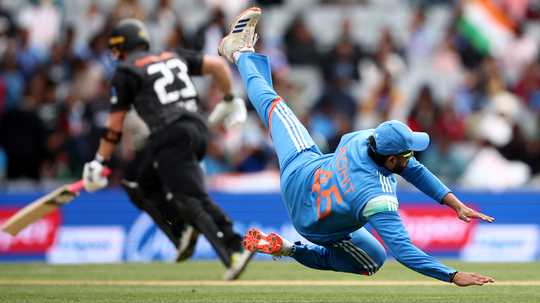
India’s preparation has included an unusual training aid: a lightweight yellow ball. It is designed to move more freely through the air than a standard cricket ball, helping fielders practise reading its flight and getting into position early. India’s new fielding coach, Subhadeep Ghosh, believes those skills are particularly important in New Zealand, where wind and atmospheric movement can make routine catches and stops less predictable.
A lighter ball, quicker decisions
Ghosh said the lighter practice ball encourages players to judge movement accurately and commit to their first step without hesitation. In windy conditions, a fielder who waits to confirm the ball’s path may find that it has already drifted beyond reach. Early movement, balance and a stable body position can therefore make the difference between a clean catch and a costly boundary.
The drill also reflects a broader feature of cricket in New Zealand: conditions can change significantly from one venue to the next. A fielding plan that works in Auckland may not be suitable in Wellington, where the wind, bounce and boundary layout create a different set of challenges. India’s ability to adjust quickly will matter just as much as individual athleticism.
Wellington’s dimensions could reshape the contest
Hnry Stadium presents a striking contrast to Auckland’s Eden Park. The straight boundaries at Eden Park are notably short, while Wellington’s square boundaries are expected to be especially compact and the straight boundaries considerably longer. That difference can influence where captains place their fielders, which areas batters target and how bowlers approach the closing overs.
New Zealand fast bowler Blair Tickner said the ground’s changing dimensions are a regular feature of playing at home. At Wellington, he indicated, the shorter square boundaries are likely to shape New Zealand’s death-bowling plans. In one-day cricket, teams often attack with conventional methods early in the innings, but the final overs require more specific strategies. Tickner declined to reveal the details, leaving India to anticipate how New Zealand might use the longer straight boundary to protect the shorter sides.
For batters, the layout creates a tactical puzzle. A shot that clears the rope at square may travel only for a single or two if directed straight, while a misjudged pull or cut could be punished. The best approach may be to rotate the strike, identify the safer scoring zones and avoid allowing the fielding side to dictate the pace of the innings.
India’s opening win offers a strong platform
India handled the first ODI impressively, bowling New Zealand out for 185 on a surface that offered more pace and bounce than home captain Mitchell Santner had anticipated. Arshdeep Singh, Gurnoor Brar and Anshul Kamboj made the most of the conditions, while India’s senior players set a high standard in the field.
Rohit Sharma produced a sharp throw to run out Daryl Mitchell, and Virat Kohli took a diving catch at second slip before scoring 74 from 51 balls in a rain-shortened chase. India’s performance was comprehensive, although the toss and overcast skies also worked in their favour. The second match offers a chance to show that the victory reflected more than favourable circumstances.
Wellington could again assist seam bowling, but New Zealand will hope its familiarity with the venue helps it make better use of the conditions. Tickner recalled that England were reduced to 44 for five at the ground last November before recovering to 222. New Zealand then chased the target in the 46th over. He is hoping for extra bounce and movement off the pitch, rather than a high-scoring contest in which both sides simply trade boundaries.
Weather and pitch: what to expect
Wet spells are forecast during the match, alongside windy conditions that could favour fast bowlers. If cloud cover and moisture remain, seamers may find movement with the new ball, making the opening overs especially important. A brisk start from New Zealand’s attack could put pressure on India’s top order, while India’s quicks will look to repeat the accuracy that restricted the hosts in Auckland.
Weather interruptions could also affect the rhythm of the game and the calculation of a revised target. Captains may need to balance early aggression with the risk of losing wickets, while batters will have to remain alert to changes in wind direction and ball movement. In a match where the ground’s dimensions are already unusual, conditions could make the tactical picture even more complex.
Team news and probable XIs
New Zealand will be without Devon Conway, who has been ruled out of the series after suffering concussion in a training collision with Matt Henry. Nick Kelly has joined the squad, having originally been selected for the fourth and fifth ODIs. Tim Seifert is expected to open alongside Will Young, while Henry, cleared of concussion, is likely to return to the side.
New Zealand probable XI: Tim Seifert, Will Young, Henry Nicholls, Daryl Mitchell, Tom Latham (wk), Glenn Phillips, Mitchell Santner (c), Nathan Smith, Kyle Jamieson, Jacob Duffy or Matt Henry, Blair Tickner.
India have added Mohammed Siraj to the squad after his appearance in the second four-day match against New Zealand A. He could replace Auqib Nabi, though the final decision will depend on the team’s assessment of the pitch and the balance of the attack.
India probable XI: Shubman Gill (c), Rohit Sharma, Virat Kohli, Shreyas Iyer, Axar Patel, KL Rahul (wk), Naman Dhir, Anshul Kamboj, Auqib Nabi or Mohammed Siraj, Gurnoor Brar, Arshdeep Singh.
Second ODI prediction: a close test of adaptability
India have the momentum after their opening victory, and their fast bowlers and senior fielders looked well suited to the conditions. However, Wellington’s short square boundaries and the possibility of movement off the pitch give New Zealand a clear route back into the series. The toss, weather and early wickets could all influence the outcome.
For a match prediction, India appear to have a slight edge if their bowlers maintain the discipline shown in Auckland and their batters adjust quickly to the boundary shape. New Zealand’s familiarity with Hnry Stadium, combined with the prospect of helpful seam conditions, makes them a serious threat. Expect a tactical ODI in which smart fielding, careful shot selection and effective death bowling may prove more decisive than raw scoring power.
Ghosh described the tight international schedule as both a physical and mental challenge, while Tickner said he is focused on enjoying cricket at this stage of his career. Their comments capture two sides of the contest: India must manage the demands of back-to-back matches, while New Zealand will look to turn home knowledge into a decisive advantage.