
Argentina Benefited from Controversial Refereeing Decision at 2026 World Cup
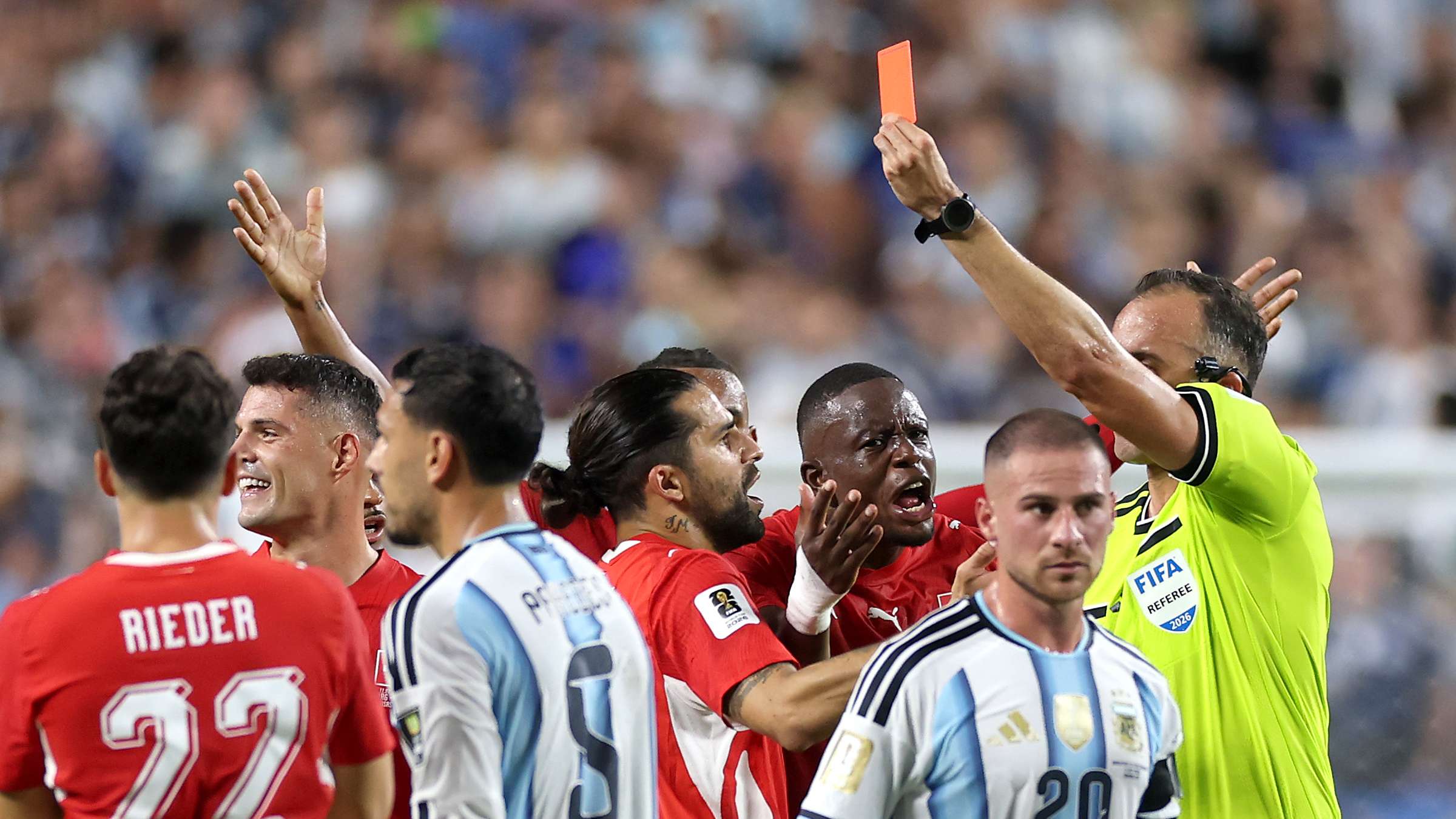
The 2026 World Cup saw Argentina make headlines not just for their on-field performance, but also for benefiting from a contentious refereeing decision that ultimately impacted the outcome of a crucial match. The incident in question involved Breel Embolo, a former Bundesliga striker playing for Switzerland, who was sent off in the quarter-final match against Argentina due to a disputed call.
The Controversial Decision
During the match, Embolo was involved in a challenge with Argentina’s Leandro Paredes near the center circle. Despite Paredes not making any contact with Embolo, the referee awarded a foul and showed Paredes a yellow card. However, upon VAR review, it was determined that the decision was incorrect, and Embolo was instead given a second yellow card and subsequently a red card, leading to his dismissal from the game.
With Switzerland reduced to 10 men, Argentina eventually emerged victorious with a 3-1 win after extra time, advancing to the next stage of the tournament. The controversy surrounding the decision brought into question the application of the rules and the role of VAR in such instances.
IFAB Admits Error
The International Football Association Board (IFAB), the governing body responsible for overseeing the laws of the game, acknowledged that the decision to send off Embolo was a mistake. According to the rules introduced for the World Cup, VAR should only intervene in yellow-card incidents in cases of mistaken identity, which was not the case in Embolo’s situation.
Despite the admission of error, FIFA had not issued a statement on the matter at the time, leaving room for further discussion and potential implications for future tournaments.
Controversy Throughout the World Cup
The incident involving Embolo was not the only controversial refereeing decision at the 2026 World Cup. Throughout the tournament, there were allegations of preferential treatment for Argentina by match officials, with instances of questionable calls and perceived biases in favor of the South American team.
Despite the controversies, Argentina made it to the final but were ultimately defeated by Spain, who were crowned world champions with a 1-0 victory after extra time. The final match was not without its own drama, as post-game altercations involving Argentina players resulted in potential disciplinary actions against individuals such as Paredes.
Conclusion
The 2026 World Cup will be remembered not just for the thrilling matches and incredible performances on the field, but also for the controversies surrounding refereeing decisions and the use of VAR. The incident involving Breel Embolo and Argentina highlighted the importance of fair play and the need for clarity in the application of the rules to ensure the integrity of the game.
As debates continue about the role of technology in officiating and the enforcement of the rules, the football community will undoubtedly reflect on the events of the tournament and strive to improve the standards of refereeing for future competitions.
Argentina’s Journey to the 2026 World Cup Quarter-Finals
Before the controversial match against Switzerland, Argentina had a strong showing in the group stage of the 2026 World Cup. Led by their star player, Lionel Messi, Argentina topped their group with impressive victories over Nigeria, Sweden, and Morocco. The team’s attacking prowess and defensive solidity made them one of the favorites to go far in the tournament.
In the Round of 16, Argentina faced off against Portugal in a highly anticipated match-up. The game ended in a thrilling 2-2 draw after extra time, with Argentina prevailing 4-2 in the penalty shootout. The performance of Argentina’s young goalkeeper, Emiliano Martinez, was crucial in securing their spot in the quarter-finals.
The Impact of VAR on the 2026 World Cup
The 2026 World Cup was the first to fully implement VAR in all matches, aiming to reduce controversial decisions and ensure fair play. While VAR has been hailed for its ability to correct clear errors, like offside calls or handballs, its application in subjective decisions, such as fouls and yellow card offenses, has been a point of contention.
The incident involving Breel Embolo and Argentina highlighted the challenges of using technology to assist referees in making crucial decisions. The fine line between maintaining the flow of the game and ensuring accuracy in calls continues to be a topic of debate among fans, players, and officials.
The Legacy of the 2026 World Cup
Despite the controversies surrounding refereeing decisions, the 2026 World Cup left a lasting impact on the football world. The tournament showcased the growing talent of emerging footballing nations, with teams like Egypt, Japan, and Australia making impressive runs in the competition.
Additionally, the World Cup provided a platform for discussions on inclusivity, sustainability, and social responsibility within the sport. Initiatives such as the use of eco-friendly stadiums, diverse representation in leadership roles, and anti-discrimination campaigns were highlighted throughout the tournament, signaling a shift towards a more progressive and holistic approach to football.
Looking Ahead to Future World Cups
As preparations begin for the next edition of the World Cup, stakeholders in football will undoubtedly reflect on the lessons learned from the 2026 tournament. The need for consistent and transparent officiating, the balance between tradition and innovation, and the promotion of values like integrity and fairness will shape the future of the sport.
With advancements in technology, changes in regulations, and evolving societal norms, the football landscape is set to undergo transformation leading up to the next World Cup. As fans eagerly anticipate the next global spectacle, the echoes of the 2026 tournament, controversies and all, will continue to reverberate through the world of football.
By delving into Argentina’s journey, the impact of VAR, the legacy of the tournament, and the implications for future World Cups, the expanded content provides a comprehensive exploration of the 2026 World Cup while offering fresh insights and perspectives on the controversial refereeing decisions that captivated the football world.