
Javier Tebas Faces Legal Scrutiny After Real Madrid Propaganda Remarks
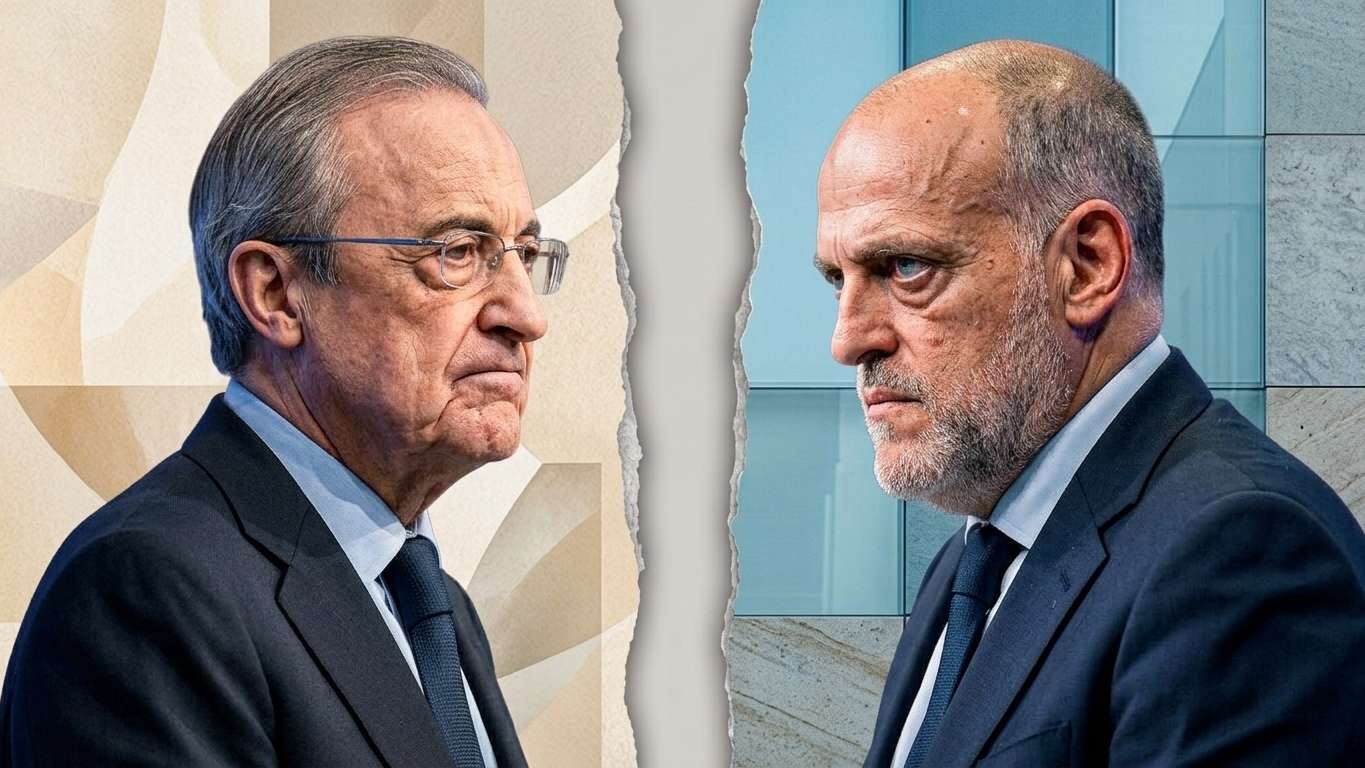
Javier Tebas is facing a fresh legal challenge that could have implications for his position as president of Spain’s top-flight football league. A dispute with Real Madrid has moved beyond public criticism and into the country’s sports-justice system, placing Tebas’s comments under official review and reigniting debate about how sporting authorities handle complaints involving powerful figures in Spanish football.
Spain’s Higher Sports Council, known as the CSD, has referred Tebas to the Administrative Court for Sport after he compared Real Madrid’s communications strategy with propaganda methods associated with Joseph Goebbels, the Nazi regime’s propaganda minister. The referral asks the court to consider whether his remarks breached rules intended to protect the dignity and standing of sport.
What Tebas Said About Real Madrid
The controversy began after Tebas spoke about what he called “the propaganda mechanisms used by Goebbels” while discussing Real Madrid’s public messaging and its television channel. His comments drew immediate attention because they invoked one of the most notorious figures in Nazi Germany, even though Tebas later argued that his comparison concerned communication techniques rather than Nazi ideology.
He also insisted that he was not attacking Real Madrid supporters. Instead, he said, his remarks were directed at what he viewed as the club’s approach to shaping public opinion. That distinction is central to the dispute: the court will need to assess the wording, context and intended meaning of the comments, as well as how they relate to Spain’s sports legislation.
According to Spanish newspaper AS, the CSD announced on Thursday that it had acted on its own initiative and lodged the complaint. The council said respect between sporting figures and institutions is essential to maintaining an environment built on coexistence and fair play. It is now for the Administrative Court for Sport to determine whether the relevant legal provisions apply to Tebas’s statements.
Could Tebas Be Suspended?
A suspension from his duties is among the possible consequences if the court finds that Tebas committed a serious violation and decides that a penalty is justified. However, the referral itself is not a ruling against him. It does not mean that he has been found guilty, nor does it automatically remove him from his role leading the Spanish league association.
The case must first be examined by the competent body, which will consider the evidence and the legal framework before deciding whether any sanction is warranted. The outcome could depend on how the remarks are interpreted, whether they are judged to have harmed the dignity or prestige of sport, and what penalties the law allows in such circumstances.
For Spanish football, the proceedings could become a significant test of the boundaries between forceful public criticism and conduct that sports authorities consider unacceptable. League leaders, club executives and other prominent figures regularly use media appearances to challenge one another. A decision in Tebas’s case may influence how similar disputes are assessed in the future.
Tebas Questions the CSD’s Consistency
Tebas has defended his comments and challenged the decision to refer them to the sports court. He has also criticised CSD president José Manuel Rodríguez Uribes, questioning why the authorities had not taken comparable action over remarks by Real Madrid president Florentino Pérez.
In particular, Tebas pointed to Pérez’s statements about the club being disadvantaged in the title race because of refereeing decisions. His argument raises a question of consistency: should sports authorities apply the same standards to public criticism from league officials and club presidents, or do the circumstances and language used justify different responses?
That issue could shape the public debate surrounding the case, although it does not determine the court’s legal assessment. The central question remains whether Tebas’s own comments fall within the scope of a punishable offence under Spanish sports rules.
Separate Complaint Targets Sports Council Officials
The dispute has opened another front. The association Transparency and Democracy in Sport has announced plans to file a criminal complaint against Rodríguez Uribes and the CSD’s deputy responsible for sports legal affairs. The group alleges possible administrative wrongdoing connected to a failure to perform official duties.
Miguel Ángel Galán, the association’s president, said that nine earlier complaints against Tebas had remained on hold for more than a year without being referred to the Administrative Court for Sport. Galán argues that the law required those complaints to be forwarded. The proposed complaint therefore focuses not on Tebas’s remarks, but on how the CSD has handled previous cases.
These claims are allegations, not established findings. Any criminal complaint would need to be assessed through the appropriate legal process, just as the CSD’s referral against Tebas must be considered on its own merits. Still, the competing actions have intensified scrutiny of the council’s procedures and raised questions about whether complaints are handled consistently and without political or institutional bias.
Two Legal Tracks, One High-Profile Football Dispute
The situation now involves two parallel processes: an official complaint asking the sports court to examine Tebas’s remarks, and a planned counter-complaint challenging the conduct of senior CSD officials. Together, they have transformed a bitter exchange between prominent figures in Spanish football into a wider institutional dispute.
For supporters following the story, the immediate prediction is that the legal process—not the latest public statement—will determine Tebas’s short-term position. No suspension or removal has been announced, and the eventual outcome remains uncertain. The court will have to weigh the language used, the context in which it was delivered and the rules governing conduct in sport.
The case also reflects the increasingly important role of media strategy in modern football. Clubs and league executives compete not only on the pitch but also for influence over public debate, particularly during controversies involving refereeing, competition rules and governance. As Spain’s sports authorities examine Tebas’s comments, the broader challenge will be to protect respectful debate without applying standards unevenly.
Until the relevant bodies reach decisions, Tebas remains at the centre of a high-stakes football dispute with potential consequences for his reputation and leadership. The legal proceedings may ultimately clarify where Spanish sports law draws the line between sharp criticism and a punishable breach—but for now, both the complaint and the counter-allegations remain unresolved.