
Why Pragyan Ojha’s Appointment Signals Continuity for Indian Cricket
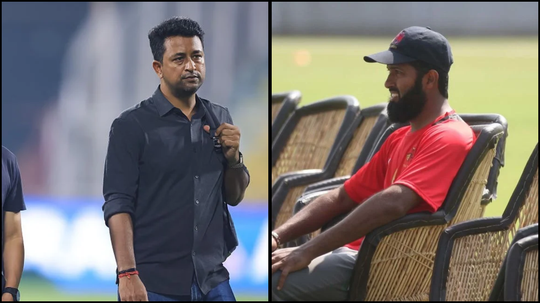
The BCCI’s decision to appoint Pragyan Ojha as chairman of the senior men’s selection committee points to a clear priority: continuity. Rather than introduce a prominent newcomer such as Wasim Jaffer, the board has chosen a candidate already familiar with the committee and its working relationship with the Indian team management. In a World Cup year, that choice may reflect a preference for stability over an immediate change in direction.
Selection decisions are rarely based on playing records alone. A chairman must help guide discussions, balance competing views and maintain a productive connection with coaches and players. Ojha’s appointment suggests the BCCI believes that knowledge of the existing system and the ability to work within it can be as valuable as a celebrated playing career.
Why Wasim Jaffer Looked Like a Strong Candidate
On paper, Jaffer had an especially compelling case. He played 31 Test matches, more than any other member of the selection committee, and built one of the most remarkable records in Ranji Trophy history. His 12,038 runs and 40 centuries remain landmarks in India’s premier domestic competition. He also scored two double-centuries in Test cricket and has substantial experience in coaching and player development.
Those credentials could have made Jaffer an obvious choice to lead a newly formed committee. His long career across domestic and international cricket might have brought fresh perspectives to selection debates, particularly around the transition from promising young players to established internationals. His coaching background could also have offered insight into how players respond to different roles, preparation methods and levels of pressure.
But a strong résumé does not automatically make someone the right appointment at every moment. Jaffer would have entered a committee that had already been operating together and coordinating with the team management. Even a highly respected newcomer can face a challenging adjustment if the group has developed its own rhythm, communication style and shared understanding of selection priorities.
Timing Matters in a World Cup Year
The timing of Jaffer’s application may therefore have mattered as much as his qualifications. With a major tournament approaching, selectors are expected to make consequential decisions on combinations, player roles, form and squad balance. A new chairman might reasonably seek to establish different processes or revisit existing assumptions. That can be useful over the long term, but it may also create uncertainty when the team is preparing for a high-stakes campaign.
In this context, continuity does not necessarily mean resisting change. It can mean preserving effective working relationships while making adjustments where they are needed. A selection committee that communicates well with the team management may be better placed to explain decisions clearly, respond quickly to changing conditions and avoid unnecessary friction during a demanding cricket calendar.
There is also a structural consideration. Traditionally, a committee chairman has had a role in shaping the panel of selectors. A leader may find it easier to build a cohesive unit when involved in selecting its members, rather than inheriting a group whose approach may not fully match his own. Jaffer could potentially be better positioned to lead a newly constituted committee, where he could help establish its working culture from the outset.
Ramesh Powar’s Team-First Profile
Ramesh Powar’s selection is another indication that the board may have valued collaboration. Powar played two Tests and 31 One-Day Internationals, but his post-playing career has given him broad experience across Indian cricket. He has coached the India women’s team, Mumbai and Gujarat, and served as a bowling coach at the BCCI Centre of Excellence.
That range of roles has required him to work with different squads, coaching groups and institutional structures. For a selection committee, the ability to listen, share information and reach a collective decision can be just as important as having a forceful individual point of view. Powar’s background appears suited to a committee seeking a dependable team member who can contribute without turning every discussion into a contest for authority.
Selection is often portrayed as a matter of prediction: forecasting which players will perform, which combination will suit a particular opponent and how a squad will cope with pressure. In practice, it also depends on judgment, communication and trust. A selector’s role is not only to anticipate future performance but to interpret current form, fitness, team needs and the demands of the cricket calendar.
Ojha’s Familiarity Could Help Build Trust
Ojha brings a different but potentially valuable profile. At 40, he is the youngest member of the committee, and his relative youth may help him connect with a changing generation of players. He also comes from within the existing system and is understood to have a constructive relationship with the team management.
That relationship could prove important. Indian cricket includes strong personalities, established senior players and coaches with clear views about how the team should operate. A chairman who can engage with these figures while maintaining the committee’s independence may help prevent disagreements from becoming distractions. Familiarity with the environment can make it easier to raise concerns, discuss selection risks and keep conversations focused on the team’s needs.
Ojha’s appointment should not be read as a rejection of experience or new ideas. Instead, it reflects the practical demands of leadership at a particular point in the cricket cycle. A chairman must understand when to preserve a successful process and when to challenge it. The balance between those responsibilities is especially delicate in a World Cup season, when every squad decision attracts attention and public scrutiny.
What the Decision Means for Indian Cricket
The BCCI’s choice highlights a broader truth about sports administration: credentials open the door, but timing and team fit can determine who walks through it. Jaffer’s domestic and international record makes him a formidable candidate for future roles, especially if the board forms a new committee. Powar’s coaching experience offers a practical team-first dimension, while Ojha’s familiarity with the current setup may provide stability.
For supporters following Indian cricket, the key question will be whether the committee can turn that stability into sound, transparent decisions. The real test will come through its handling of form dips, injuries, emerging talent and the balance between proven performers and players pushing for a place. Whatever the prediction about individual selections, the committee’s effectiveness will ultimately be judged by how well its choices serve the team.
By choosing Ojha, the BCCI appears to have backed continuity at a moment when coordination matters. That may not be the most dramatic option, but in a major tournament year, a steady selection process could be precisely what Indian cricket needs.