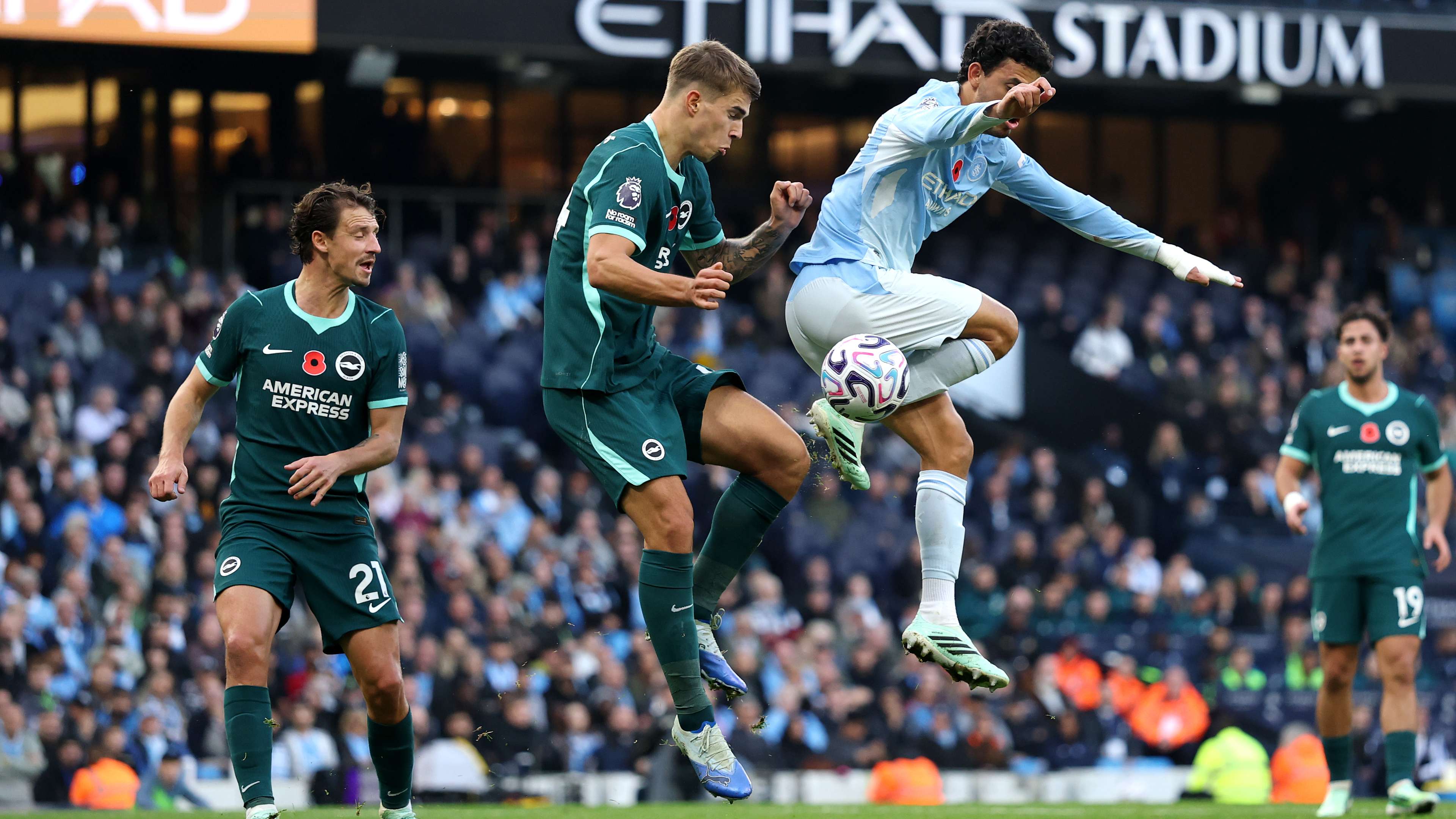

Keith Hackett Says Manchester City Should Have Been Awarded Penalty Against Brighton
Manchester City’s 1-0 Premier League defeat to Brighton has prompted fresh debate about handball decisions and the role of VAR. Former international referee Keith Hackett, who previously led England’s Professional Game Match Officials Limited (PGMOL), believes City should have received a first-half penalty after the ball struck Brighton defender Luka Vuskovic’s outstretched arm.
The incident occurred shortly before half-time at the Etihad Stadium, with City trailing after Yasin Ayari’s early goal. Referee Craig Pawson waved away several penalty appeals during the match, while VAR official John Brooks supported his decisions. Hackett’s assessment has intensified questions over whether the officials missed a clear opportunity to award a spot-kick—and whether the outcome might have changed had City been given the chance to equalise.
The Handball Incident That Divided Opinion
City’s strongest appeal came when Diego Gomez headed the ball towards Vuskovic inside Brighton’s penalty area. The ball struck the defender’s arm, which was extended away from his body. City players immediately surrounded Pawson, asking for a penalty, but the referee allowed play to continue. VAR did not recommend an on-field review.
Speaking to Football Insider, Hackett argued that Vuskovic had time to move his arm and that its position made his body appear larger. In his view, those details made the incident a deliberate handball rather than an unavoidable contact.
“The player had enough time to pull back his outstretched arm, which clearly made his body bigger,” Hackett said. He added that a penalty should have been awarded.
Handball decisions are often difficult to judge because the referee must consider more than whether the ball touched a player’s arm. The position of the arm, the player’s movement, the distance from which the ball was played and whether the contact was avoidable can all influence the decision. That complexity is one reason similar-looking incidents can produce different outcomes—and why VAR reviews continue to attract scrutiny.
Brighton Take Their Chance, City Cannot Find an Answer
The disputed call was not the only defining moment of the match. Brighton made a fast start and took the lead in the 11th minute. The move developed through Maxim De Cuyper, who helped create the opportunity before Ayari finished to put the visitors in front.
City responded with sustained pressure and a high volume of attacks, but they could not turn possession and chances into a goal. They registered 21 shots, yet Brighton goalkeeper Bart Verbruggen delivered an outstanding performance. He made seven saves and kept out efforts worth a reported 1.74 expected goals, helping his side protect the narrow lead.
Those numbers underline the difference between creating opportunities and converting them. City had enough attacking moments to make the contest uncomfortable for Brighton, but Verbruggen’s handling, positioning and reflexes repeatedly denied the home side. Even if Hackett is right about the penalty, City’s inability to score from open play remains a major part of the match’s story.
Why the Decision Matters in the Premier League Race
The defeat was City’s second consecutive Premier League loss, following their previous setback against Aston Villa. Back-to-back defeats can quickly change the mood around a title challenge, particularly for a team accustomed to controlling matches and turning pressure into points. The result also gives Brighton a significant away win and reinforces their reputation as a side capable of troubling the league’s strongest teams.
A penalty before the break could have altered the game’s rhythm. An equaliser might have forced Brighton to defend deeper, while a successful spot-kick could have given City renewed confidence. But any football prediction about how the match would have unfolded must remain speculative: a penalty is not a guaranteed goal, and even a different scoreline would not erase Brighton’s strong defensive display.
That distinction matters when assessing refereeing controversies. Officials can influence pivotal moments, and consistent application of the laws is essential. At the same time, a disputed decision should not become a complete explanation for a defeat when a team has had numerous chances to score. City’s 21 attempts show they created pressure; their failure to beat Verbruggen shows they did not make that pressure count.
VAR Questions and a Previous City Controversy
The absence of a VAR intervention is likely to be as contentious as Pawson’s initial decision. VAR is designed to correct clear and obvious errors, but supporters often struggle to understand why one incident receives a review while another does not. In this case, the officials apparently judged that the contact did not meet the threshold for intervention, leaving Pawson’s on-field call in place.
The discussion also recalls a separate controversy involving City last September, when VAR allowed Erling Haaland’s decisive goal to stand in a win over Manchester United at Old Trafford. Critics have described the Brighton handball as a mirror-image situation: a major decision that, in their view, benefited City in one match and went against them in another.
That comparison may add context, but it does not settle either incident. Each decision should be judged on its own facts, including the relevant rules and the available angles. Nor does an earlier call in City’s favour make a later decision correct. The broader issue is whether referees and VAR apply the handball standard consistently enough for players, clubs and fans to understand it.
What Comes Next for Manchester City?
City will need to respond quickly, both in results and in performance. The immediate priorities are clear: improve their finishing, avoid conceding early and maintain composure when decisions go against them. Strong teams are judged not only by their reaction to controversy but also by their ability to turn dominance into goals.
Brighton, meanwhile, can take confidence from a disciplined away performance, Ayari’s early breakthrough and Verbruggen’s match-winning work. Their victory shows how an organised defence and an effective goalkeeper can withstand prolonged pressure in the Premier League.
Hackett’s verdict ensures that the penalty debate will continue, and many City supporters will feel that a clear opportunity to level the match was denied. Still, the final result reflected more than one refereeing call. Brighton scored, defended resolutely and made crucial saves; City created chances but left the pitch without a goal. That balance—not the controversy alone—will shape the post-match analysis and the teams’ next steps.