
Real Madrid Take a Deserved First-Half Lead in El Clásico
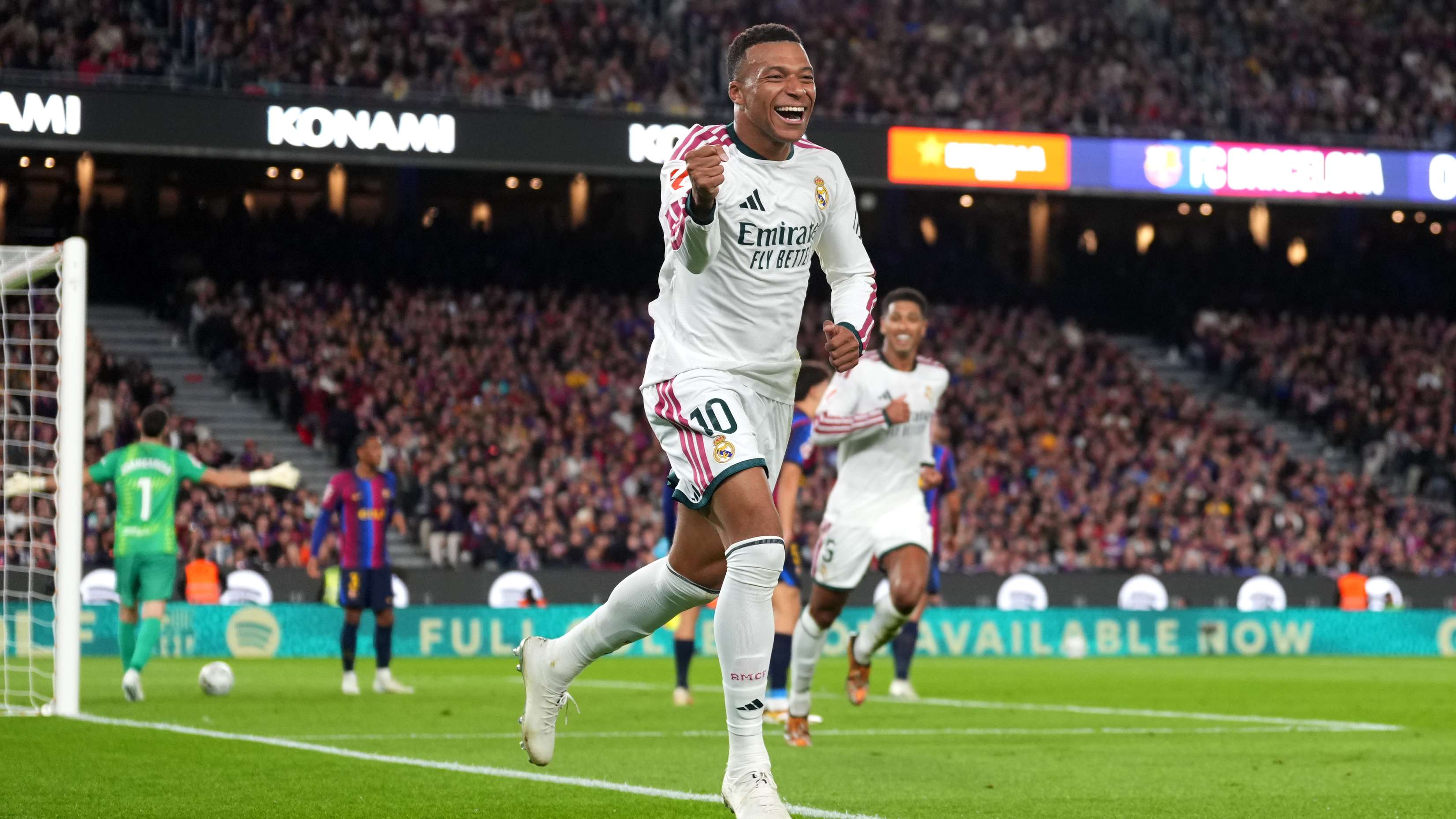
Real Madrid went into the half-time break ahead of Barcelona after Kylian Mbappé scored in the 41st minute of a lively El Clásico. The goal included an element of fortune, but it capped a first-half performance in which Madrid’s pace, movement and pressure repeatedly tested the Barcelona defence.
The decisive moment began with a delivery from the left. Diomande sent a cross into the area, where Barcelona full-back Gerard Martín attempted to clear the danger. His contact was mishit, and the ball ricocheted off Mbappé, who had moved into the right place at the right time. The forward stretched out a leg to redirect it beyond goalkeeper Joan García and give Los Blancos a 1–0 advantage.
Mbappé Makes the Most of a Scrappy Opening
It was not a cleanly constructed finish, but Madrid will have cared little about the manner of the goal. In a match of this magnitude, reacting quickly to a loose ball can matter as much as producing a perfectly struck shot. Mbappé’s alert movement ensured that the deflection became a scoring opportunity rather than another harmless scramble in the box.
For Barcelona, the incident was a frustrating end to a spell in which the defence had been under growing pressure. Martín’s attempted clearance turned a cross into a dangerous bounce, while Madrid’s attackers were positioned to capitalise. García was left with little time to adjust as Mbappé’s touch changed the ball’s path.
The goal also reflected one of the central themes of the half: Madrid were more effective at turning their attacking intent into sustained danger. They moved the ball forward with purpose, looked to exploit space on the flanks and repeatedly forced Barcelona to defend facing their own goal.
Madrid’s Left-Sided Attacks Trouble Barcelona
Madrid’s most threatening sequences came down the left, where quick combinations and forward runs stretched Barcelona’s defensive shape. Rather than relying on isolated moments, the home side built pressure through repeated attacks, forcing the visitors to retreat and work hard to protect the area around García.
That approach gave Madrid several advantages. Wide attacks can pull defenders away from central positions, opening lanes for runners arriving in the penalty area. They can also make it harder for a defence to clear decisively, particularly when crosses are met by multiple attackers. The sequence leading to Mbappé’s goal showed how a delivery can remain dangerous even when the first defensive action appears likely to resolve the threat.
Barcelona, meanwhile, needed to improve its protection of the channels and communicate more effectively when dealing with crosses. A single misjudged clearance can be costly in a Clásico, where elite forwards are quick to react to rebounds and deflections. The visitors also faced the challenge of preventing Madrid from building momentum on the same side of the pitch.
A Lead Built on More Than Luck
The deflection gave the goal an unpredictable finish, but Madrid’s advantage was not simply a product of chance. Their first-half performance had been energetic and purposeful, with attacking movement creating problems before the breakthrough arrived. The pressure helped place Barcelona’s defenders in difficult situations, and Mbappé’s goal was the reward for staying alert inside the area.
That distinction matters in any football prediction. A fortunate goal can change the scoreboard, but a team that consistently creates pressure may have a more reliable route to further chances. Madrid’s ability to attack with speed and stretch the opposition suggested that Barcelona would need to make adjustments after the interval if they were to regain control.
At the same time, a one-goal lead offers no guarantee in a fixture as competitive as El Clásico. Barcelona have the attacking quality to respond, and Madrid could not afford to defend passively. The second half was likely to depend on whether the leaders continued to threaten going forward or allowed their opponents to settle into possession and build attacks.
What the Half-Time Score Means for the Second Half
Madrid’s priority after the break was to maintain the intensity that had brought them the lead. Continuing to press Barcelona’s defenders and exploit space on the left could make it difficult for the visitors to launch a sustained comeback. However, Madrid also had to manage the risks that come with pushing forward: Barcelona can punish gaps if the ball is lost in advanced areas.
For Barcelona, the response required more than simply increasing possession. The visitors needed to move the ball with greater urgency, find ways to bypass Madrid’s pressure and provide better support to their forward players. Defensively, they had to limit the crosses and second-ball opportunities that had allowed Madrid to keep attacks alive.
With Mbappé already on the scoresheet, Madrid also had a clear threat in transition. His speed and awareness can make even a brief defensive lapse dangerous, meaning Barcelona had to balance their search for an equaliser with the need to maintain cover at the back.
Upcoming Fixtures for Both Clubs
Attention will soon turn to the next league assignments for both sides. Barcelona are scheduled to face Alavés on 1 November 2026, with kick-off listed for 04:00. Real Madrid are due to meet Alavés later that day at 23:15. Those fixtures will offer both teams an opportunity to carry momentum forward—or respond quickly to any disappointment from El Clásico.
For now, the story is Madrid’s first-half advantage: a goal shaped by a defensive error and a deflection, but earned after a period of assertive attacking football. Mbappé’s opportunism supplied the finishing touch, while Madrid’s movement and pressure created the conditions for the breakthrough. The scoreline left Barcelona with work to do and set up a second half in which tactical adjustments, concentration and composure could decide the outcome.