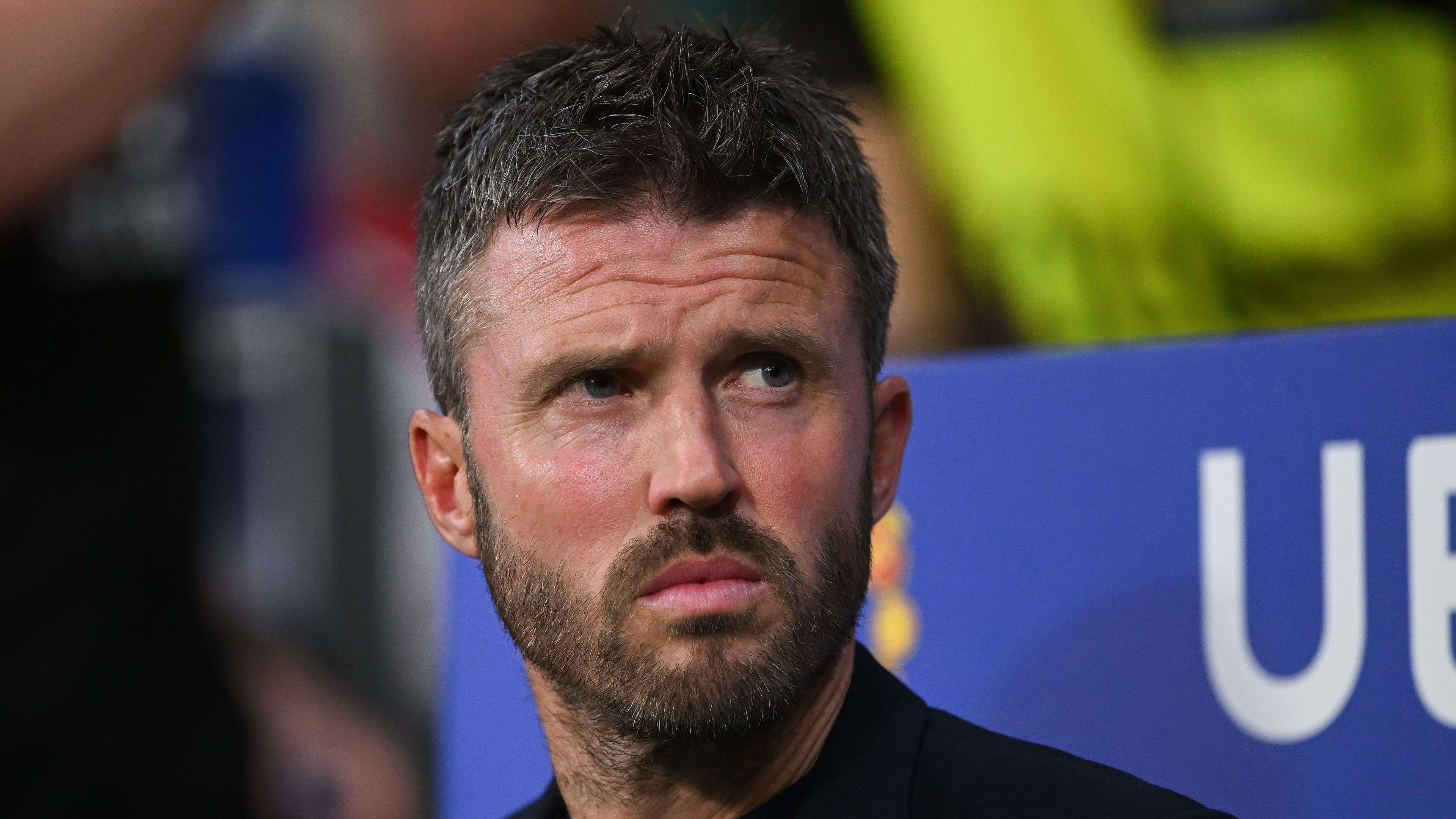

Michael Carrick Backs Manchester United to Close the Gap on the Premier League’s Best
Manchester United manager Michael Carrick has delivered a message of defiance amid mounting criticism of the club’s performances, insisting that his team may be closer to challenging for the Premier League title than outside observers believe. While United’s recent results have raised serious questions about their progress, Carrick says the club should not lose sight of its long-term ambition: returning to the top of English football.
That ambition is closely associated with Project 150, the plan unveiled by chief executive Omar Berrada two years ago. The project set out a goal of winning the Premier League by 2028, the year Manchester United will mark the 150th anniversary of its foundation. The target has since become a prominent reference point in discussions about the club’s rebuild, recruitment and expectations.
Project 150 and the pressure to deliver
Berrada has previously indicated that United would like to achieve the target earlier than planned. Speaking during the summer, he said the club hoped to win the title next season, or the season after, and pointed to encouraging progress on the pitch as a reason for optimism. His comments reflected the scale of United’s ambition, but the team’s current form has made that timeline feel increasingly demanding.
United are experiencing their worst start to a Premier League season in 40 years, a statistic that has inevitably intensified scrutiny of the manager, the squad and the club’s wider strategy. The side’s uneven performances have also fuelled debate over whether enough was done in the transfer market. Defender Lisandro Martinez added to that discussion after the defeat to Atletico Madrid, suggesting that the squad had not been strengthened sufficiently during the summer.
Some players were reportedly hoping for greater investment from co-owner Sir Jim Ratcliffe and the Glazer family before the campaign began. Yet Carrick has pushed back against the idea that United are as far away from the title race as their critics suggest. His position is not that the club’s problems can be ignored, but that a difficult run of results should not be treated as a final verdict on the team’s potential.
Carrick urges perspective amid a difficult run
Asked whether winning the league by 2028 remains realistic, Carrick stressed the importance of perspective. He recalled that when he arrived in January, United were a considerable distance from third place, yet the team went on to finish third. For him, that turnaround is evidence that football can change quickly—and that a club’s position at one point in a season does not always define where it will end up.
“Football can change,” Carrick’s comments suggested, pointing to the unpredictable nature of a long campaign. Injuries, confidence, tactical adjustments and individual performances can all shift a team’s trajectory. A side struggling to establish consistency in autumn may look markedly different after a productive transfer window or a sustained stretch of improved results.
Carrick also argued that United must concentrate on what they can build rather than becoming consumed by setbacks. The goal of winning the Premier League remains enormous, he acknowledged, but it is also the standard the club must continue to pursue. In his view, accepting a lower ceiling would be the wrong response to present difficulties.
The manager pointed to United’s early European record—one win and one defeat in the Champions League—as part of a wider picture that he believes is more complicated than the negative headlines suggest. Their domestic campaign has also left them with opportunities to climb the table, although that will require greater consistency and a sharper response in upcoming matches. A positive football prediction for United’s season depends on whether they can turn encouraging spells into reliable results.
A rebuild without a fixed deadline
Carrick said that Project 150 and the club’s title ambition were discussed with him by Berrada and sporting director Jason Wilcox when he took the job. However, he described the internal objective in straightforward terms: Manchester United always aim to win, and they want to reach that level as soon as possible. The target matters, but the manager’s comments suggest the club does not intend to treat one date as the only measure of progress.
That distinction is important. A long-term plan can provide direction, but it cannot guarantee that results will follow a neat schedule. United are trying to rebuild a team capable of competing consistently at the highest level, a standard they have not reached for several years. That process may involve changes to the squad, improvements in performance and the development of a clearer identity on the pitch.
For supporters, the challenge is to balance the club’s historic expectations with the reality of a team still searching for stability. United’s name and resources bring pressure to compete for major honours, but rebuilding a title-winning side is rarely a simple or linear process. The club will need to demonstrate progress through more than ambitious statements: stronger results, improved performances and greater consistency will be essential if Project 150 is to feel credible.
What United must show next
The coming fixtures offer Carrick’s side an opportunity to respond. Their scheduled matches include a Champions League meeting with Sunderland on 22 October 2026 and a Premier League game against Leeds on 26 October. Performances in those contests will not determine the entire season, but they could provide an early indication of whether United can convert Carrick’s confidence into momentum.
For now, the manager’s message is clear: Manchester United are not where they want to be, but he believes the gap can be closed. Whether that confidence proves justified will depend on how quickly the team addresses its weaknesses and begins collecting points. The title ambition remains alive inside the club, even as the current campaign tests its patience.
United’s immediate task is not to win the argument about their long-term potential; it is to show improvement on the pitch. If Carrick can guide the team through that difficult phase, Project 150 may begin to look less like a distant slogan and more like a practical objective. Until then, the club’s title hopes—and any optimistic Premier League prediction—will rest on evidence of progress rather than promises.