
The Growing Dispute Between UEFA and FIFA President: Nasser Al-Khelaifi Emerges as a Potential Contender
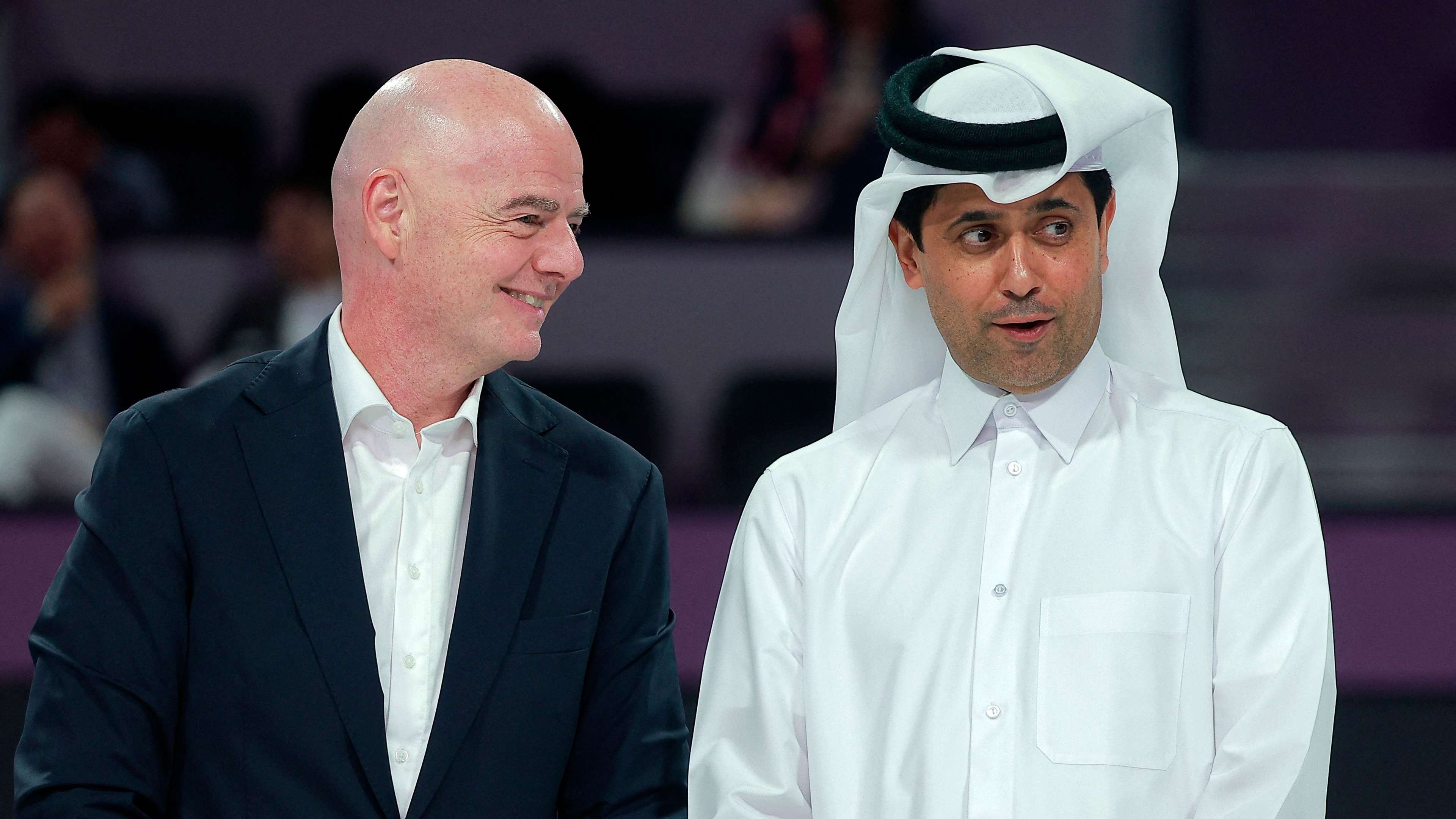
The tension between UEFA and FIFA president Gianni Infantino continues to escalate as European football leaders search for a candidate to challenge the Swiss president in the upcoming FIFA presidential elections in March 2027. The latest name to emerge as a potential contender is Nasser Al-Khelaifi, the president of Paris Saint-Germain and the European Football Clubs (EFC) association.
Al-Khelaifi’s Potential Candidacy
While Al-Khelaifi has publicly stated that he has no ambition to run for the FIFA presidency, his credentials make him a credible contender in the eyes of many European football officials. As the president of Paris Saint-Germain, a team that has been successful in the Champions League in recent years, and the head of the EFC association opposing FIFA’s plan to sell stakes in the World Cup, Al-Khelaifi holds significant influence in the football world.
Additionally, Al-Khelaifi’s connections in Asia through Qatar’s involvement in world football, coupled with his media experience as president of the beIN Media Group, further enhance his profile as a potential challenger to Infantino.
Infantino’s Frontrunner Status
Despite the growing pressure from European football leaders, Gianni Infantino remains the favorite to retain his position as FIFA president in the 2027 elections. Having significantly increased FIFA’s revenues during his tenure, Infantino has garnered support from various African, Asian, and South American federations.
However, Al-Khelaifi could potentially secure backing from the majority of European federations if he decides to run for the presidency. Nevertheless, his path to victory would be challenging, as he would need to convince a large number of the 211 member federations worldwide.
Potential Challenges Ahead
If Al-Khelaifi enters the race, it could trigger a lengthy and contentious electoral campaign, reopening controversial issues related to the candidates. Despite his qualifications and support base, the decision to challenge Infantino for the FIFA presidency would be fraught with challenges and uncertainties.
In conclusion, the dispute between UEFA and FIFA, coupled with the emergence of Nasser Al-Khelaifi as a potential contender, sets the stage for an intriguing presidential election in March 2027. As the football world watches closely, the outcome of the elections could have significant implications for the future of the sport.
The Role of Predictive Analytics in Football Elections
When it comes to predicting the outcome of football elections, such as the upcoming FIFA presidential elections in March 2027, the use of predictive analytics can play a significant role. By analyzing various factors such as past election results, candidate profiles, support bases, and regional alliances, predictive analytics can provide valuable insights into the potential outcome of the election.
One key aspect that predictive analytics can help shed light on is the level of support that a candidate like Nasser Al-Khelaifi may receive from different regions around the world. By examining historical voting patterns and regional affiliations within FIFA member federations, predictive models can estimate the likelihood of Al-Khelaifi securing backing from European, Asian, African, or South American federations.
Moreover, predictive analytics can also be used to forecast the impact of various campaign strategies on the election results. For example, by simulating different scenarios where Al-Khelaifi focuses his efforts on specific regions, engages in targeted outreach to key stakeholders, or leverages his connections in the media and football industry, analysts can assess the potential outcomes of these strategies on his chances of victory.
The Influence of Public Opinion and Media Coverage
Public opinion and media coverage can also play a critical role in shaping the outcome of football elections. In the case of the FIFA presidential elections, the narrative surrounding candidates like Al-Khelaifi in the media, as well as public perceptions of their leadership qualities, integrity, and vision for the future of football, can sway voter sentiment and ultimately determine the election results.
By monitoring social media trends, news articles, and public statements related to the candidates, analysts can gain insights into how different segments of the football community perceive Al-Khelaifi and Infantino. This information can then be integrated into predictive models to gauge the potential impact of public opinion on the election outcome.
The Role of Strategic Alliances and Lobbying Efforts
In the world of football politics, strategic alliances and lobbying efforts can significantly influence the outcome of elections. Candidates like Al-Khelaifi may seek to form alliances with influential football federations, confederations, and key stakeholders within FIFA to bolster their chances of success.
By analyzing the strength of these alliances, as well as the level of support that candidates receive from different factions within FIFA, predictive analytics can provide valuable insights into the dynamics of the election campaign. Understanding the power dynamics and relationships between various players in the football world can help analysts predict how these alliances may shape the final outcome of the election.
Conclusion
In conclusion, the FIFA presidential elections in March 2027 present a fascinating opportunity to explore the intersection of football, politics, and predictive analytics. By leveraging data-driven insights, examining the influence of public opinion and media coverage, and analyzing the role of strategic alliances and lobbying efforts, analysts can offer valuable predictions on the potential outcome of the election.
As the tension between UEFA and FIFA continues to escalate, and Nasser Al-Khelaifi emerges as a potential contender, the use of predictive analytics can provide a deeper understanding of the complex dynamics at play in the lead-up to the elections. By considering these factors, stakeholders in the football world can make more informed decisions and prepare for the implications of the upcoming FIFA presidential elections.