
Tilak Varma Embraces India’s No. 6 Challenge Ahead of Hyderabad T20I
Tilak Varma has already shown that he can play several different roles in India’s T20 cricket team. He can attack in the Powerplay, steady an innings after early wickets, or arrive late and score quickly from the first ball. Although he still loves batting at No. 3, the India vice-captain says he is ready to take on whatever position best serves the team.
That adaptability is back in focus ahead of the fourth T20I against West Indies in Hyderabad, Tilak’s home city. The match is set to be a special occasion for the left-hander, who will play at his home ground as a member of India’s leadership group. It also offers a fresh look at how he has adjusted to batting lower down the order—and why flexibility can be vital in a demanding T20 cricket campaign.
From prolific No. 3 to versatile middle-order batter
Tilak’s record at No. 3 explains why the position has long suited him. He has scored 651 T20I runs at a strike rate close to 151 from that spot, including both of his international hundreds. Those centuries came in consecutive innings in November 2024: an unbeaten 107 at Centurion followed by an unbeaten 120 at Johannesburg.
At No. 3, a batter often gets the chance to make use of the Powerplay, when fielding restrictions leave more space in the outfield. Tilak has spoken about the freedom that comes with that opportunity: he can take on the bowlers early without necessarily carrying the same responsibility to rebuild an innings after a collapse.
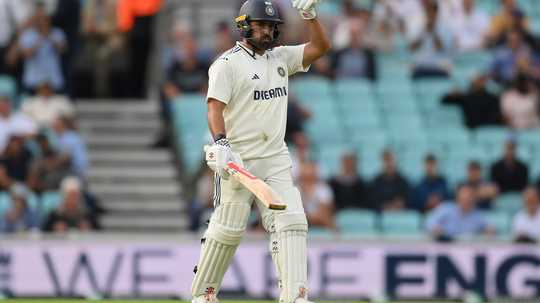
His contributions elsewhere in the order have demanded a different kind of judgement. Lower down, he has been asked both to anchor and to finish. In the Asia Cup final against Pakistan, he helped India manage a tense chase after early wickets. During India’s run to the T20 World Cup title, he also showed he could attack immediately, including in the semi-final against England in Mumbai.
A changed role during the T20 World Cup
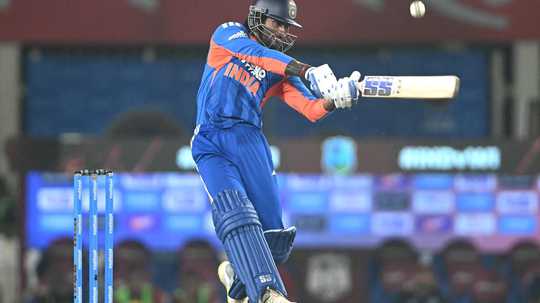
Tilak began the 2026 T20 World Cup batting at No. 3 and spent much of the campaign in that position. But after India’s defeat to South Africa, the team reshuffled its batting order for a must-win match against Zimbabwe. Tilak moved to No. 6 and made an unbeaten 44 from just 16 deliveries.
Since that innings, he has batted at No. 3 only once. The change may have taken him away from his preferred position, but Tilak says he understands the team’s reasoning. With strong competition for places in India’s top four, including young talent such as Vaibhav Sooryavanshi waiting for an opportunity, maintaining a settled combination can matter as much as an individual’s preferred role.
“I still love to bat at No. 3,” Tilak said at a press conference in Hyderabad. But he was quick to add that he does not want to disrupt the team’s balance. His comments reflect a practical view of modern T20 cricket: players may need to adapt to the match situation rather than expect the same place in the order every time.
Two jobs, one mindset
Tilak describes his current responsibilities as covering two distinct phases of an innings. If wickets fall during the middle overs—around overs five, six or seven—he can take a little time to settle, rebuild the innings and help India bat deep. If the top order is still at the crease late in the innings, he can switch gears and attack from the outset.
That contrast is central to the challenge. A middle-order batter may have to absorb pressure after a collapse one day, then face only a handful of balls and be expected to score rapidly the next. Preparation, Tilak says, is not only about practising shots. It is also about developing the mental strength to recognise which version of the role the team needs.
“When the team is under pressure, you should take it deep,” he explained. “And when the team needs it from the first ball, you should go.” Tilak says he has been practising for both situations and feels prepared to respond according to the circumstances.
For fans considering a cricket prediction ahead of the Hyderabad match, that flexibility makes Tilak an intriguing player to watch. His position in the order may influence how many deliveries he faces, but his value is not limited to one slot. If India lose early wickets, he can help stabilise the innings; if the top order lays a strong platform, he can provide late acceleration. As with any T20 prediction, conditions, match-ups and the state of the game will also shape his likely impact.
Reading conditions and backing himself
Tilak says confidence is essential for a player entrusted with a flexible role. He credits his childhood coach with teaching him that the most satisfying outcome is helping the team win, regardless of batting position. His approach is to assess the conditions, identify which bowlers he can target and choose shots suited to the pitch.
That process is especially important in the middle order, where a batter may have little time to settle. A slow surface might call for careful shot selection and strike rotation, while a good batting pitch could reward a more aggressive approach. The ability to adjust quickly is one reason teams value players capable of moving between positions.
Tilak says he is enjoying watching teammates such as Ishan Kishan, Shreyas Iyer and the openers make the most of their opportunities. Rather than seeking a return to No. 3, he wants to support the group by filling whichever role is required. “Whatever the team needs, I want to do it,” he said.
A special occasion in Hyderabad
The fourth T20I will be Tilak’s first appearance at his home ground in the current series. Playing in front of Hyderabad supporters while serving as India’s vice-captain adds an emotional dimension to the occasion. He described the opportunity to lead the side in that capacity before a home crowd as a proud and special moment.
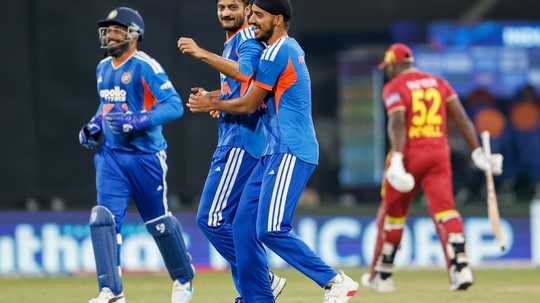
There is also a light-hearted memory from the recent match in Indore. Tilak was run out after stopping midway through a run, believing the ball had reached the boundary. He said a flash from the digital boundary hoardings led him to think the fielder had touched the advertising board while saving the ball. Axar Patel, at the other end, had a similar impression, and both batters paused.
Because the ball was returned towards Axar’s end, Tilak said he could not see exactly what had happened. Teammates shouted for the pair to run, but by then the chance had gone. Asked about the incident, he joked that he would keep running in future—even if he thought the umpire had signalled a boundary.
The episode offered a reminder that T20 cricket can turn on a split-second decision. For Tilak, the broader message is clear: whether he is anchoring, finishing or batting at his favoured No. 3, he intends to stay ready, trust his judgement and put the team first.