
Manchester United’s European Crisis Deepens After Roma Strike Early at Old Trafford
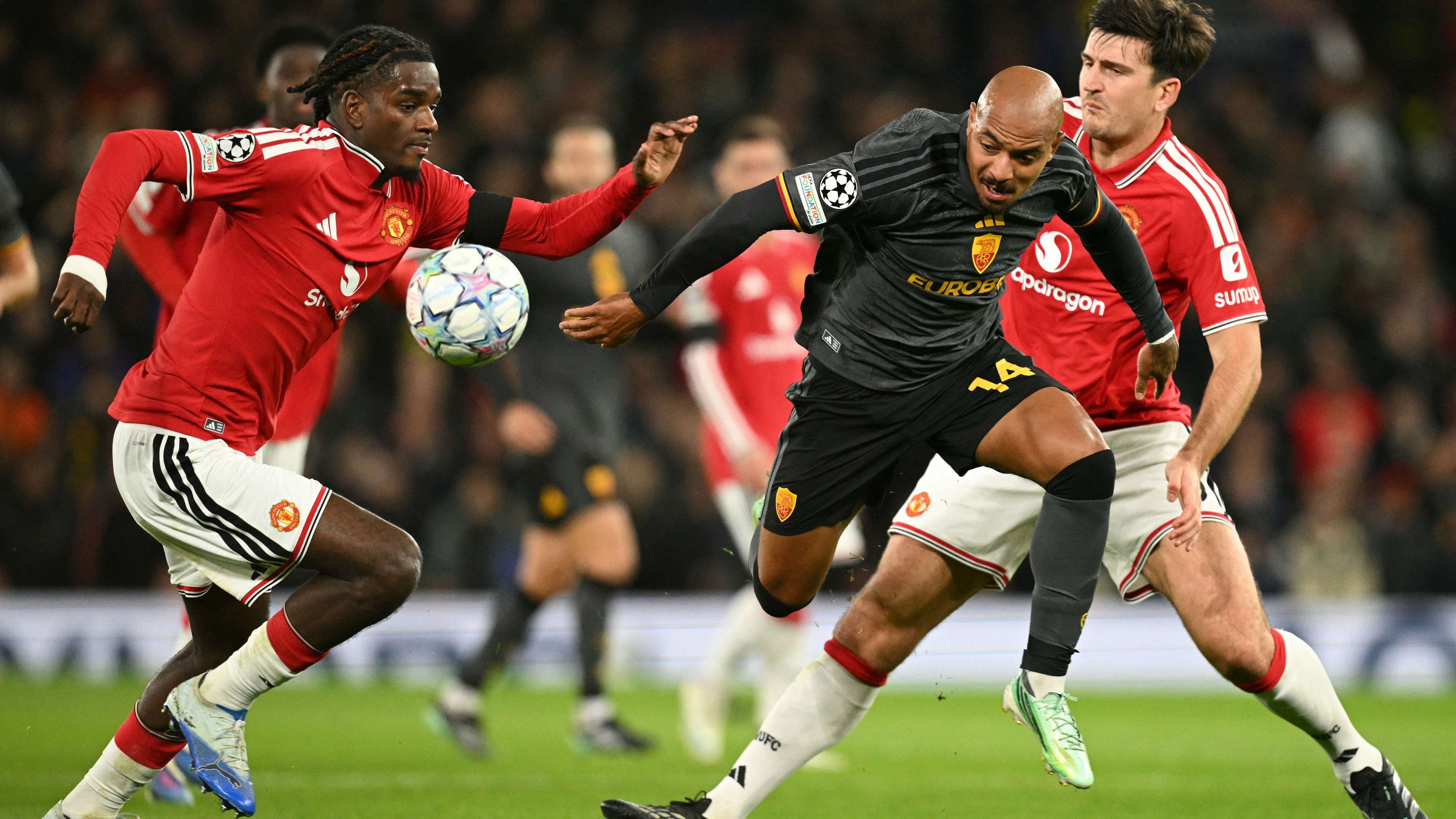
Manchester United’s troubles reached another alarming point when Roma stunned the hosts with two goals inside the opening 17 minutes of their UEFA Champions League league-phase meeting at Old Trafford. The visitors’ fast start produced an unwanted piece of history for the Red Devils and intensified questions about the team’s form, confidence and ability to respond under pressure.
Roma arrived in Manchester for the fourth round of the league phase and wasted little time exposing United’s defensive weaknesses. By the time the home side had found its footing, the Italian club had already built a two-goal advantage. According to Opta, no visiting team had previously scored twice so quickly against Manchester United at Old Trafford in European competition.
Roma Punish United’s Slow Start
The breakthrough came in the 11th minute through Argentina forward Matías Soulé. After getting beyond the United defence, Soulé went one-on-one with goalkeeper Senne Lammens, rounded him and finished with his left foot. The move was direct and decisive, but it also highlighted how easily Roma had been able to turn a forward run into a clear scoring opportunity.
United had little time to recover before Roma struck again. Donyell Malen doubled the visitors’ lead in the 17th minute, converting a penalty beyond Lammens. The Netherlands international’s composed finish left the goalkeeper with little chance and placed Roma firmly in control of the contest before the first half had properly taken shape.
For Roma, the opening spell offered a model of efficient away football: attack quickly, take advantage of space and make important moments count. For United, it was another damaging reminder that small lapses can carry a heavy cost at the highest level. A slow start is not always fatal, but conceding twice in such a short period can transform a tactical challenge into a psychological one.
A Record That Reflects a Wider Manchester United Problem
The unwanted European record is striking, but the larger concern is the run of results that preceded Roma’s visit. United had gone nine matches without a win, losing six and drawing three. That sequence points to a team struggling to find consistency, whether in its defensive organisation, attacking rhythm or ability to manage difficult moments.
When a club of United’s stature enters a match carrying such a run, pressure can build quickly. Players may become more cautious after conceding, while the opposition grows in belief. Roma’s early goals therefore mattered not only on the scoreboard but also in shaping the atmosphere and the match’s momentum.
United’s challenge was made harder by the nature of the goals. Soulé’s finish followed a clear route through the defence, while Malen’s penalty added to the sense that Roma were finding ways to exploit the hosts. Recovering from a two-goal deficit requires composure, sharper decision-making and a willingness to take calculated risks—qualities that become harder to display when confidence is already fragile.
What United Must Improve
The immediate priority for Manchester United is to make its opening phases more reliable. Strong teams do not need to dominate every minute, but they must remain organised while they settle into a match. That means communicating effectively across the back line, protecting the space in front of goal and avoiding unnecessary fouls or errors that give opponents a route into the game.
United also need a more convincing response after setbacks. A team’s character is often judged not by whether it concedes, but by how it reacts. The Red Devils must show they can regain control, move the ball with purpose and create pressure without leaving themselves exposed to further counterattacks.
There is an attacking question, too. When chasing a game, United need to turn possession into meaningful chances rather than relying on hopeful crosses or isolated moments of individual quality. Better movement between the lines and quicker combinations could help stretch a compact defence and give the forwards more useful opportunities.
Roma’s Opportunity and the Match Prediction
Roma’s early advantage gave the visitors a platform to manage the contest on their terms. With a two-goal cushion, they could look for opportunities to counter while asking United to take the initiative. That approach can be especially effective against a side under pressure, because every forward move by the trailing team may leave space behind.
Any football prediction for a match in this situation has to account for both the scoreline and the teams’ recent form. Roma’s quick start and United’s nine-game winless run made the visitors’ position increasingly promising, while the home side needed a major improvement in concentration and execution to change the narrative. Still, Old Trafford can create a powerful atmosphere, and a goal for United could have shifted the energy of the contest.
The key question was whether the hosts could respond before Roma’s control became too firm. United needed to score, settle the crowd and restore belief. Roma, meanwhile, had to remain disciplined and avoid giving the home side an easy route back into the game. In European football, an early lead is valuable, but it only becomes decisive if the team in front continues to defend intelligently.
What Comes Next for the Red Devils?
United’s next fixtures provide little room to dwell on the disappointment. Roma are scheduled to face Sassuolo in Serie A on 8 November 2026, while Manchester United are due to meet Aston Villa in the Premier League on 9 November 2026. The short turnaround makes recovery—both physical and mental—an important part of the preparation.
The result against Roma will inevitably sharpen scrutiny of United’s performances, but the response in the following games may prove just as significant. A return to winning football would not erase the European record or the poor run that came before it, yet it could offer a foundation for rebuilding confidence. Another setback, by contrast, would deepen concerns about whether the team can find stability.
For now, Roma’s rapid double strike stands as a vivid symbol of Manchester United’s wider difficulties: opponents are finding opportunities, the Red Devils are struggling to stop momentum, and every mistake is being magnified by a run of poor results. The path forward begins with greater defensive discipline, a faster response to adversity and the consistency expected of a club competing at the highest level of European football.