
Somali Federation Requests Omar Artan for Egyptian League Duty
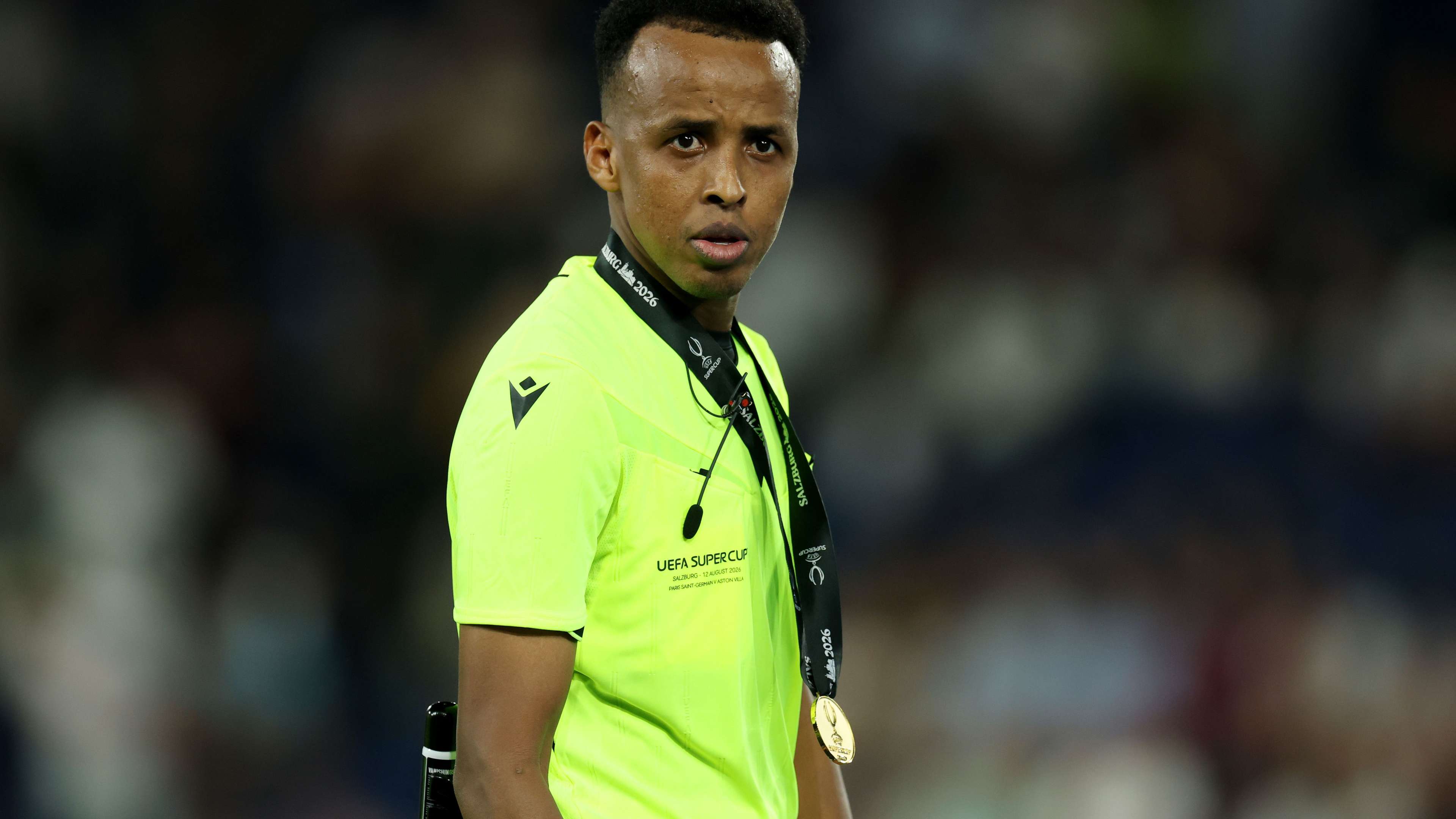
Egyptian refereeing could soon welcome an international guest after Essam Abdel Fattah, head of the Egyptian Referees Committee, confirmed that the Somali Football Federation has formally asked for referee Omar Artan to officiate matches in the Egyptian Premier League. Abdel Fattah said he supports the proposal, but the move depends on approval from the Egyptian Football Association.
Speaking in televised comments, Abdel Fattah clarified that Artan’s approach was not connected to the upcoming Al Ahly–Zamalek derby. Instead, the request was made through an official letter from Somalia’s football authorities. If the Egyptian FA gives the green light, Artan could be invited to referee in Egypt in the near future.
The proposal reflects the growing exchange of officials between national football associations. Hosting a referee from another country can offer clubs and supporters a fresh perspective, while giving the visiting official valuable experience in a different league environment. Any appointment, however, would need to follow the Egyptian federation’s procedures and account for competition scheduling, referee availability and local regulations.
How the Al Ahly vs Zamalek Referee Was Selected
Abdel Fattah also explained how the committee chose Slovenian referee Rade Obrenović for the high-profile meeting between Al Ahly and Zamalek, scheduled for Sunday, 11 October, at Cairo Stadium in the sixth round of the Egyptian league. With the derby carrying significant sporting and public attention, the committee sought an experienced international official to oversee the contest.
According to Abdel Fattah, the committee contacted the football federations of five major European leagues in search of suitable referees. Germany, England and Italy declined to provide officials. Portugal responded later, but the available refereeing team was not considered an elite option. The Spanish candidates also did not meet the committee’s requirements for the match.
Abdel Fattah said he personally contacted several referees as part of the search. Some declined because of existing commitments, including appointments connected to UEFA Champions League fixtures. The committee ultimately settled on Obrenović, whom Abdel Fattah described as the strongest available option from Slovenia.
Choosing a referee for a derby is about more than reputation. Officials must be available, fit the competition’s requirements and be capable of managing a match in which the pace, pressure and scrutiny can be unusually intense. A referee’s communication, positioning and consistency are also important, particularly when decisions may influence the result or shape the post-match discussion.
Foreign Referees and the Pressure of Football Officiating
Abdel Fattah defended Egyptian referees while acknowledging that criticism of officials is a familiar feature of football around the world. He noted that refereeing decisions are debated in Spain and other major football nations, not only in Egypt. In his view, referees are often treated as the weakest link in the sport, even though they work within a demanding system involving players, coaches, clubs, administrators and supporters.
That pressure can be especially visible after a close result. A penalty decision, a red card or a disallowed goal may dominate conversation long after the final whistle, while the many routine decisions made correctly receive little attention. This imbalance can make it difficult for fans to see refereeing as an essential part of the game rather than simply a source of controversy.
Abdel Fattah also pointed to the approach taken by established European leagues, saying that Spain, France and Italy do not generally bring in foreign referees to officiate their domestic matches. That comparison highlights the broader debate over whether international appointments improve confidence in major fixtures or whether investment in local officials is the more sustainable path.
For Egyptian football, the decision to appoint a foreign referee to a high-profile game can be viewed as a practical response to availability and expectations. It does not necessarily mean that domestic officials lack ability. Instead, it underlines how difficult it can be to find a suitable referee when leading candidates are already committed elsewhere and the match is under intense scrutiny.
Mahmoud Ashour’s Decision and Referee Wellbeing
Abdel Fattah also addressed the situation involving referee Mahmoud Ashour, describing what happened as an apology rather than a dispute. Ashour had initially been interested in working in the media. After discussions, he agreed to join the refereeing committee, but later made a final decision to step away. Abdel Fattah said he respected Ashour’s choice.
The comments point to the personal and professional pressures facing officials, whose work can involve long hours, regular assessment and strong public reactions. Referees must make rapid decisions in front of players and coaches, then often face detailed scrutiny from fans and media. Maintaining confidence and concentration under those conditions is an important part of performance.
Abdel Fattah said the committee is taking steps to improve psychological support for referees. Individual sessions have been introduced, with plans to involve specialists in psychological support in the future. He added that some referees had already sought help from psychologists after becoming frustrated by the pressures of their work.
What the Developments Could Mean for Egyptian Football
The possible arrival of Omar Artan, the appointment of Obrenović for the derby and the renewed focus on referee wellbeing all point to the challenges involved in managing football officiating. International cooperation may help broaden experience, while clear selection procedures can strengthen confidence in major appointments. At the same time, supporting local referees remains essential if the league is to build a dependable pool of officials for the long term.
As the Al Ahly–Zamalek match approaches, supporters will naturally focus on the teams, tactics and likely outcome. Any prediction about the derby will depend on factors such as form, fitness and match-day decisions. But the referee’s role will also matter: consistent management can help the contest remain focused on football, while effective psychological support may help officials handle the pressure that comes with the biggest games.