
Intensified Battles Over the Future of Football: Javier Tebas Challenges Rebellious Giants and the Return of the Super League
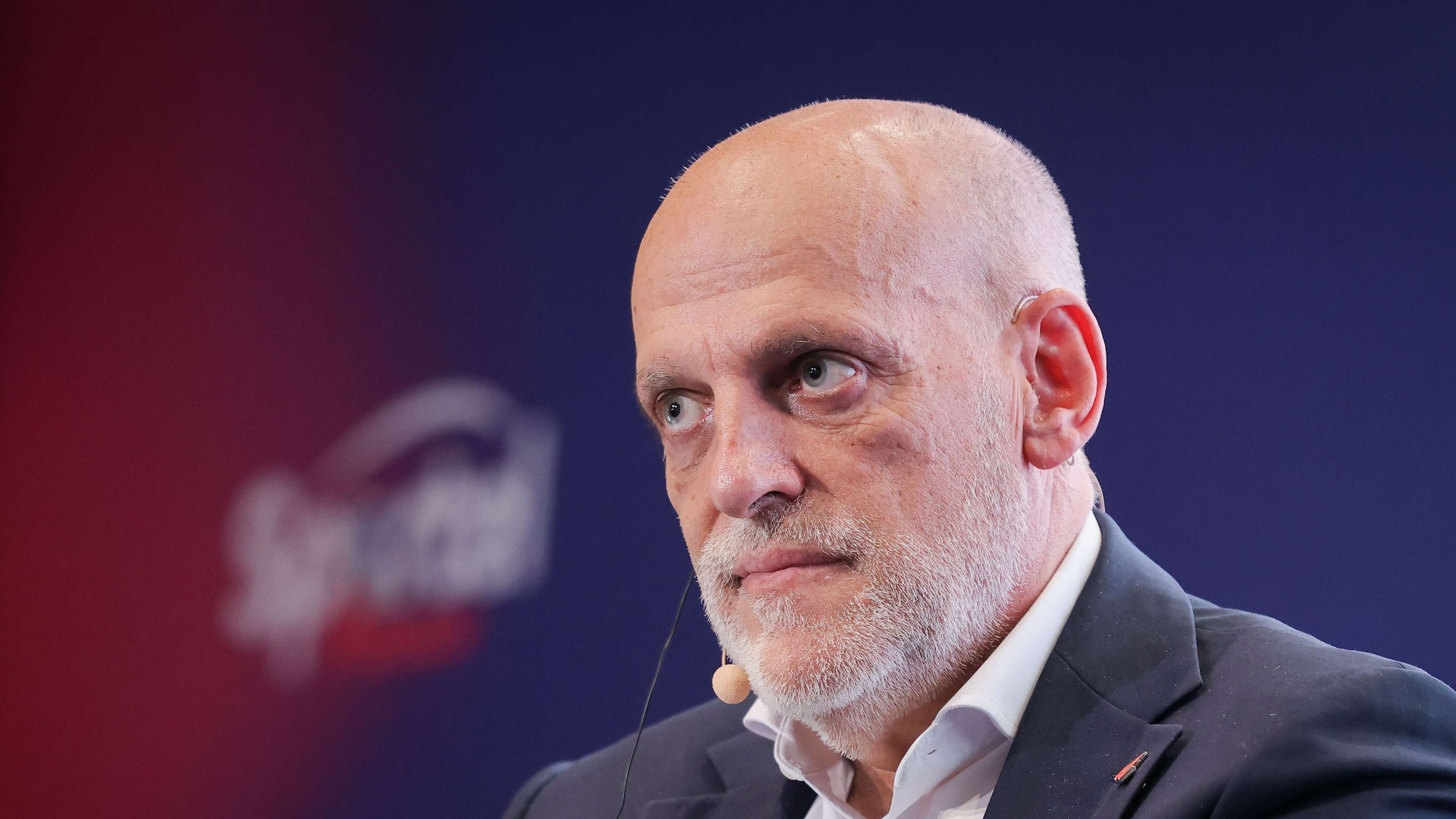
As the landscape of European football continues to evolve amidst ongoing debates about its future, Javier Tebas, the President of LaLiga, has once again positioned himself at the forefront of the discourse. His recent remarks at the inaugural National Conference on Press and Sport in Galicia have ignited fresh controversy, especially in light of the looming threat of a potential Super League revival. With a pointed critique aimed at Real Madrid, Florentino Pérez, and their ambitious Super League project, Tebas’s stance underscores the deepening divisions within the sport’s governance and the enduring struggle to preserve the traditional football model.
The Clash of Visions: Tebas Versus the Rebellious Giants
Javier Tebas did not hold back when describing the rivalry that has come to define modern football’s tumultuous landscape. He referred to Real Madrid as “the most rebellious team in Spain,” highlighting the club’s relentless push for a more lucrative and independent footballing future. This remark, reported by the French sports outlet Foot Mercato, underscores the fundamental philosophical divide: while LaLiga and its governing bodies aim to protect a balanced, sustainable football ecosystem, clubs like Real Madrid and Barcelona are often seen as catalysts for radical change, driven by financial ambitions and desire for greater autonomy.
The Super League, a proposed continental competition that would pit Europe’s elite clubs against each other in a closed, lucrative format, has been a contentious issue for years. Originally conceived as a way to generate unprecedented revenue, it threatened to fracture the traditional pyramid system that supports both big and small clubs across Europe. Tebas’s comments suggest a persistent concern that this project is not merely a passing fad but a potential reality that could reshape the sport’s competitive fabric permanently.
The Super League Resurgence: A Threat to Football’s Balance?
Tebas issued a stark warning about the possibility of the Super League’s comeback, emphasizing that halting the project in its current iteration may not be enough to prevent its resurgence. “If we do not act, we will face a two-tier football system,” he warned, alluding to a future where a select group of clubs dominate the landscape, leaving smaller teams and national leagues marginalized. This scenario would undermine the core principle of competitive balance that has long been cherished in European football.
He further elaborated that the current football model—built over the past two decades—has been instrumental in maintaining a harmonious ecosystem that supports both the giants of the sport and the smaller, yet vital, clubs. “We have built an exceptional football over the course of 20 years, and we must defend it,” Tebas asserted. “We cannot allow it to be lost.” His analogy of the sport as a train with “locomotives” like Real Madrid and Barcelona, complemented by “carriages” representing smaller clubs, illustrates his belief in a collective, inclusive system that prioritizes sustainability and fairness.
The Defense of the Current Model and Revenue Sharing
One of the core pillars of Tebas’s advocacy is the equitable distribution of television broadcasting rights. He championed the current model, which ensures revenue sharing among all clubs, fostering competitive balance and financial stability across leagues. This approach has been credited with elevating LaLiga’s stature globally, attracting top talent and generating lucrative broadcasting deals.
When questioned about ticket prices for the upcoming El Clásico—a fixture that consistently ranks among the most-watched sporting events worldwide—Tebas refused to weigh in. Instead, he emphasized that ticket pricing is a matter for the clubs themselves, underlining the autonomy and independence clubs have in managing their commercial strategies. This stance subtly hints at the ongoing tension between league regulators and individual clubs over financial policies that impact both fans and club sustainability.
Implications for the Future of Football: Prediction and Analysis
Looking ahead, the battle over the future of football appears poised to intensify. The resurgence of the Super League remains a significant threat, with clubs like Real Madrid and Barcelona eager to explore alternative revenue streams amid financial pressures and the impact of the COVID-19 pandemic. The prediction for football’s future hinges on whether governing bodies like LaLiga and UEFA can effectively counter these ambitions or if the sport will bifurcate into a tiered system dominated by a handful of elite clubs.
Many experts anticipate that the ongoing conflict will drive reforms aimed at increasing financial fair play, improving revenue sharing, and reinforcing the integrity of national and continental competitions. The outcome will likely influence transfer markets, broadcasting rights negotiations, and even fan engagement strategies. As Tebas suggests, defending the current model is crucial to preserving the sport’s competitive spirit and cultural richness.
Additional Context: The Broader Impact on Global Football
The controversy surrounding the Super League isn’t confined to Spain or Europe alone. It has sparked global debates about the commercialization of football, the role of governing bodies, and the rights of fans. The push for a closed, highly profitable league system raises questions about the accessibility of the sport and the sustainability of smaller clubs that are vital for local communities and grassroots development.
Furthermore, the prediction of future football trends involves considering technological advances, broadcasting innovations, and the evolving tastes of global audiences. The rise of digital streaming platforms and social media has democratized content consumption, but it also complicates revenue models and competitive balance. How these factors interplay with the persistent rivalry between traditionalists and reformers will shape the sport’s trajectory in the coming years.
Conclusion: A Pivotal Moment in Football’s Evolution
The recent statements by Javier Tebas reflect a pivotal moment in the ongoing battle to define football’s future. His firm stance against the re-emergence of the Super League and his commitment to preserving a balanced, sustainable model highlight the importance of safeguarding the sport’s integrity for generations to come. As predictions point toward continued tensions and negotiations, football fans worldwide can expect an exciting, if tumultuous, period of transformation that will determine whether the beautiful game remains true to its roots or evolves into a new, divided era.
In this high-stakes game of strategy and ideology, the outcome will depend not only on the actions of powerful clubs and governing bodies but also on the collective voice of the global football community. The prediction is clear: football’s future hinges on balancing ambition with tradition, innovation with sustainability, and competition with fairness.