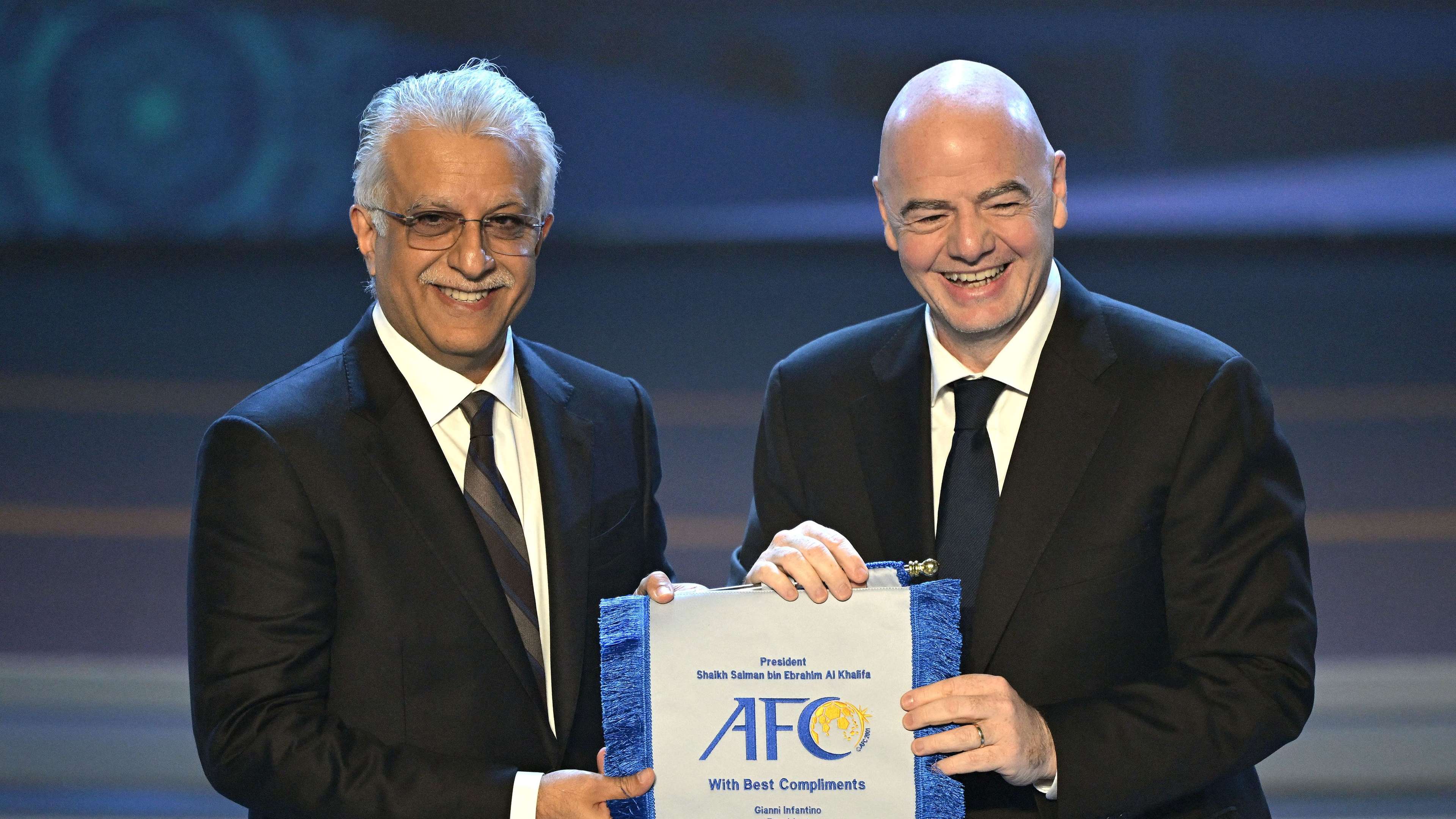

Sheikh Salman Al Khalifa Welcomes FIFA’s Decision to Withdraw from Controversial Project
Sheikh Salman bin Ibrahim Al Khalifa, president of the Asian Football Confederation (AFC), has expressed his support for FIFA’s decision to withdraw the FIFA Forward Enterprise project. The project, which aimed to create a new commercial entity allowing private sector investors to be involved in the commercial rights of FIFA’s competitions, has been met with widespread criticism from various football entities.
Consultation and Unity in Global Football Governance
In an official statement released on Saturday, Sheikh Salman emphasized the importance of a consultative approach in shaping the future of global football. He called for any future initiatives similar to the FIFA Forward Enterprise project to be presented to continental confederations, the FIFA Council, national member associations, and all concerned parties in a transparent manner and well in advance.
Sheikh Salman stated, “The future of global football must always be shaped through proper consultation, collective dialogue, and respect for the approved governance structures of our game.” He also reiterated the AFC’s willingness to support initiatives that strengthen the unity of the football family and contribute to the global development of the game.
National Member Associations Stand United
The AFC president extended his appreciation to the national member associations for their unity and solidarity during the period of controversy surrounding the FIFA Forward Enterprise project. He commended the associations for trusting the AFC to seek answers on their behalf regarding the governance of global football.
Sheikh Salman expressed his gratitude, saying, “I thank them for their patience, solidarity, and unity, and I confirm that the AFC will always work to achieve their best interests.”
FIFA President Announces Withdrawal
FIFA President Gianni Infantino announced the withdrawal of the FIFA Forward Enterprise project in response to growing opposition from various football entities. The project was intended to strengthen FIFA’s national member associations and support football development worldwide, particularly in countries in need.
Infantino highlighted that the project’s implementation was contingent on the support of the majority of national member associations and would have involved consultations with various stakeholders. However, mounting opposition from continental confederations and football officials led to the decision to withdraw the project.
Controversy and Opposition
The proposal to create a new company to manage commercial activities and competitions, with a stake available for sale to private sector investors, faced strong opposition. UEFA, the European Football Association, rejected the proposal and threatened to boycott FIFA competitions if it proceeded. The AFC and CONCACAF also joined the opponents, leading to a wave of criticism and resignations within FIFA.
Carlos Cordeiro, senior adviser to the FIFA president, resigned in protest, while FIFA’s chief operating officer, Kevin Lamour, publicly criticized the project. The withdrawal of the FIFA Forward Enterprise project marked the end of one of the most controversial initiatives in FIFA’s history.
Overall, the decision to withdraw from the project reflects the importance of consultation, unity, and transparency in shaping the future of global football governance.
The Importance of Transparency in Global Football Governance
Transparency in decision-making processes within global football governance is crucial to maintaining trust and unity among all stakeholders. By involving continental confederations, national member associations, and other concerned parties in the discussion of significant projects, FIFA can ensure that initiatives align with the best interests of the global football community. Transparency fosters accountability and allows for open dialogue, ultimately leading to decisions that benefit the entire football family.
Lessons Learned and Moving Forward
The controversy surrounding the FIFA Forward Enterprise project serves as a valuable lesson for football governing bodies. It highlights the importance of engaging in thorough consultations, listening to feedback from stakeholders, and respecting the established governance structures of the game. Moving forward, FIFA and other football organizations can use this experience to inform their decision-making processes and strive for greater transparency and inclusivity in their initiatives.
Unity in the Face of Adversity
The united front presented by national member associations, continental confederations, and football officials in opposing the FIFA Forward Enterprise project demonstrates the strength of unity within the football community. When faced with decisions that could impact the future of the game, stakeholders must stand together to uphold the values of transparency, consultation, and respect for governance structures. This unity ensures that the voices of all parties are heard and considered in shaping the direction of global football.
Building a Stronger Future for Global Football
As FIFA withdraws from the controversial project, it paves the way for a renewed focus on initiatives that truly benefit the development of football worldwide. By prioritizing collaboration, consultation, and transparency in future endeavors, football governing bodies can work towards a stronger and more unified global football community. The lessons learned from this experience can guide future decision-making processes and foster a culture of inclusivity and shared responsibility among all stakeholders.
In conclusion, the withdrawal of the FIFA Forward Enterprise project underscores the importance of transparency, consultation, and unity in global football governance. By learning from this experience and committing to a more open and collaborative approach, FIFA and other football organizations can build a brighter future for the beautiful game.