
Javier Tebas Faces Possible Disciplinary Action After Controversial Real Madrid Post
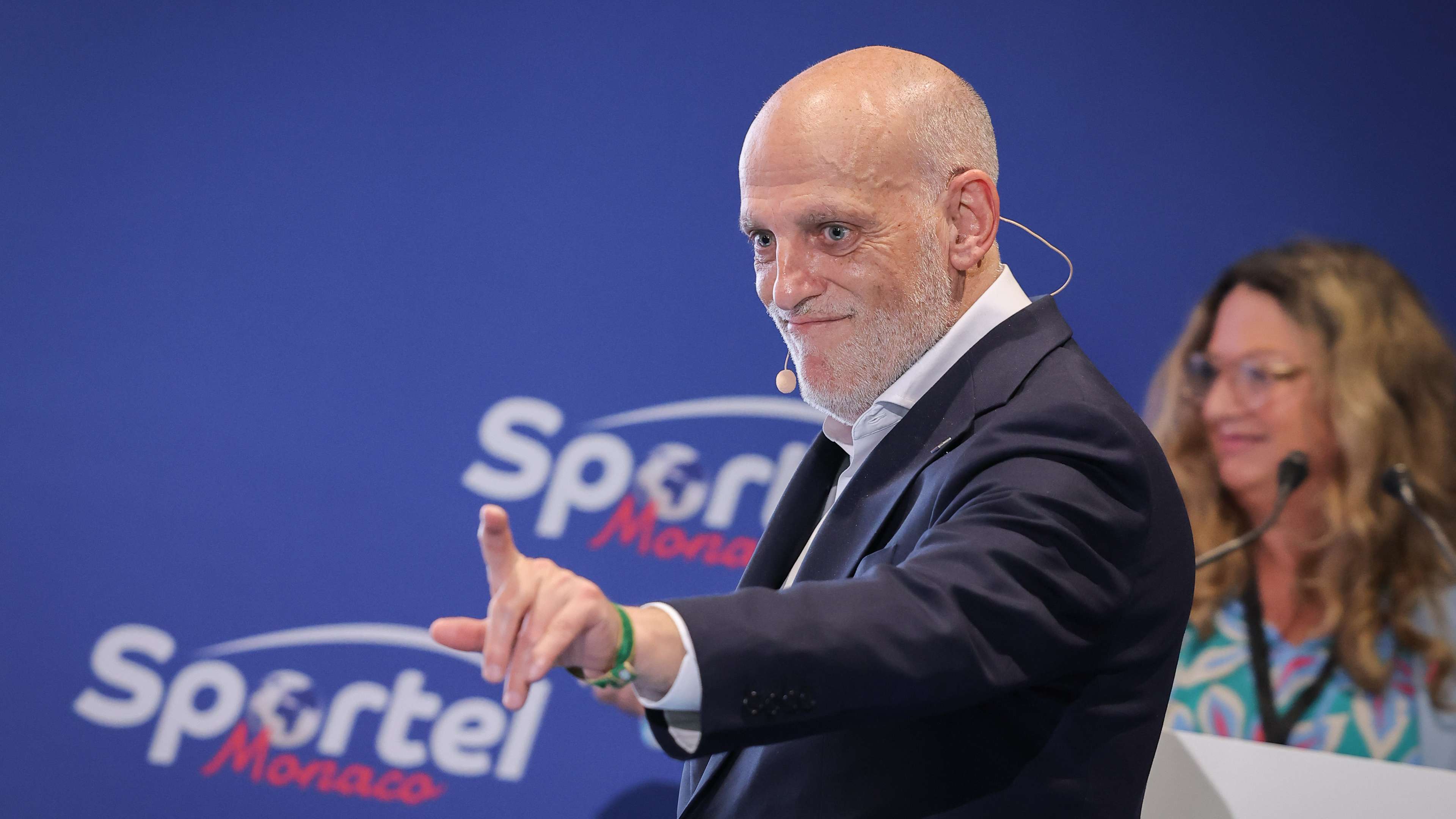
La Liga president Javier Tebas is facing the possibility of disciplinary action from Spanish authorities after a social media post comparing Real Madrid’s communication strategy with Nazi propaganda prompted widespread criticism. The remarks have intensified an already heated debate over the relationship between Spain’s top football league and one of its most influential clubs.
The controversy highlights how quickly disputes in modern football can move beyond the pitch. A comment posted by a prominent executive can become a national talking point, drawing scrutiny from supporters, officials and institutions responsible for addressing conduct in public life. In this case, the reaction has focused not only on Tebas’s criticism of Real Madrid, but also on the historical comparison he chose to make.
Why Tebas’s comparison triggered backlash
Tebas’s post reportedly accused Real Madrid of using communication methods that he likened to the propaganda machinery of Nazi Germany. The comparison drew immediate attention because it invoked one of history’s most brutal regimes to describe a dispute over messaging and public relations in sport.
Critics argued that such language was excessive and inappropriate, regardless of the underlying disagreement. Comparisons involving Nazi Germany carry enormous historical weight because of the regime’s responsibility for persecution, mass murder and the Holocaust. Using that imagery in a football argument can be seen as trivialising a profound tragedy and inflaming tensions rather than clarifying the issue.
The episode also raises questions about the responsibilities attached to high-profile leadership. As La Liga’s president, Tebas is not simply another participant in an online debate. His public statements can influence perceptions of the league, its clubs and the wider football environment. That visibility brings greater scrutiny, particularly when a post touches on sensitive historical or political subjects.
What potential disciplinary action could mean
Spanish authorities are now considering whether the post could warrant disciplinary consequences. The precise outcome will depend on the relevant rules, the nature of the complaint and any formal review of the comments. At this stage, the prospect of action should not be treated as a final finding: an investigation or assessment is not the same as a decision that a rule has been broken.
Any process would likely need to consider the wording, context and reach of the post, as well as the standards that apply to public figures in Spanish sport. It may also examine whether the remarks fall under a specific code of conduct or other regulatory framework. Until authorities clarify the procedure and possible sanctions, the consequences remain uncertain.
That uncertainty has not reduced the significance of the dispute. Even without a formal penalty, the controversy could affect Tebas’s relationship with clubs and supporters, and may prompt renewed discussion about the boundaries of public criticism in football. If disciplinary measures are imposed, the case could also become a reference point for how Spanish institutions respond to inflammatory comments from senior sports executives.
A long-running tension between La Liga and Real Madrid
The incident has landed against a backdrop of frequent friction between La Liga and Real Madrid. The club is one of the most powerful brands in world football, with a large international audience and a strong capacity to shape its own public narrative. The league, meanwhile, is responsible for promoting the competition and managing the interests of its member clubs, which do not always align.
That dynamic can turn disagreements over governance, commercial decisions or public messaging into broader institutional disputes. Real Madrid’s statements often reach millions of fans, while La Liga has its own platform and authority to explain its position. When those channels are used to challenge one another, supporters can find themselves following a battle over credibility as much as a debate about football policy.
The latest row underscores how communication has become a central part of the sport. Clubs and leagues now compete for attention across social media, television and digital platforms. Their messaging can influence fan opinion, sponsorship conversations and the public understanding of decisions made behind the scenes. In that environment, the choice of language matters: sharp criticism may attract attention, but extreme comparisons can overshadow the issue being discussed.
Social media’s growing role in football disputes
Social media gives football leaders a direct route to supporters, but it also removes many of the filters that once shaped public statements. A post can be published instantly, shared widely and interpreted by audiences far beyond its original context. Screenshots and excerpts can continue circulating even after a message is deleted or clarified.
For senior figures, that speed creates a difficult balance. Direct communication can make organisations appear more open and responsive, yet it also increases the risk of escalating conflict. A brief comment may be read as an official position, especially when it comes from a league president. The Tebas controversy is a reminder that online communication is not separate from leadership; it is part of how leaders are judged.
More broadly, football organisations may need clearer standards for public communication, particularly when disputes involve rival institutions or sensitive historical references. Such standards would not prevent robust criticism, but they could encourage arguments to remain focused on evidence and policy rather than language likely to provoke lasting harm.
What happens next—and what fans should watch
The next important development will be whether Spanish authorities open a formal disciplinary process or conclude that no further action is necessary. Any official statement could clarify which rules are being considered and what range of outcomes is possible. Until then, reports about potential sanctions should be understood as an ongoing matter rather than a settled verdict.
Fans can also expect the dispute to remain part of the conversation around La Liga and Real Madrid. The immediate headlines may focus on the post, but the deeper issue is how football’s leading institutions manage conflict in public. The way both sides respond could influence whether tensions cool or become another chapter in their wider rivalry.
For readers searching for a football prediction about the outcome, certainty is impossible at this stage. A formal review could lead to action, a warning or no sanction, depending on the authorities’ assessment. The more reliable prediction is that the debate over responsible language and public accountability will continue, especially as social media becomes an increasingly powerful arena for football politics.
Ultimately, the episode serves as a cautionary moment for leaders across the sport. Strong disagreement is part of football’s culture, and criticism of clubs or governing bodies is often unavoidable. But when historical atrocities are invoked, the discussion can shift away from the original dispute and toward the harm caused by the comparison itself. How Spanish authorities handle the case—and how Tebas and Real Madrid respond—will help determine whether the controversy becomes a brief online storm or a significant test of accountability in Spanish football.