
Bruno Fernandes at a crossroads as Manchester United face a defining transition
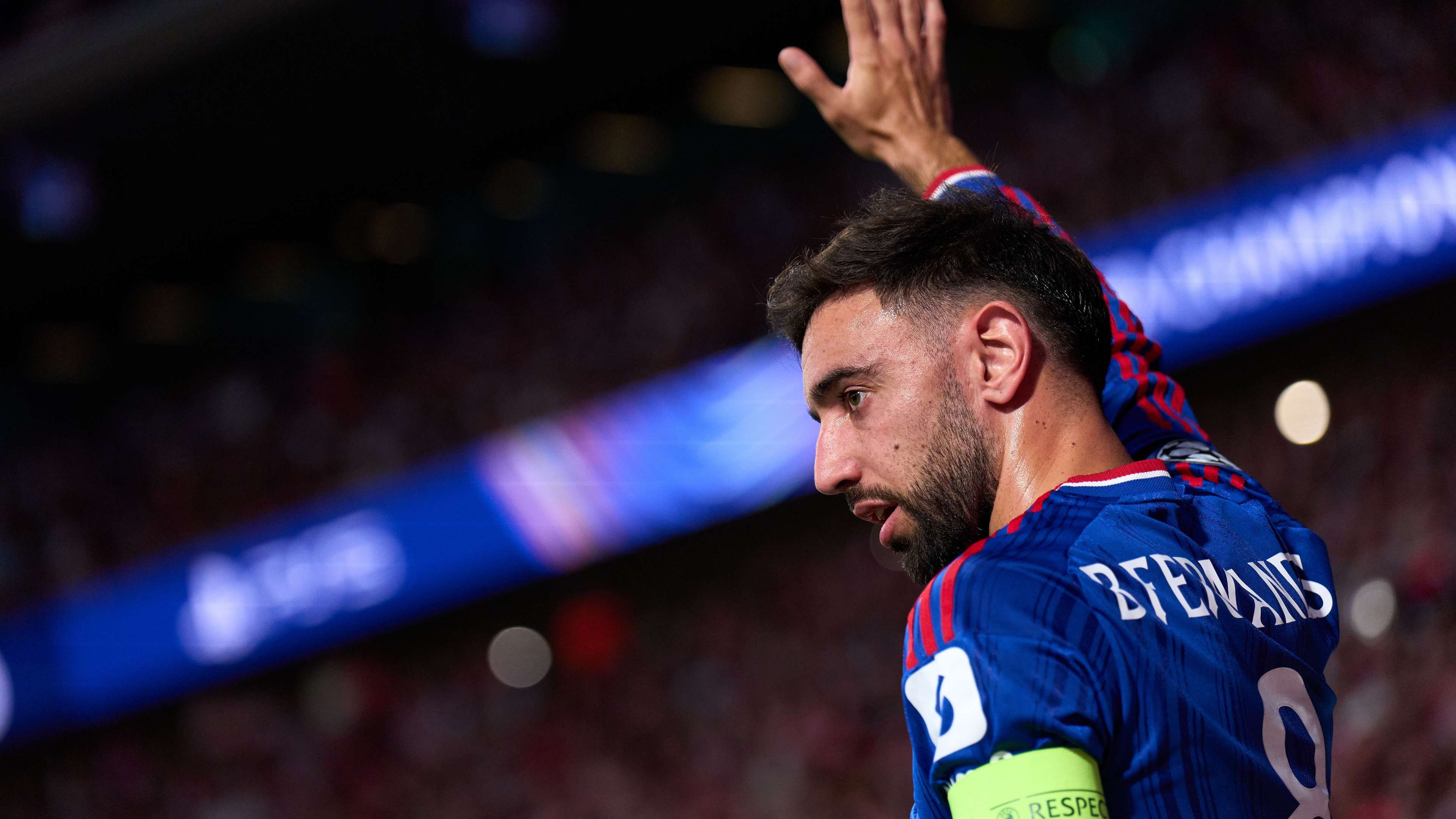
For almost seven years, Bruno Fernandes has been one of the defining figures of Manchester United’s modern era. He has supplied goals, assists, urgency and leadership through seasons of upheaval, often carrying the creative burden when the team struggled to find a consistent identity. But a subdued display against Leeds has renewed questions about whether the captain’s influence is beginning to change—and whether his place at the heart of United’s next project is as secure as it once seemed.
One quiet performance does not erase Fernandes’ contribution to the club. Yet his showing against Leeds felt significant because it echoed a broader statistical decline and arrived at a time when United are considering how to reshape their midfield. The Portuguese playmaker’s preferred No. 10 role, long associated with his freedom to operate behind the striker, could face greater competition as the team’s tactical priorities evolve.
A remarkable United career enters a new phase
Fernandes quickly became a central figure after arriving at Old Trafford, bringing an intensity and directness that had been missing from United’s attack. His willingness to attempt ambitious passes, shoot from distance and demand the ball helped transform the side’s creative output. He also became a regular source of goals and assists, while his work rate and emotional commitment made him a natural candidate for the captaincy.
That status has made Fernandes more than a midfielder. He has often been the player expected to make something happen when United’s structure faltered, and his influence has extended beyond the final pass. He presses, tracks runners, directs teammates and takes responsibility in difficult moments. For supporters, those qualities have helped explain why he remains one of the club’s most important players even when his form is under scrutiny.
However, a team cannot rely indefinitely on one individual to supply its creativity. As United look to build a more balanced and sustainable side, the question is not simply whether Fernandes remains talented. It is whether the system can use his strengths effectively while reducing the pressure on him to solve every attacking problem.
Why the Leeds performance raised concerns
Fernandes’ display against Leeds lacked the usual spark. He struggled to impose himself consistently, and the moments of invention that have often changed matches were less evident. In isolation, that could be explained by the demands of the fixture, the quality of the opposition or the rhythm of the game. The concern is that the performance appeared to fit a wider pattern rather than stand alone.
When a player has set exceptionally high standards, even a modest dip becomes noticeable. Fernandes has built his reputation on constant involvement: attempting difficult passes, arriving around the penalty area and driving the team forward. If his output in those areas falls, United can look short of ideas, particularly when opponents block central spaces and force the team to attack from wider positions.
Statistics can help illustrate a change in form, but they do not tell the whole story. A midfielder’s contribution depends on teammates’ movement, the quality of service and the tactical role he is asked to perform. A lower return in goals or assists may reflect a difficult team environment as much as an individual decline. Still, the numbers can sharpen the debate when they align with what viewers see on the pitch.
The No. 10 role is no longer guaranteed
Fernandes is most comfortable when he can operate between the opposition’s midfield and defence, where he can turn, create chances and move into scoring positions. That advanced role maximises his vision and aggressive decision-making. But it also asks the team to provide enough balance behind him, especially when possession is lost.
United may increasingly favour a midfield structure that prioritises control, compactness and defensive security. If the team uses two deeper midfielders or asks its attacking players to maintain more disciplined positions, Fernandes could have less freedom to roam. Alternatively, a new signing or the emergence of another creative option could lead to rotation—or require the captain to adapt to a deeper role.
None of those possibilities automatically means Fernandes is finished at the club. His passing range, experience and ability to arrive in dangerous areas remain valuable. But the discussion around his position reflects a broader challenge: United need a midfield that can create chances without becoming exposed whenever its most adventurous player moves forward.
What a transition could mean for Manchester United
For United, planning beyond Fernandes is not necessarily a verdict on his past performance. It is part of the normal work of rebuilding a squad. The club must consider how to distribute responsibility, improve its options in central areas and ensure that its attacking play does not depend on one player’s availability or form.
A more balanced midfield could help Fernandes by giving him better support and clearer passing options. With reliable ball-winners and runners around him, he may be able to focus on the creative actions that have made him so influential. On the other hand, if United change their tactical approach, he may need to become more selective in possession and contribute in a role that offers less freedom.
The manager’s decisions will be crucial. A clear plan can help Fernandes understand how he fits into the team, whether as the primary No. 10, a deeper playmaker or one of several attacking midfield options. Uncertainty, by contrast, could make it harder for both the player and the side to find consistency.
Prediction: a key player, but a changing role
The most reasonable prediction is not an immediate end to Fernandes’ United career, but a gradual shift in how the club uses him. His experience, leadership and creative quality make him difficult to replace outright. Yet the Leeds performance and the wider questions about his statistical output suggest that United cannot simply assume he will continue to occupy the same role with the same level of influence.
His future may depend on how quickly the team develops a coherent midfield around him. If United can add control and provide dependable movement ahead of the ball, Fernandes could rediscover his best form and remain a major figure. If the club pursues a different tactical direction, he may have to share the creative burden or adapt to a less central position.
For supporters following the football debate, the key issue is not whether Fernandes has been a success. His impact at Old Trafford is clear. The more pressing question is how United can honour that contribution while preparing for a new phase. The captain’s loyalty has been valuable, but loyalty alone cannot settle questions of form, tactics and squad planning. Fernandes now faces a defining period—one that could determine whether he remains the team’s undisputed playmaker or becomes an important part of a broader transition.