
Virat Kohli’s 74 powers India to DLS win in Auckland ODI
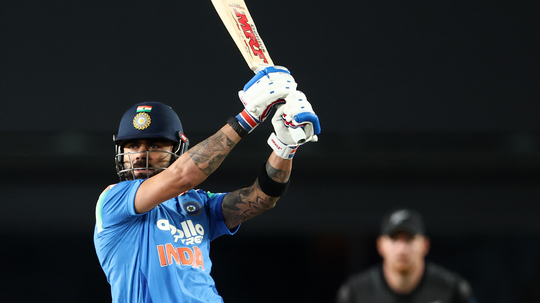
Virat Kohli turned a tricky chase into a statement performance as India beat New Zealand by five wickets under the Duckworth-Lewis-Stern method in the first ODI at Eden Park. On a pitch that played quicker and bounced more than expected, Kohli’s 74 off 51 balls proved decisive, helping India reach a revised target of 143 in just 22.4 overs and take a 1-0 lead in the five-match series.
The surface had been expected to favour batters, but the hard length caused problems for much of the match. New Zealand captain Mitchell Santner later acknowledged that the pitch had more pace and bounce than anticipated. Kohli, however, turned that extra lift into a scoring opportunity, striking seven fours and a six as India’s other batters struggled to handle the same deliveries.
Rain interrupted the chase twice, changing the target and the required pace. Yet India stayed ahead of the DLS par score, even after a late cluster of wickets briefly raised the tension. The result gave New Zealand an unwanted start to a home ODI series: it was the first time in 12 such series that they had lost the opening match. The previous instance was also against India, in January 2019.
India’s seamers exploit the lively Eden Park pitch
India captain Shubman Gill chose to bowl after a passing shower delayed the toss by 10 minutes. Under overcast skies, India’s pace attack made effective use of the movement available from a back-of-a-length line, keeping New Zealand under pressure from the opening overs.
Arshdeep Singh struck twice inside the first nine overs, removing Will Young and Henry Nicholls with short deliveries. Gurnoor Brar then tightened India’s control after coming into the attack in the 13th over. He dismissed Tim Seifert, New Zealand’s top scorer with 38, before removing captain Tom Latham, leaving the hosts short of a settled partnership.
Daryl Mitchell, who arrived with an impressive recent record against India, was run out for 12 after a mix-up with Glenn Phillips. Rohit Sharma’s accurate throw gave India another breakthrough and left New Zealand needing a substantial recovery. Phillips made 30 from 51 balls, but the innings continued to lose wickets as India’s bowlers varied their pace and used the bounce intelligently.
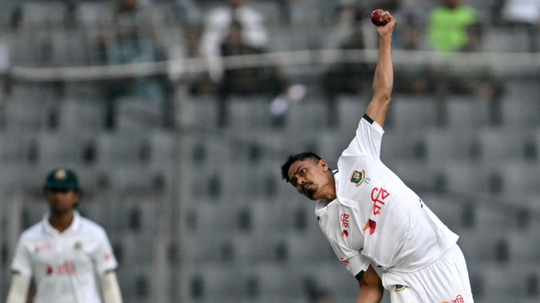
Anshul Kamboj was particularly effective with the wobble ball. Santner inside-edged one delivery onto his pad, and the ball spun back to hit the stumps. Kamboj then drew an edge from Nathan Smith, with Kohli taking a sharp, diving catch at second slip. New Zealand had slipped to 115 for seven.
Arshdeep finished with four wickets for 70 runs, while Brar claimed three for 44. Kamboj’s figures of two for 22 from 10 overs were among the most economical of the innings, earning him Player of the Match honours. New Zealand’s final total of 185 in 40.2 overs might have been lower still but for a 39-run last-wicket stand between Blair Tickner and Jacob Duffy. Tickner struck four sixes, matching the joint-highest number by a No. 11 in an ODI innings, to lift the total past 180.
Kohli turns short-ball pressure into a scoring weapon
India’s chase began poorly when Rohit chipped Kyle Jamieson to mid-off in the first over and was dismissed for a six-ball duck. Kohli and Gill initially had to work hard against the seam movement. New Zealand kept the scoring rate in check, at one stage allowing only 14 runs across five overs.
Kohli broke the boundary drought with a controlled pull off Duffy, then followed it with an inside-out drive over extra cover against Jamieson. The first rain interruption arrived with India at 55 for one in the 11th over. When play resumed, India were set a revised requirement of 167 from 40 overs, but another stoppage followed after only seven deliveries. Gill even told umpire Paul Reiffel that he was having difficulty seeing the ball.
The second interruption reduced the contest to 32 overs and reset India’s target to 143. Kohli responded by accelerating. While the short ball had troubled several batters, he judged the bounce early and used the pace to score freely. He swivelled a pull off Jamieson for four and launched Tickner over midwicket for six.
A pull through deep midwicket brought up Kohli’s 80th ODI half-century, reached from 35 balls. It was his second-fastest fifty in an away ODI. Gill, who had taken longer to settle, supported him steadily as the pair added 113 for the second wicket. It was their sixth century partnership in 27 ODI innings together, and it left India needing only 29 more runs.
Late wickets create a brief opening for New Zealand
New Zealand found some late momentum when Gill top-edged a pull against Smith. In the next over, Kohli drove Duffy over his head for four, but was dismissed three balls later, mistiming a short delivery to deep square leg. Axar Patel fell for a duck off the final ball of the over, caught by Phillips, who produced a one-handed diving grab at backward point.
India had lost three wickets for 10 runs in 11 balls, but the damage was limited because they remained 45 runs ahead of the DLS par score at the end of the 20th over. Shreyas Iyer, who had also been tested by the short ball, briefly counterattacked with a hook for six before falling for 15. Naman Dhir then finished the match with a pulled boundary, sealing India’s five-wicket victory.
What the result means for the series
The opening match offered a useful lesson in cricket conditions and chase management: a pitch described as a batting surface can still reward bowlers when it offers pace, bounce and cloud cover. India’s seamers made the most of those conditions, while Kohli adapted his shot selection to the ball’s extra lift rather than allowing it to dictate the innings.
For New Zealand, the late lower-order resistance was a positive, but the top and middle order will need to find better answers to India’s hard-length bowling. The hosts also showed that they could create pressure during the chase, although the rain-adjusted target and Kohli’s partnership with Gill left them little room to recover.
Looking ahead, any cricket prediction for the next ODI will depend on the venue, weather and whether the surface again offers assistance to fast bowlers. India will take confidence from a disciplined bowling display and Kohli’s command of the chase, while New Zealand will be eager to respond at home. The visitors lead the series 1-0, but the opening match suggests that adapting quickly to conditions could be just as important as batting depth in the games to come.
Match summary
New Zealand: 185 all out in 40.2 overs (Tim Seifert 38, Blair Tickner 34; Arshdeep Singh 4-70, Gurnoor Brar 3-44, Anshul Kamboj 2-22).
India: 143 for five in 22.4 overs (Virat Kohli 74; Jacob Duffy 3-49). India won by five wickets under the DLS method.