
Pakistan Announces New Leadership for T20I Series Against Sri Lanka: A Strategic Shift in Cricket Prediction and Team Dynamics
The Pakistan Cricket Board (PCB) has officially appointed Sahibzada Farhan as the captain of the national T20I team for the upcoming series against Sri Lanka, marking a significant shift in leadership within Pakistan’s shortest format of the game. This decision not only reflects a strategic move to rejuvenate the squad but also underscores the importance of cricket prediction insights in shaping team composition and leadership choices.
Understanding the Leadership Change: From Salman Ali Agha to Sahibzada Farhan
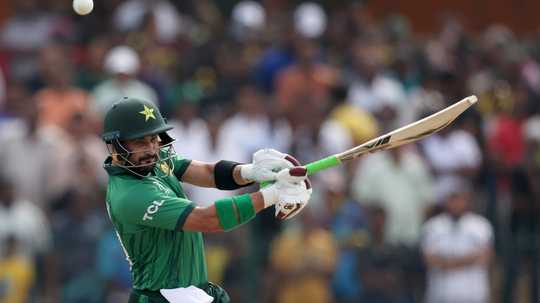
Salman Ali Agha, who previously captained Pakistan during the T20 World Cup, will not feature in the upcoming series, which kicks off on October 9. Instead, 30-year-old Sahibzada Farhan, a dynamic right-handed opening batsman, has been entrusted with the captaincy. This transition signals a broader intent by Pakistan cricket authorities to explore fresh leadership avenues and harness the potential of emerging talent.
Farhan’s elevation to captaincy is backed by impressive recent performances, notably his standout role at the T20 World Cup earlier this year, where he amassed a remarkable 383 runs, establishing himself as a consistent and reliable batsman in the shortest format. His leadership experience was further solidified when he led Pakistan to a silver medal at the recently concluded Asian Games, showcasing his ability to handle pressure and inspire team performance on a major international stage.
Strategic Significance of Player Selection and Team Composition
The selection of Farhan as captain aligns with Pakistan’s ongoing efforts to identify and develop versatile players capable of leading the team through challenging cricket prediction scenarios. The 15-player squad features a blend of seasoned campaigners and promising youngsters, signaling a calculated approach to balancing experience with emerging talent.
Notable inclusions from the Asian Games squad include Abdul Samad, Saim Ayub, Hasan Nawaz, Arafat Minhas, Maaz Sadaqat, and Abrar Ahmed. These players have demonstrated their potential in recent matches and are now poised to make an impact in the T20I series. The team lineup also comprises established players such as Fakhar Zaman, Shadab Khan, and Naseem Shah, ensuring a mix of stability and innovation.
Detailed Pakistan T20I Squad for the Sri Lanka Series
Captain: Sahibzada Farhan
Key Players: Abdul Samad, Abrar Ahmed, Arafat Minhas, Fakhar Zaman, Hasan Nawaz, Khawaja Nafay (wicketkeeper), Maaz Sadaqat, Mohammad Salman Mirza, Muhammad Imran Randhawa, Naseem Shah, Razaullah, Saim Ayub, Shadab Khan, Sufiyan Moqim
This squad reflects Pakistan’s strategic emphasis on versatile batting and bowling options, with a keen eye on future cricket prediction models that forecast trends in T20 cricket performance.
Why Farhan’s Leadership Is a Game-Changer in Cricket Prediction
Cricket prediction models and analytics have increasingly influenced team selections and captaincy decisions. Farhan’s appointment as captain underscores a data-driven approach, prioritizing players with proven performance metrics and leadership potential. His success at the Asian Games and the T20 World Cup suggests a high likelihood of favorable predictions for Pakistan’s performance in the series.
While Farhan takes charge of the T20I squad, he is notably absent from the 16-member ODI team, which is led by Shaheen Shah Afridi. This separation indicates a strategic focus on different leadership groups tailored to specific formats, with separate plans for the upcoming tri-series against Sri Lanka and England. The ODI squad, featuring stars like Babar Azam and Shaheen Shah Afridi, aims to prepare Pakistan for the next ICC Cricket World Cup, with prediction models emphasizing the importance of format-specific leadership and team composition.
Pakistan’s Upcoming ODI Series: Building Momentum and Refining Strategies
The upcoming ODI tri-series, commencing on October 18 at Lahore’s Gaddafi Stadium, offers a crucial platform for Pakistan to test new combinations and implement insights from cricket prediction analytics. The series format involves a double round-robin among Pakistan, Sri Lanka, and England, culminating in a final scheduled for October 31. This tournament serves as a vital preparatory phase ahead of major international competitions, allowing coaches and selectors to evaluate player performances under competitive conditions.
The ODI squad boasts seasoned players like Shaheen Shah Afridi, Haris Rauf, Fakhar Zaman, and Razaullah, alongside emerging talents such as Saim Ayub and Sufiyan Moqim. The inclusion of these players reflects a strategic effort to balance experience with youth, aligning with cricket prediction insights that emphasize adaptability and squad versatility for success in the upcoming World Cup.
Broader Implications for Pakistan Cricket and Future Predictions
This leadership and squad reshuffle demonstrates Pakistan’s proactive approach to modern cricket challenges. By integrating analytics and cricket prediction tools, the team management aims to optimize performance, anticipate opponent strategies, and cultivate leadership talent suited to the evolving landscape of international cricket.
Moreover, the decision to separate T20 and ODI leadership groups suggests a nuanced understanding of format-specific demands. T20 cricket, with its fast-paced nature, requires aggressive leadership and innovative strategies, whereas ODIs demand consistency and strategic depth. Pakistan’s approach indicates a desire to tailor leadership styles and team compositions to maximize success across formats.
Expert Insights and Cricket Prediction Perspectives
Cricket experts and analysts view Pakistan’s recent strategic moves as a positive step towards enhancing team competitiveness. Cricket prediction models favor teams with adaptable leadership and diverse skill sets, which Pakistan appears to be cultivating through these selections. Farhan’s rise as captain is seen as a promising development that could influence future prediction outcomes for Pakistan in international cricket.
Additionally, the emphasis on integrating young talent into the squad aligns with long-term development goals, ensuring Pakistan remains competitive across all formats. As cricket prediction tools become more sophisticated, the ability to foresee team performances and identify key players will play an increasingly vital role in shaping Pakistan’s cricket future.
Conclusion: A New Chapter in Pakistan’s Cricket Journey
Pakistan’s appointment of Sahibzada Farhan as captain for the upcoming T20I series against Sri Lanka marks a pivotal moment in the team’s evolution. This strategic leadership change, coupled with a carefully selected squad, underscores Pakistan’s commitment to leveraging cricket prediction insights and analytics to bolster team performance. As the series unfolds, all eyes will be on Farhan’s leadership and how well the team adapts to the new dynamics.
Meanwhile, the ODI tri-series offers an invaluable opportunity for Pakistan to refine their strategies, test emerging talents, and set the stage for a successful World Cup campaign. With a blend of experienced stalwarts and youthful exuberance, Pakistan aims to carve out a competitive edge in international cricket, guided by data-driven predictions and innovative leadership approaches.
Stay tuned for live updates, expert predictions, and in-depth analysis as Pakistan’s cricket journey continues to evolve on the international stage, promising exciting times ahead for cricket fans and prediction enthusiasts alike.