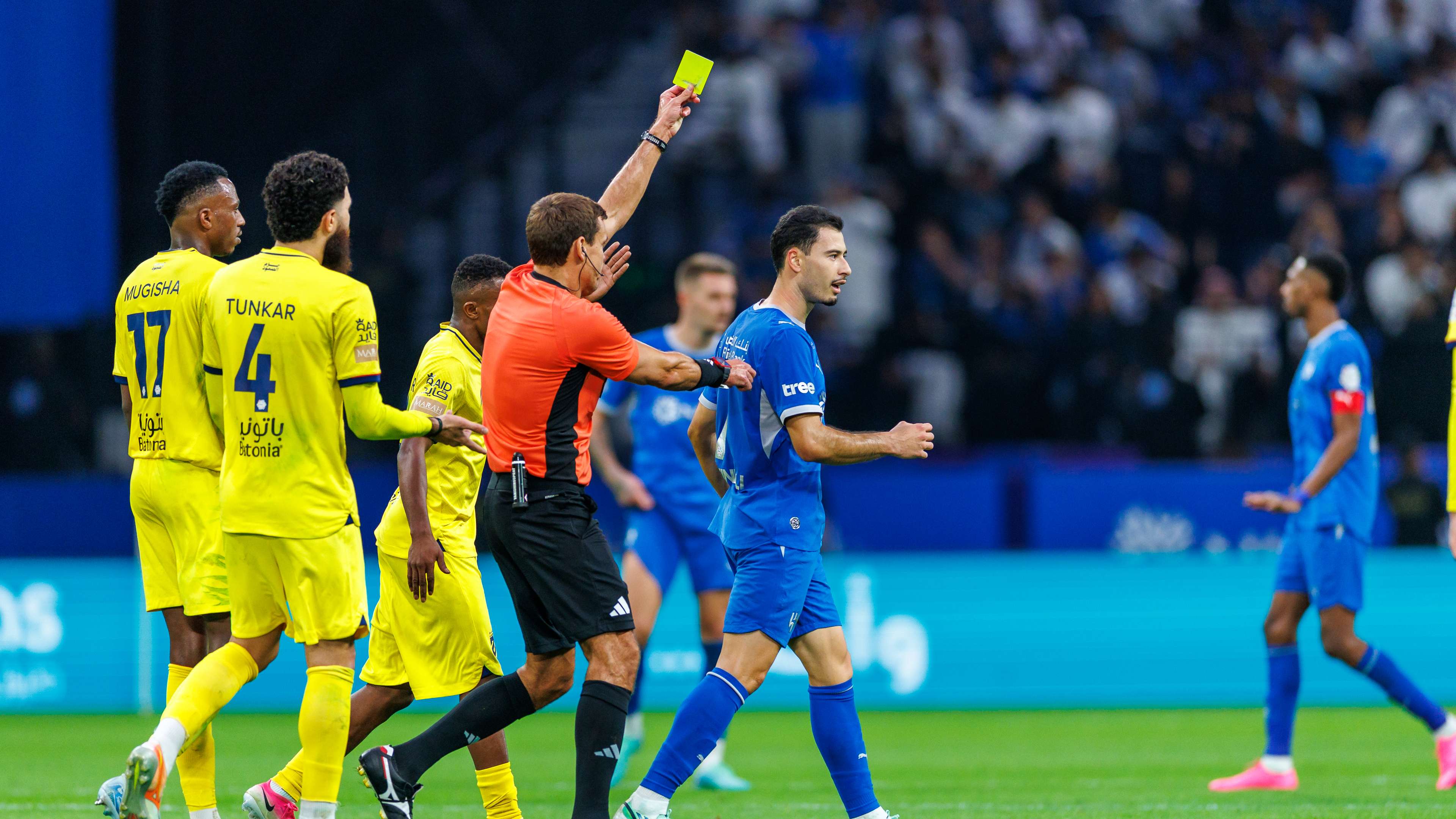

Al-Hilal Penalty Controversy: Was Al-Zaeem Denied a Spot-Kick Against Al-Hazm?
A disputed first-half challenge has placed the spotlight on refereeing in the Saudi Roshn Pro League after Al-Hilal defeated Al-Hazm 1-0 in the competition’s tenth round. Former international referee Saad Al-Kathiri believes Al-Hilal should have been awarded a penalty in the 17th minute, raising questions about both the on-field decision and the video assistant referee’s response.
Al-Hilal, widely known as “Al-Zaeem” and “The Boss,” eventually secured all three points through a late goal from Gabriel Martinelli. But while the result strengthened the club’s position in the race near the top of the table, the alleged missed penalty has become a major talking point among supporters and football observers.
Al-Kathiri Says Al-Hilal Deserved a Penalty
Al-Kathiri, a refereeing analyst for Al-Jazira newspaper, reviewed an incident involving English winger Crysencio Summerville inside Al-Hazm’s penalty area. In his assessment, an Al-Hazm defender impeded the Al-Hilal attacker, making the contact a foul that should have resulted in a spot-kick.
The referee allowed play to continue, and Al-Hilal were not given the chance to take a penalty during the incident. Al-Kathiri argued that this was the wrong call, saying the defender’s action prevented Summerville from continuing freely inside the box. Under the usual interpretation of the laws of the game, a foul committed by a defender inside their own penalty area can warrant a penalty if the contact is judged to have unfairly obstructed an opponent.
The timing also mattered. The incident came just 17 minutes into the match, when the score was still level and Al-Hilal were looking for an early breakthrough. A successful penalty could have changed the rhythm of the contest, forcing Al-Hazm to adjust their defensive approach and giving the home side a different route to control the game.
Why VAR Is Part of the Debate
Al-Kathiri’s criticism extended beyond the referee’s decision on the pitch. He also questioned why VAR did not intervene. In his view, the video assistant referee should have recommended that the referee review the footage at the pitchside monitor, giving the match official an opportunity to reassess the contact before deciding whether to award a penalty.
VAR is designed to help officials correct clear and obvious errors in key situations, including penalty decisions. However, it does not automatically replace the referee’s judgment every time players make contact in the box. The video team must determine whether the original call meets the threshold for review, while the referee remains responsible for the final decision after considering the available footage.
That distinction often fuels debate after close calls. Supporters may see a replay as clear evidence of a foul, while officials can interpret the same contact differently based on its intensity, timing and impact on the attacker. In this case, Al-Kathiri’s view that VAR should have prompted an on-field review has added a second layer to the controversy: whether the incident was missed once or whether the review process also failed to provide a proper check.
Late Winner Settles a Tense Contest
Despite the frustration surrounding the first-half incident, Al-Hilal continued to create opportunities and press for a goal. Al-Hazm’s resistance kept the contest scoreless deep into the second half, leaving the hosts at risk of dropping points in a match where they had been expected to challenge for victory.
The breakthrough finally arrived in the 89th minute, when Gabriel Martinelli scored the decisive goal. His late strike turned a difficult evening into a valuable win, sparing Al-Hilal from a frustrating draw and giving the team three important points in the Saudi Pro League standings.
The narrow scoreline also highlights how a single refereeing decision can shape the story of a match, even when it does not determine the final result. Had Al-Hilal received the penalty, the match might have opened up earlier. Instead, Al-Hazm remained in contention until the closing stages, and Al-Hilal had to keep pushing for a winner.
What the Result Means for Al-Hilal
The victory lifted Al-Hilal’s points total to 24, keeping the club firmly involved in the battle near the top of the Roshn League. At this stage of the season, every result can influence the standings, particularly for teams aiming to maintain pressure on their title rivals. Winning a tight game can be just as important as producing a dominant performance, especially when the schedule leaves little time to recover between fixtures.
For Al-Hilal, the result offers encouragement, but the performance and the penalty debate may still be reviewed by fans and analysts. The team showed persistence by continuing to attack after failing to score early, while Martinelli’s late contribution underlined the value of having players capable of deciding close matches.
Match Prediction and What to Watch Next
Looking ahead, Al-Hilal’s next fixtures will test whether the team can turn late resilience into more consistent control. A strong start in upcoming matches could reduce the pressure of relying on last-minute goals, while improved finishing may help convert chances into a more comfortable margin. The club’s ability to manage demanding fixtures, maintain attacking momentum and avoid unnecessary defensive risks will be important in its pursuit of the league’s leading positions.
Any football prediction for Al-Hilal’s next outings should account for the team’s attacking quality, current points total and capacity to find decisive moments. Still, predictions remain uncertain: opponents may adapt their tactics, and the outcome of a match can hinge on details such as finishing, injuries or refereeing decisions. The Al-Hazm game serves as a reminder that even a side with strong title ambitions can be pushed into a tense finish when chances go unconverted.
For now, Al-Hilal can celebrate a crucial 1-0 win, while the debate over Summerville’s challenge is likely to continue. Al-Kathiri’s assessment has renewed discussion about consistency in penalty decisions and the role of VAR in Saudi football. Whether supporters believe Al-Zaeem was unfairly treated, the incident has become one of the defining talking points from a match ultimately decided by Martinelli’s dramatic 89th-minute goal.