
Zinedine Zidane’s Tactical Innovation: Exploring New Styles of Play and Set Piece Strategies for France
As France’s national football team gears up for crucial fixtures in the UEFA Nations League, head coach Zinedine Zidane is making strategic adjustments to elevate the team’s performance. Known for his legendary career as a player and a successful managerial stint at Real Madrid, Zidane is now focusing on refining France’s tactical approach, particularly in set pieces—a fundamental yet often underestimated aspect of modern football. This development has sparked considerable interest among fans, analysts, and betting enthusiasts eager to see how these new strategies might influence upcoming predictions and match outcomes.
Shifting Focus: Zidane’s Emphasis on Set Pieces and Game Intelligence
Since taking the helm of the French national team after Didier Deschamps’ tenure post-2026 World Cup, Zidane has been determined to introduce innovative styles of play. One area that has captured his attention is set pieces—corner kicks, free kicks, and throw-ins—which have historically played a pivotal role in determining match results at the highest levels of football.
According to reports from the reputable French sports newspaper L’Équipe, Zidane is actively working to refine France’s set piece execution, recognizing it as a game-changer in tight encounters. While at Real Madrid, Zidane transformed set pieces into a formidable weapon, leveraging the technical prowess of players like Toni Kroos, Luka Modric, Sergio Ramos, and Cristiano Ronaldo. These players’ precision and creativity in dead-ball situations often tipped the scales in Madrid’s favor, particularly in Champions League campaigns. Now, he aims to replicate and adapt that success for France, although with a different pool of players and tactical nuances.
Delegating Responsibilities: The Role of Assistant Coach David Bettoni
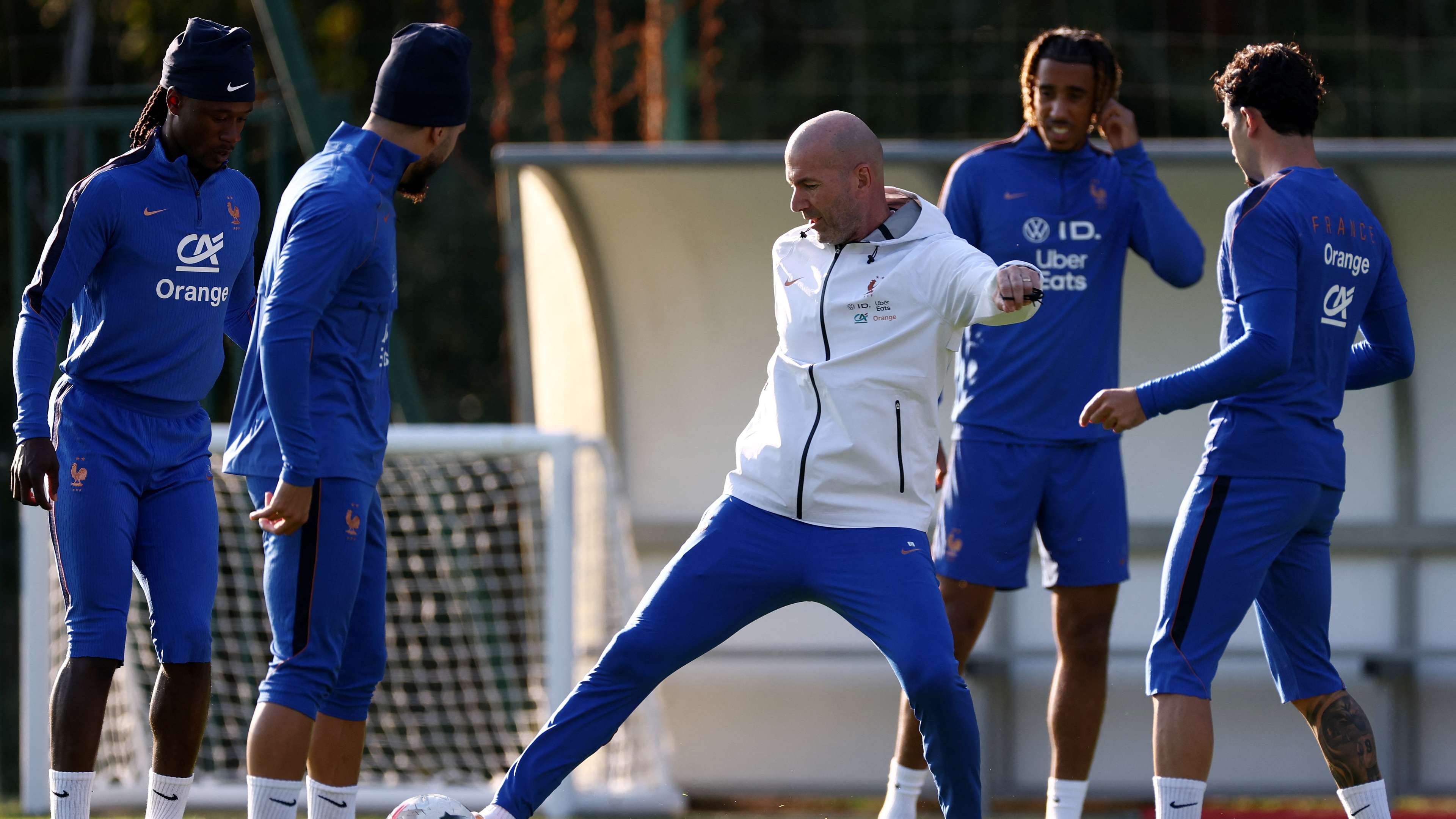
Implementing a new tactical focus is no small feat, especially within the tight schedules of international football. Zidane has entrusted much of the work related to set pieces to his trusted assistant, David Bettoni, who has a keen eye for detail in these phases of play. This delegation allows Zidane to concentrate on overall team strategy and attack patterns while Bettoni fine-tunes the execution of set-piece routines.
In an interview with Foot Mercato, Zidane emphasized the importance of teamwork in this process. He stated, “We work on it as one team, but my assistant David Bettoni is primarily responsible because he pays particular attention to these phases of play. We haven’t had much time to work on set pieces so far, but it is a hugely important aspect for me, of course.”
This candid acknowledgment highlights the challenges faced by international teams in implementing new tactics, given the limited training windows and fixture congestion. Yet, Zidane’s focus on these details underlines his understanding that small tactical improvements can translate into significant advantages on the pitch.
Learning from the Past: Applying Madrid’s Set Piece Philosophy to France
At Real Madrid, Zidane’s mastery in set-piece design was evident. His team exploited the aerial prowess of Ramos, the finesse of Kroos, and the vision of Modric to create scoring chances from dead-ball situations. These routines often caught opponents off guard, especially in high-stakes European matches where precision can determine progression.
For France, the challenge lies in adapting this approach to a different roster—comprising a mix of young talents and established stars like Kylian Mbappé, Antoine Griezmann, and Olivier Giroud. Zidane’s strategy involves leveraging their technical ability and tactical intelligence, particularly in set-piece scenarios, to unlock defences that are often well-organized and disciplined.
Recent Tactical Experiments: France’s Approach Against Italy and Future Plans
In recent international fixtures, Zidane has experimented with deploying attackers outside the box during corners—a tactic designed to stretch the opposition’s defensive shape and create more goal-scoring opportunities. Against Italy, France showcased their willingness to utilize the technical quality of their attackers, positioning several players outside the penalty area during set pieces to increase unpredictability.
This innovative approach not only reflects Zidane’s desire to diversify France’s offensive options but also aligns with modern football trends that emphasize tactical flexibility. The upcoming match against Belgium in the UEFA Nations League presents an ideal opportunity for France to further develop these strategies, with predictions favoring a more dynamic and unpredictable set-piece routine that could give them an edge over their rivals.
Match Preview: France vs. Belgium – A Critical Test in the UEFA Nations League
The encounter at Stade de France promises to be a fascinating tactical battle. France currently tops Group A in the UEFA Nations League with 7 points, closely followed by Belgium on 6 points. Both teams boast a wealth of talent, and their clash is expected to be a high-stakes contest where tactical nuances, such as set-piece execution, could prove decisive.
Football prediction models are increasingly factoring in these tactical improvements, with analysts suggesting that France’s enhanced focus on set pieces and attacking versatility might tip the balance in their favor. Fans and bettors alike are eager to see whether Zidane’s new strategies translate into tangible results, potentially influencing future predictions and betting odds for upcoming international fixtures.
The Broader Impact: How Tactical Innovations Shape Football Predictions
As football continues to evolve, so do the expectations around tactical innovation and prediction accuracy. Coaches like Zidane, who prioritize detailed set-piece planning and adaptable game plans, are reshaping how teams approach international competitions. These strategic shifts are especially relevant for prediction enthusiasts, who analyze team formations, training routines, and recent tactical experiments to forecast match outcomes.
Moreover, the emphasis on set pieces underscores a broader trend in football—where meticulous preparation in dead-ball situations can be the difference between victory and defeat. As teams like France implement these advanced tactics, prediction models will increasingly incorporate variables such as set-piece routines, player positioning outside the box, and routine execution success rates.
Conclusion: A New Era for France’s Football Strategy
Under Zidane’s leadership, France’s national football team is entering a new phase characterized by tactical experimentation and strategic refinement. The focus on set pieces, a crucial yet often overlooked aspect of football prediction and analysis, highlights Zidane’s comprehensive approach to elevating the team’s competitive edge.
With upcoming fixtures against formidable opponents like Belgium, the success of these innovations could significantly influence France’s trajectory in international football. Fans, analysts, and betting enthusiasts will be watching closely to see if Zidane’s new styles of play and set-piece strategies can translate into consistent success, ultimately shaping predictions and expectations for France’s future in global football.