
Real Madrid TV Escalates Row With Sevilla Over Refereeing After 4-1 Win
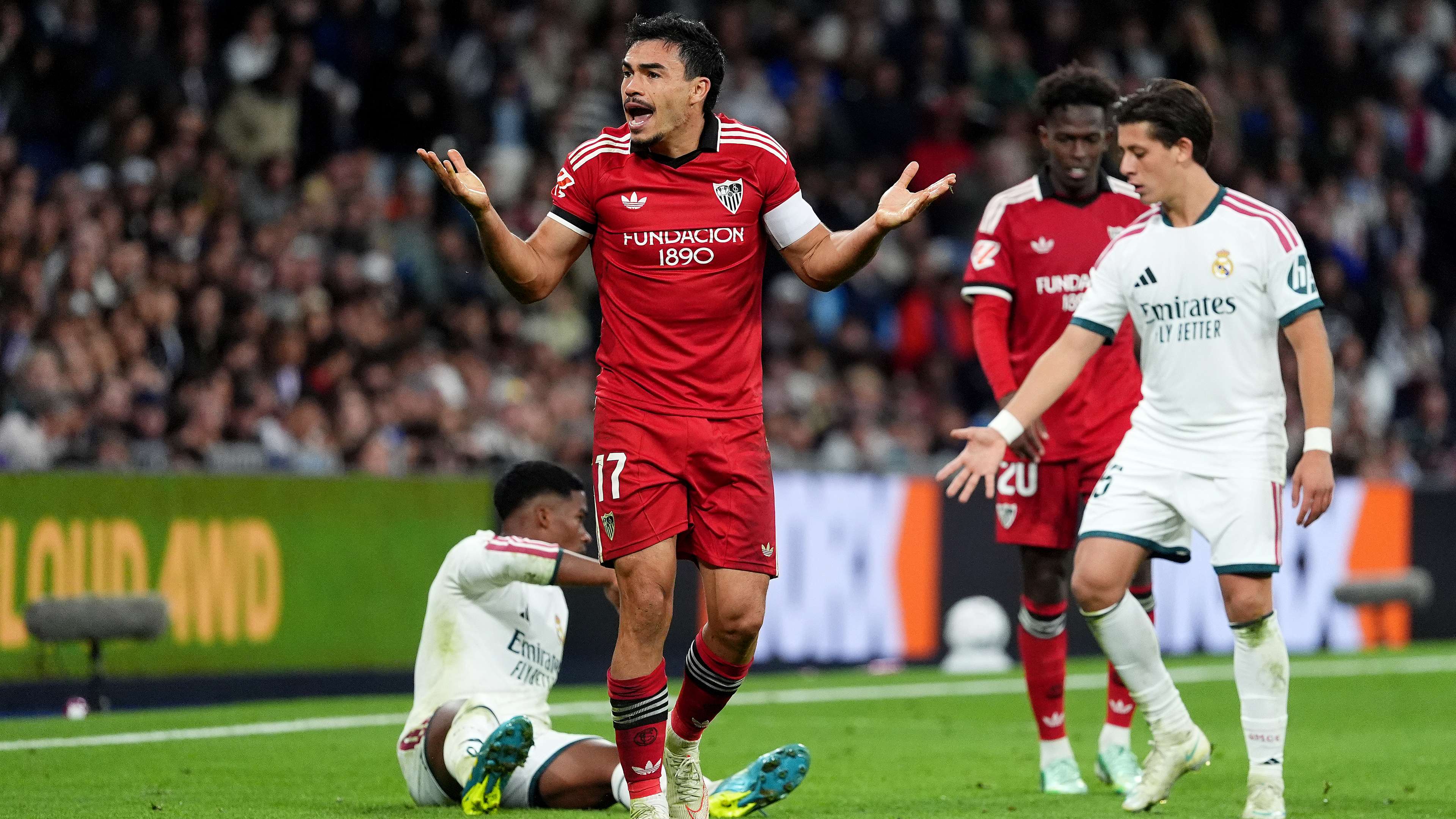
Real Madrid TV has intensified its criticism of Sevilla following Real Madrid’s emphatic 4-1 victory, accusing the Andalusian club of applying inconsistent standards when discussing refereeing decisions. The broadcaster argued that Sevilla’s complaints about the match’s officiating risk distracting from the result and Madrid’s performance.
The dispute has added another layer of controversy to a fixture that might otherwise have been remembered chiefly for Real Madrid’s four goals. Instead, attention has shifted to competing interpretations of key incidents, the role of club media in football debates, and the increasingly tense relationship between Real Madrid and Spain’s league leadership.
Real Madrid TV Challenges Sevilla’s Refereeing Complaints
After Sevilla raised concerns about decisions made during the match, Real Madrid TV responded by questioning why the club had not protested similar incidents in other games. Its pundits pointed to footage of an alleged elbow by Barcelona player Rodri in a previous fixture, claiming that the incident went unpunished and did not prompt the same level of public criticism from Sevilla.
“Sevilla didn’t complain about Rodri’s elbow,” the channel’s commentators argued, asking why the Andalusian side spoke out when decisions went against it against Real Madrid but remained quiet when Barcelona was involved. Their central claim was that clubs and commentators should apply the same standards to contentious calls, regardless of which teams benefit.
That argument reflects a familiar feature of modern football: disagreements over refereeing rarely remain confined to one match. Clubs, broadcasters and supporters often compare decisions across the season, looking for patterns that they believe reveal inconsistency. However, comparisons can be difficult to assess fairly, since incidents may differ in their context, severity and the referee’s view at the time.
Debate Over the Penalty and Arda Güler Incident
One of the main flashpoints in the discussion was the penalty awarded to Real Madrid. The channel suggested that critics had focused heavily on the decision while overlooking the broader flow of the game. Its pundits also maintained that a foul had occurred on Arda Güler before the penalty incident, presenting that interpretation as important context for judging the sequence.
Refereeing decisions can be especially contentious when several actions unfold close together. Supporters may focus on the final contact, while others argue that an earlier foul or challenge should shape the assessment. Without a shared interpretation of the full sequence, the same footage can fuel sharply different conclusions.
Real Madrid TV’s position was that the penalty debate should not eclipse the team’s overall display. The channel highlighted the four goals scored by Madrid and argued that the post-match conversation had been redirected away from the football itself. Sevilla’s complaints, by contrast, put the spotlight on whether pivotal decisions had influenced the contest.
Tebas and Broadcast Coverage Become Part of the Dispute
Sevilla was not the only target of the broadcaster’s criticism. Real Madrid TV also accused La Liga president Javier Tebas of interfering with the presentation of the match, alleging that viewers were not shown a protest banner directed at him inside the Santiago Bernabéu.
The channel’s pundits claimed that the omission raised questions about who controls the images shown during a broadcast and whether commentators are free to discuss sensitive subjects. They went further by suggesting that the league leadership influences what viewers see and hear. These were allegations made by the broadcaster; the account provided no independent evidence establishing that Tebas personally ordered footage to be withheld or dictated commentary.
The claims underline how football broadcasts have become another arena in which clubs and governing bodies contest influence. Television coverage does more than show the action: camera choices, replays and commentary can shape the way a match is remembered. When a protest is not shown, or a controversial incident receives limited attention, audiences may question whether the coverage was complete—even when there may be practical or editorial reasons for what appears on screen.
Wider Tensions Involving Barcelona and the Negreira Case
Real Madrid TV broadened its criticism beyond the Sevilla match, linking the club’s complaints to other disputes involving Barcelona, Tebas and the Negreira case. The channel referred to controversy surrounding the Real Betis-Barcelona match and portrayed the wider debate as part of what it sees as an effort to harm Real Madrid.
The Negreira case has remained a major subject in Spanish football, drawing scrutiny because of payments made by Barcelona to companies linked to José María Enríquez Negreira, a former senior refereeing official. The matter has prompted extensive debate and legal investigation, but references to it do not, by themselves, establish wrongdoing. Its repeated appearance in football commentary shows how unresolved institutional questions can influence discussion well beyond the events of a single game.
By bringing those issues into its response to Sevilla, Real Madrid TV presented the match as part of a larger conflict over refereeing, media coverage and the governance of Spanish football. That approach may resonate with Madrid supporters who believe the club faces unfair treatment, while critics may see it as an attempt to turn a specific refereeing debate into a broader political argument.
What the Row Means for the La Liga Conversation
The 4-1 result gives Real Madrid a clear sporting headline, but the surrounding dispute shows how quickly a football match can become a platform for institutional criticism. Sevilla has challenged decisions from the game, while Real Madrid TV has questioned the club’s consistency and accused the league’s leadership of restricting coverage. The competing claims have ensured that the post-match conversation extends well beyond the scoreline.
For supporters seeking a prediction about what happens next, a prolonged public exchange appears more likely than an immediate resolution. Refereeing controversies are often revisited through club statements, broadcast analysis and social media, particularly when major teams and league officials are involved. Any further response from Sevilla or La Liga could keep the story active, although the available information does not confirm what either party will do.
Ultimately, the match offers two contrasting narratives: Real Madrid’s convincing performance and the argument over how key decisions should be judged. Separating evidence from accusation will be essential as the debate continues. For now, the result is clear, but the broader questions—about consistency, transparency and the influence of football media—remain firmly in play.