
Vinícius Júnior’s Villarreal Red Card Reignites Real Madrid’s Refereeing Debate
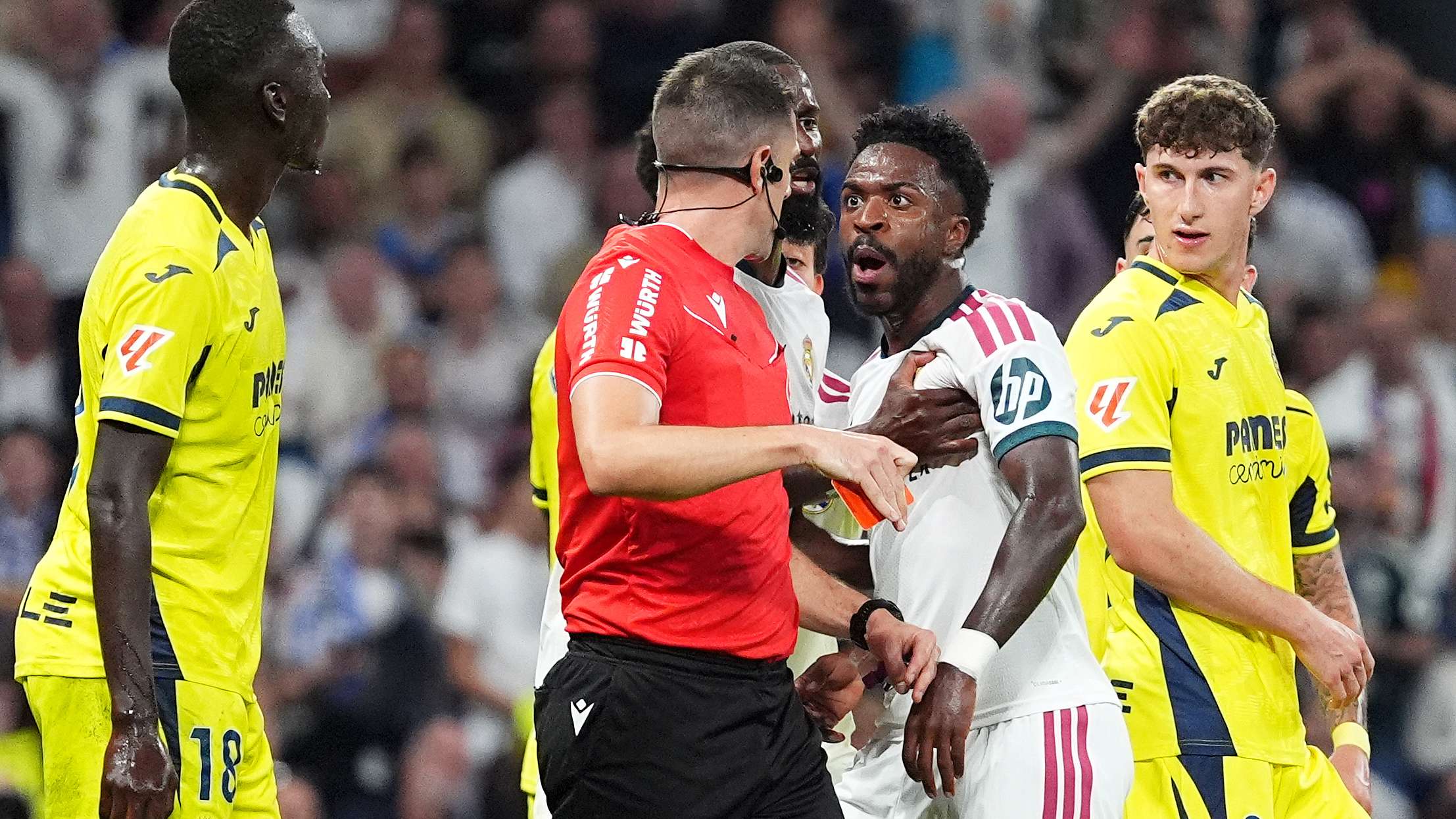
Vinícius Júnior’s dismissal against Villarreal has stirred fresh controversy at Real Madrid, with people close to the Brazilian forward questioning whether similar incidents are judged consistently in Spanish football. The red card followed an altercation involving Nathan Saliba, during which Vinícius was accused of pulling the Villarreal player’s hair. His goal was disallowed, and the referee sent him off.
The decision has prompted debate well beyond the match itself. While some observers accept that the laws of the game may support the referee’s call, those in Vinícius’s circle have pointed to a previous incident involving Valencia as a reason to scrutinize how comparable situations are handled. The dispute has also raised concern about the possible consequences for Real Madrid, particularly if the suspension rules him out of a high-profile Clásico against Barcelona.
What Happened in the Villarreal Match?
The flashpoint came when Vinícius became involved in a confrontation with Saliba. The Brazilian appeared to pull the Villarreal player’s hair, an action the referee treated as serious misconduct. The official disallowed Vinícius’s goal and showed him a red card, turning a key moment in the match into one of the weekend’s most discussed football stories.
Incidents involving hair-pulling can be difficult to assess in real time. Referees must judge what happened, how forceful the action was and whether it meets the threshold for a sending-off. Video review can offer additional angles, but it does not always end disagreement: fans and analysts may still differ over intent, context and whether the punishment fits the offence.
For Real Madrid, the decision was significant not only because it removed one of the team’s most influential attackers from the game, but also because it could carry into future fixtures. A suspension would leave the club weighing its options in attack and potentially adjusting its plans for a demanding stretch of the season.
Why the Valencia Comparison Matters
According to French outlet Foot Mercato, citing Spanish newspaper Marca, family members and friends of Vinícius have expressed frustration about the dismissal. One person close to the player reportedly acknowledged that the rules could justify the referee’s decision, while questioning whether they are applied consistently.
“The rule is fair, but have they forgotten what happened against Valencia?” the source reportedly said. The comment refers to a previous episode that, in the view of Vinícius’s circle, invites comparison with the Villarreal incident. Their point is not simply that the latest decision was wrong; rather, they are asking whether similar conduct has been treated in the same way in other matches.
That distinction is central to the debate. A referee may be entitled to punish an action under the rules, yet controversy can persist if players, clubs or supporters believe another team received different treatment in a comparable situation. Consistency is especially important in a competition followed closely by international audiences, where individual decisions can influence results, suspensions and the wider title race.
Real Madrid’s Frustration and the Wider La Liga Debate
The reaction reflects a broader frustration at Real Madrid over refereeing standards in La Liga. Disputed calls are a regular feature of football, but repeated arguments over interpretation can erode confidence among clubs and supporters. Real Madrid’s concerns are likely to be amplified by the profile of Vinícius, whose performances and on-field confrontations frequently attract intense media attention.
There are several questions at the heart of the discussion: Was the contact clear enough to warrant a red card? Did the referee have a consistent basis for disallowing the goal and dismissing the player? And how does the decision compare with similar incidents from earlier matches, including the one involving Valencia? Those questions require careful review of the footage and the relevant rules, rather than relying solely on the immediate reactions of either club’s supporters.
At the same time, the episode highlights the pressure placed on match officials. Decisions must often be made within seconds, in a charged atmosphere and with players competing for position. Video technology can assist, but the final interpretation still depends on the laws and the referee’s assessment of the incident. Clearer explanations after controversial decisions could help audiences understand why one action results in a red card while another does not.
Could Vinícius Miss the Clásico?
The potential suspension is now a major concern for Real Madrid. If the ban extends to the next relevant fixture, Vinícius could miss the eagerly anticipated Clásico against Barcelona. His availability would matter to both sides: he is one of Madrid’s most dangerous attacking players, capable of stretching a defence with pace, creating chances in one-on-one situations and changing a match with a single run.
Any prediction about the Clásico must therefore account for the disciplinary process as well as team form, injuries and tactical choices. If Vinícius is unavailable, Madrid may need to redistribute attacking responsibilities, alter its approach on the left flank or rely more heavily on other forwards. Barcelona, meanwhile, would still need to prepare for Madrid’s broader attacking threat rather than assume that one absence settles the contest.
The timing of the decision also matters. Clubs typically need clarity over suspensions well before major fixtures so coaches can plan training and match strategy. Until the disciplinary outcome is confirmed, speculation about Vinícius’s availability will remain part of the build-up—and a central talking point in Spanish football coverage.
A Controversy That May Continue Beyond One Match
Vinícius’s sending-off has become more than a discussion about one moment against Villarreal. It has reopened questions about consistency, the role of video review and the standards used to judge on-field conduct. Real Madrid’s camp may accept that the rules permit punishment while still demanding that those rules be applied evenly across the league.
For supporters searching for the latest football prediction and team news, the practical issue is whether Vinícius will be available for Madrid’s upcoming fixtures, especially the Clásico. The broader issue is whether Spanish football can provide clear, consistent explanations when major decisions shape matches. Until both questions are answered, the Villarreal incident—and the comparison with Valencia—is likely to remain a source of debate among Real Madrid fans, rivals and neutral observers alike.