
Rayo Vallecano–Athletic Bilbao Match Abandoned After Fan Protest
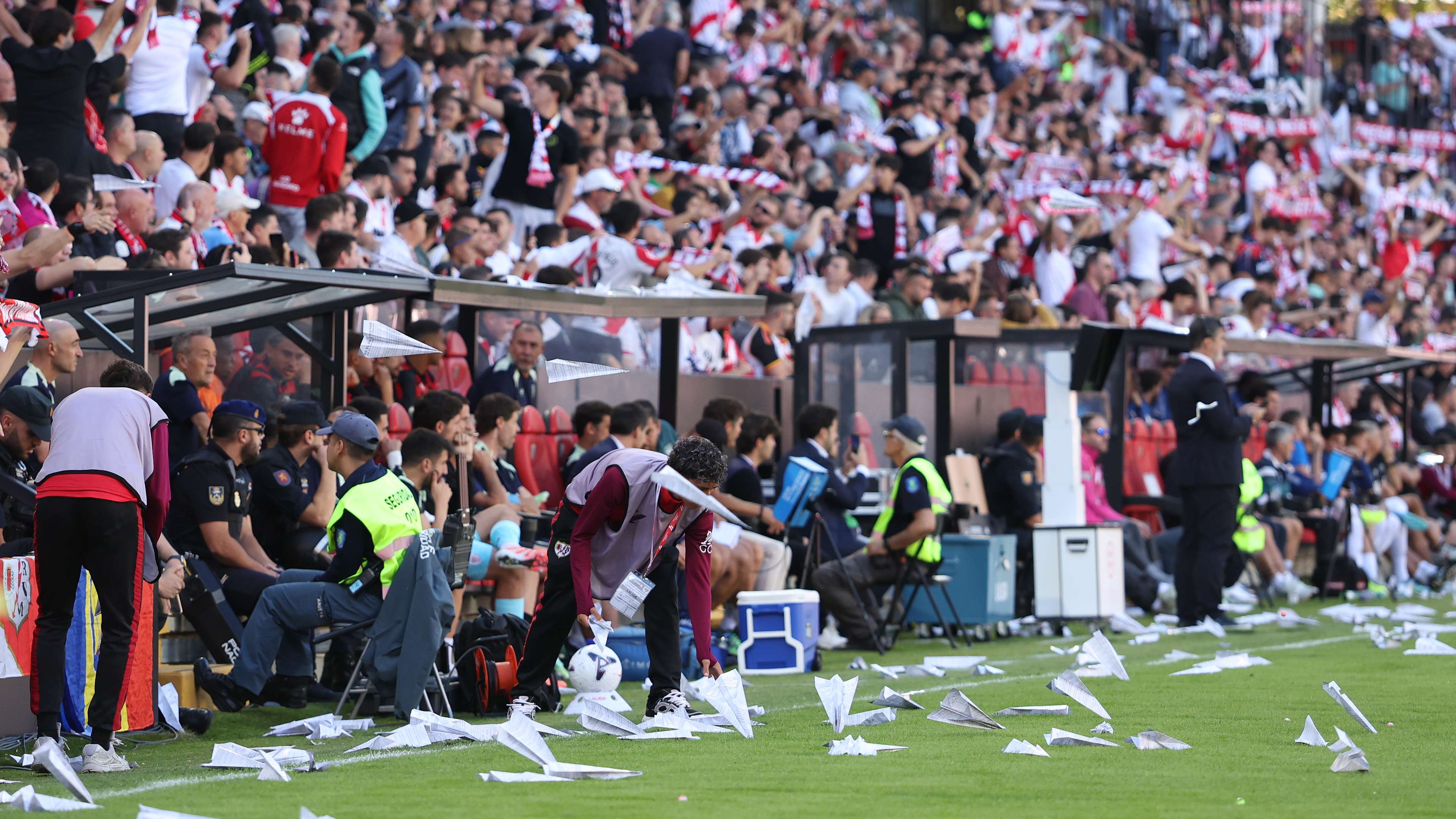
A LaLiga fixture between Rayo Vallecano and Athletic Bilbao was abandoned after supporters at Madrid’s Campo de Fútbol de Vallecas threw paper planes, paper balls and bouncing balls onto the pitch in protest against the club’s leadership. The match was goalless when referee José María Sánchez stopped play for a second time and, after speaking with the captains and officials, decided it could not continue.
The disruption began after 13 minutes, when objects started falling from the stands onto the playing surface. The demonstration was directed at Rayo president Raúl Martín Presa, with supporters displaying signs that read, “Presa, leave now!” The incident interrupted a football match that had barely begun and brought long-running tensions between the club’s leadership and its organised fan groups into sharp focus.
How the Vallecas Match Was Stopped
Sánchez initially paused the game to allow stewards to clear the pitch. During the stoppage, players from both Rayo Vallecano and Athletic Bilbao moved to an interior area of the stadium. Former Borussia Dortmund coach Edin Terzić, who was also present, remained inside with the teams while staff worked to remove the objects.
Play resumed after several minutes, but the interruption proved temporary. With the score still 0-0, a fresh wave of projectiles reached the pitch. The referee stopped the match again, consulted the team captains and match officials, and then abandoned the fixture.
The decision reflected the difficulty of restarting a game when objects continued to be thrown from the stands. While the initial protest involved lightweight items rather than an attack on players, the repeated disruption raised practical questions about safety, crowd control and whether the match could be completed under the circumstances.
Why Rayo Vallecano Fans Are Protesting
In a statement published on X after the abandonment, Rayo’s organised fan scene described the protest as the result of years of frustration. The supporters’ complaints reportedly concern the condition of the club’s facilities, the leadership under Presa and a dispute over the concession for the stadium.
The statement characterised the situation as “untenable” and warned that further action could follow. Its message—“The Rayo fans will not allow this”—suggested that supporters see the abandoned match not as an isolated incident, but as part of a broader campaign for changes at the club.
At the centre of the dispute is the club’s home ground, the Campo de Fútbol de Vallecas. In July, the regional Ministry of Culture, Tourism and Sport ruled that Rayo had to play its first three home matches of the new LaLiga season at another stadium because of serious safety deficiencies at Vallecas. The team was required to use Butarque, a stadium in Leganés, while work and safety concerns were addressed.
Playing home fixtures away from Vallecas has added another layer to the tension. For many supporters, a home stadium is more than a venue: it is part of the club’s identity and a gathering place for the local community. Concerns about its condition, combined with disagreements over who controls or manages the ground, have helped fuel the anger directed at the leadership.
Football Consequences and Possible Next Steps
The immediate question is how LaLiga and the relevant authorities will handle the abandoned game. The competition’s organisers and disciplinary bodies typically review the referee’s report, the circumstances of the stoppage and any available evidence before deciding whether a match should be replayed, completed later or resolved through another ruling. The final outcome could affect the fixture calendar and both clubs’ preparations.
Any decision will need to balance sporting fairness with the safety of players, staff and spectators. A replay would require a suitable date and venue, while a continuation would mean returning to a match that ended before the first half had developed. Until the authorities clarify the process, supporters and teams are left waiting for a formal decision.
The incident also puts renewed attention on stadium readiness and communication between clubs, local authorities and fans. When safety problems force a team away from its ground, clear information about the reasons, the work being carried out and the timeline for a return can be important in maintaining trust. The protest in Vallecas showed how quickly unresolved concerns can spill over into a high-profile football event.
Mixed Starts for Both LaLiga Teams
Before the abandonment, the match offered a meeting between two sides looking to build consistency. Rayo had recorded two wins, two draws and three defeats in their opening seven league games, leaving them 13th in the table. Their start had been uneven, making home fixtures particularly important as they sought to establish momentum.
Athletic Bilbao, meanwhile, entered the game in 10th place. The Basque side had lost its first two matches of the season but had since gone four games without defeat, earning two wins and two draws. That run had given the team a chance to stabilise its campaign under Terzić, although the abandoned fixture prevented it from extending that progress on the pitch.
Prediction: What the Abandonment Means for the Clubs
Any prediction about the eventual result is premature until LaLiga confirms how the fixture will be handled. On form alone, Athletic’s unbeaten run offered signs of improvement, while Rayo’s mixed results pointed to a need for greater consistency. But the stadium protest, rather than tactics or individual performances, became the defining story of the night.
For Rayo, the next challenge is likely to extend beyond football. Resolving concerns about Vallecas, addressing supporters’ grievances and restoring confidence in the club’s leadership may be essential to preventing further disruption. For Athletic, attention will turn to the revised fixture arrangements and maintaining its recent momentum.
The abandoned match has therefore become a test for more than the two teams. It has highlighted the connection between stadium safety, club governance and supporter trust—and left the league to determine how a LaLiga contest interrupted by protest should be concluded.