
Suryakumar Yadav Opens Up About a Difficult Period and His Drive to Rebuild
India batter Suryakumar Yadav has spoken candidly about the challenges he has faced since captaining the national side to the T20 World Cup title in March. While the triumph marked a major achievement in his career, he says the months that followed were difficult—and that his current focus is on reconnecting with the enthusiasm and purpose that first drew him to cricket.
“Post the T20 World Cup win, it has been a little difficult. I don’t want to run away from that fact,” Suryakumar said. “If you are not honest with yourself, it is very difficult to lead a happy life. So, to be very honest, it has been very difficult.”
His comments offer a personal perspective on the pressures that can follow a significant sporting success. A title-winning campaign can bring celebration and recognition, but it also raises expectations. For an international cricketer, the challenge is to keep performing while adapting to changes in form, selection and responsibilities.
From international setback to a fresh perspective
After leading India in its T20 World Cup defence, Suryakumar was left out of the national team following an underwhelming Indian Premier League season. The change in circumstances came after a period in which he had been one of the most prominent figures in the country’s T20 setup.
Rather than dismissing the difficult stretch, the batter says he has tried to understand it and regain his footing. He also described the arrival of his daughter in May as a major change in his life. The early months of parenthood, he said, brought happiness and shifted his attention away from cricket.
“During the IPL, I was blessed with a baby girl in May. So, the focus shifted completely towards her. The last few months, since she was born, have been very beautiful,” he said. “But the first two months after the IPL were difficult.”
That combination of family joy and professional uncertainty prompted him to look back at the beginnings of his journey. Instead of concentrating only on selection or recent results, he returned to a simpler ambition: playing for Mumbai and earning opportunities through age-group and first-class cricket.
Rediscovering the love of cricket
Suryakumar said he spoke openly with his wife, Devisha, about how he was feeling. Her advice, he recalled, was to recover the love and passion he had as a teenager hoping to represent Mumbai at Under-15 level.
“I sat down and started discussing all these things with my wife. She said the same thing: I think you need to bring back the love and passion for the game that you had when you were a 15-year-old kid who wanted to represent Mumbai in the Under-15 age group,” he said.
That reflection has become the basis of his approach to training and competition. He says he is trying to work with the same commitment he had 10 to 15 years ago, when the immediate goal was simply to improve and earn a place in the Mumbai setup.
“I am following the same approach now that I did 10-15 years ago — training again and pursuing the same passion and love for the game. Everything is back to normal now,” he said. “When you start thinking that way and focus on playing the sport, you want to do well for your team and your family. Things change completely.”
For supporters following his next chapter, the key question is how that renewed mindset will translate into performances. Any cricket prediction about a player’s return to form should be treated cautiously: selection depends on team requirements, competition for places and consistent results. Still, Suryakumar’s emphasis on training, perspective and team contribution provides a clearer picture of the work he believes will matter most.
Mumbai remains central to his ambitions
Despite his international achievements, Suryakumar stressed that his goals remain closely connected to Mumbai cricket. His priority, he said, is to help the state side win matches and compete for championships.
“The main goal is what I used to think about earlier: win games for Mumbai and win the championship for Mumbai,” he said.
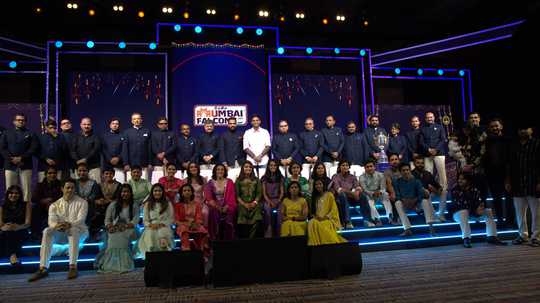
He was speaking at a Mumbai Cricket Association function honouring the winners of the T20 Mumbai League 2026 and celebrating the competition’s development. The league is set to expand in the men’s category, with another team taking the total to nine from next year. The growth reflects the continuing effort to create more opportunities for local players to compete and gain experience.
The event also gave Suryakumar a chance to speak directly to young cricketers. He urged them not to treat the Indian Premier League as the first or only destination in their careers. Instead, he encouraged them to value the pathway through Mumbai’s age-group teams and first-class cricket.
“The end goal, or even the first goal, should never be to play in the IPL. Everyone dreams of playing for India,” he said. “If you ask any kid playing in the maidans of Bombay cricket right now, they will not say, ‘I want to play in the IPL.’ They will first say, ‘I want to play for Mumbai. I want to represent Mumbai at the age-group level. I want to represent Mumbai in first-class cricket. I want to earn that cap, which is really special.’”
Experience, learning and the road ahead
Suryakumar also spoke about the value of being part of the Mumbai dressing room, where he has spent much of his career. Although he did not get an opportunity during the latest Ranji Trophy season, he said he remains keen to contribute and learn from teammates.
He pointed to the upcoming Syed Mushtaq Ali Trophy as an opportunity for growth, both for himself and for the wider squad. The domestic T20 competition could give Mumbai players a platform to test their skills under pressure, while also helping established performers build rhythm and confidence.
“I am still learning a lot of things from all the players,” he said, adding that he would be happy to spend time with the squad and represent the association. “I have always been around; I have been here for the last 16 years, and that hunger, energy and passion are still there. I would be very happy to carry on, lead this side and win the tournament.”
For Suryakumar, the next phase is not simply about returning to the India team. His remarks suggest that he is measuring progress through a broader set of goals: enjoying the game again, contributing to Mumbai and approaching each training session with the mindset that shaped his early career. Whether that reset leads to a national comeback will depend on what follows on the field, but his message is clear: the motivation to compete—and to win for Mumbai—remains strong.