
PSG Shock Manchester City with Three Goals in a Stunning Etihad Start
Paris Saint-Germain delivered a ruthless opening spell against Manchester City, racing into a three-goal lead inside the first 32 minutes of their Champions League meeting at the Etihad Stadium. The visitors struck quickly, punished gaps in City’s defence and gave the hosts little time to settle into the contest.
The match, played on Wednesday evening in the second round of the Champions League’s opening phase, began with both teams carrying confidence from recent domestic victories. But PSG’s sharp counterattacks and precise finishing rapidly changed the mood in Manchester, leaving City with a steep challenge and supporters searching for a response.
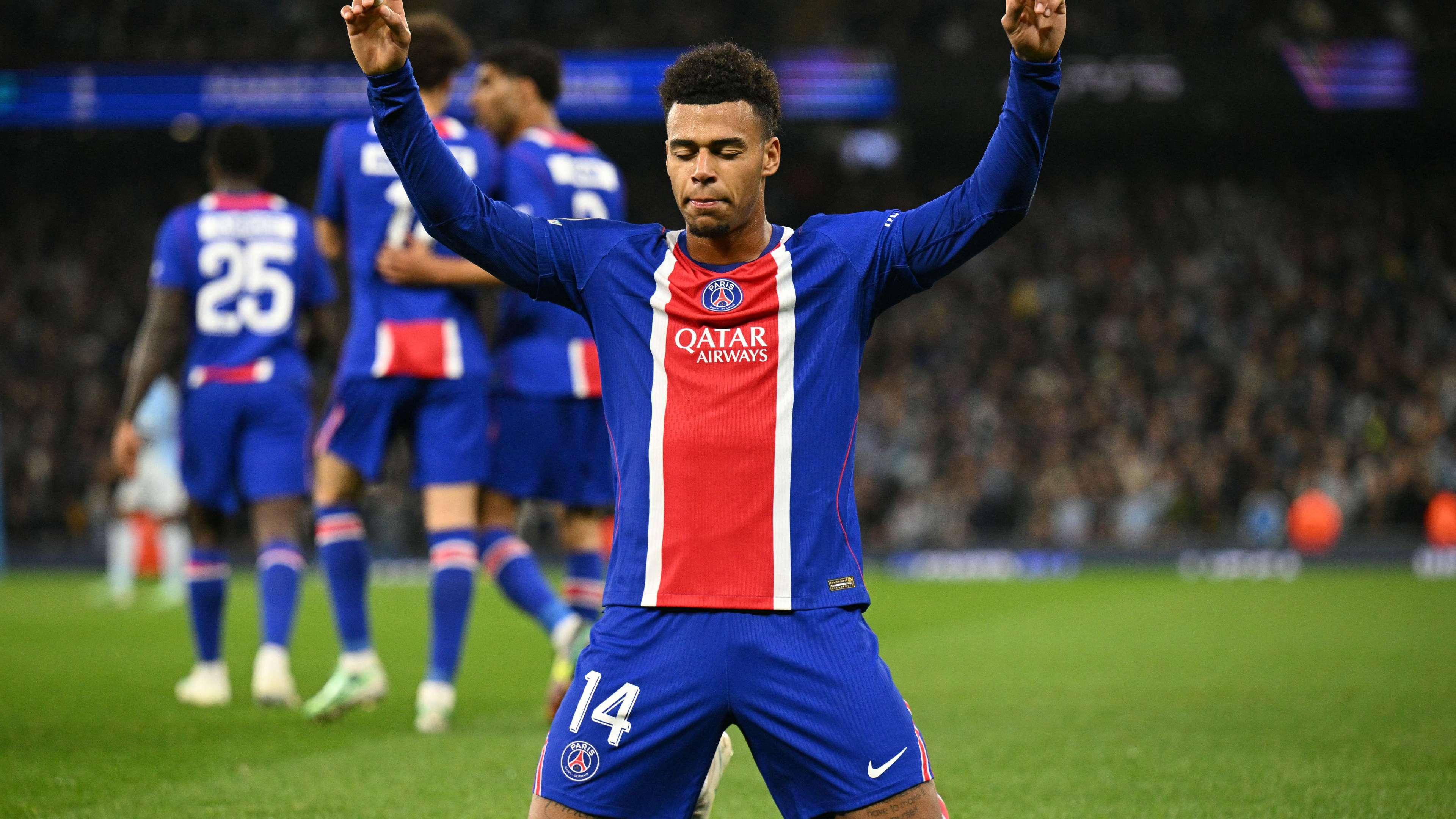
Desire Doue Opens the Scoring on the Counterattack
PSG’s breakthrough arrived in the 13th minute, when City were caught with too many players committed forward. The visitors moved the ball into space during a swift counterattack, and France international Desire Doue found himself in a promising position.
Doue kept his finish low and drove the ball toward the right side of the goal, beating Italian goalkeeper Gianluigi Donnarumma. The shot appeared to offer the City keeper a chance to make the save, but its placement and pace were enough to put PSG ahead.
The goal highlighted a familiar risk for teams that build attacks with a high defensive line: losing possession can leave large spaces for opponents to exploit. PSG were ready to take advantage, and their speed in transition made City’s forward movement look vulnerable. For anyone following the match or considering a football prediction, the early strike was a strong indication that PSG had arrived with a clear plan to attack quickly whenever the opportunity appeared.
Dembele and Doue Double the Advantage
Manchester City had barely begun to recover from the opening goal when PSG struck again. Just two minutes later, Ousmane Dembele delivered the ball from the right toward Doue, who had moved into space on the opposite side of the attack.
Doue returned the pass to Dembele, who continued his run into the area and headed past Donnarumma. The quick exchange caught City’s defence off balance and made the visitors’ second goal a product of both pace and coordination. PSG had turned a promising attack into a decisive finish before the home side could reorganise.
The two goals also underlined the importance of movement without the ball. Doue did more than finish the first chance: he helped create the second by combining with Dembele and drawing defenders away from the French winger’s path. Dembele, meanwhile, showed how dangerous he can be when he attacks the penalty area rather than remaining wide.
At 2-0, PSG had already placed significant pressure on City. The hosts needed to regain control of possession, improve their defensive spacing and find a way to slow the visitors’ forward runs. Yet the next major moment belonged to PSG again.
Vitinha Makes It Three Before Half-Time
In the 32nd minute, Portuguese midfielder Vitinha added a third goal with a powerful finish. The move began with a clever back-heel from Warren Zaire-Emery, who created a shooting opportunity for his teammate in the attacking area.
Vitinha struck the ball firmly into the City net, completing a remarkable first-half display from the visitors. The goal showed that PSG were not relying solely on counterattacks or individual skill: they could also create openings through quick combinations in congested areas. Zaire-Emery’s inventive touch and Vitinha’s decisive finish gave City another problem to solve.
Three goals in 32 minutes represented a major statement from PSG, particularly at a stadium where opponents are often forced to defend for long periods. The visitors’ efficiency was central to their advantage. They did not need to dominate every phase of play; instead, they made the most of key moments and punished defensive lapses with clinical execution.
Contrasting Momentum Before the Champions League Clash
Both clubs entered the fixture after positive results in their domestic competitions. Manchester City had beaten Liverpool 3-0 in the Premier League, a performance that suggested the English side were in strong form and ready for a demanding European test.
PSG also arrived with a win behind them, having defeated Le Mans 3-1 in the French league. The result provided a confidence boost, although the match against City represented a much greater test of their organisation, attacking quality and ability to withstand pressure away from home.
That recent form made the opening scoreline all the more striking. City’s victory over Liverpool had raised expectations, but PSG’s fast start showed how quickly a Champions League contest can shift. Domestic results can offer useful clues when assessing a team, yet tactical matchups, transitions and individual moments often prove just as important when shaping a football prediction.
What Manchester City Needed to Change
After falling three goals behind, City faced the challenge of balancing urgency with discipline. Pushing more players forward could help them create scoring chances, but it could also leave further room for PSG to counter. The hosts therefore needed to improve their protection behind the ball while finding ways to move PSG’s defensive shape from side to side.
City’s response also depended on their ability to regain composure. A quick goal would have offered a route back into the match and lifted the Etihad crowd, but chasing the score without control risked playing directly into PSG’s strengths. The visitors had already demonstrated that they could turn a City attack into a dangerous opportunity at the other end.
For PSG, the priority was to maintain the intensity that had produced their early lead. Protecting a three-goal advantage requires concentration as well as ambition. If the visitors continued to press at the right moments and remained organised when City had possession, they would make it difficult for the hosts to build sustained pressure.
A Defining European Test for Both Sides
PSG’s opening half-hour transformed the match into a major test of City’s resilience and the visitors’ ability to manage a commanding lead. Doue’s double, Dembele’s movement and Vitinha’s powerful strike gave the French side a memorable start and demonstrated the danger they pose when attacking with speed and precision.
For football fans, the contest offered a reminder that Champions League matches can turn on a handful of decisive moments. City’s recent domestic success made them a formidable opponent, but PSG’s early execution changed the tactical picture almost immediately. The result and the teams’ performances would shape the wider conversation around their European ambitions, while any prediction for the remainder of the match depended on whether City could respond without allowing PSG more space to exploit.