
Real Madrid Edge Villarreal in Tense La Liga Battle at the Bernabéu
Real Madrid claimed a hard-fought 1-0 victory over Villarreal at the Santiago Bernabéu, with Yan Diomande’s second-half goal proving decisive in a dramatic eighth-round La Liga encounter. The result lifted Madrid to 18 points and third place in the standings, while Villarreal remained tenth on eight points after failing to turn promising spells into goals.
The match was shaped by more than the scoreline. Madrid had to wait patiently for their breakthrough, then defend their narrow lead after Vinícius Júnior was sent off in the closing stages. Villarreal pushed for an equaliser, but the home side held firm to secure three valuable points in a fixture that offered plenty of talking points for supporters and analysts considering their next football prediction.
A Cautious First Half with Signs of Madrid’s Threat
Neither team found the net before half-time, although the opening period was far from uneventful. Villarreal approached the game with confidence and looked willing to take the contest to the hosts rather than simply sit deep. Madrid, meanwhile, pressed aggressively and tried to disrupt the visitors’ attempts to build attacks.
Federico Valverde was particularly influential in the early exchanges. The midfielder recovered possession repeatedly during the first 15 minutes, helping Madrid shut down Villarreal’s forward moves while also setting an energetic tone for the home side. His work without the ball would later prove just as important as his contribution in attack.
Madrid gradually created the clearest opportunity of the half. Arda Güler helped launch a move that ended with Kylian Mbappé striking a volley against the post. It was a warning that the home team could punish Villarreal when it found space, but the rebound never came and the score remained level.
Madrid’s frustration grew as the breakthrough failed to arrive. Some disputed refereeing decisions added to the tension, including a challenge on Mbappé that did not result in a foul and an apparent booking for Cardona that was not given. At the same time, Madrid struggled to convert possession and promising positions into a consistent stream of clear chances.
Villarreal Target Madrid’s Left Side
Villarreal found opportunities down Madrid’s left, where Ilias repeatedly tested Álvaro Carreras. The visitors’ willingness to attack that flank gave them a route forward and forced Madrid to consider adjustments. Their threat was a reminder that a team can remain dangerous even when it has less control of the ball.
On the opposite side, Diomande faced Fresneda and showed he could beat his marker with direct runs. His dribbling created openings, though his final pass was not always accurate enough to turn those moments into a decisive chance. That balance between individual skill and end product would change after the break.
Madrid also looked for ways to make better use of Güler’s ability to read the game. Trent Alexander-Arnold offered a different kind of influence, using precise long passes to switch play and help dictate the tempo. His distribution gave Madrid a way to move Villarreal’s defensive shape, even when the hosts were struggling to find room through the middle.
Tactical Changes Bring Madrid’s Breakthrough
Madrid adjusted their shape as the game developed. Valverde moved towards the right, while Güler took up a more central role, where he could receive the ball and connect the midfield with the attack. The changes helped the home side become more direct and gave its forwards better opportunities to run at Villarreal’s defence.
Vinícius came on with energy and immediately added another attacking dimension. Diomande shifted across, and the Brazilian occupied a more familiar position, stretching the visitors and increasing Madrid’s threat. The hosts looked sharper after the substitutions, although their greater attacking ambition also left more space behind them.
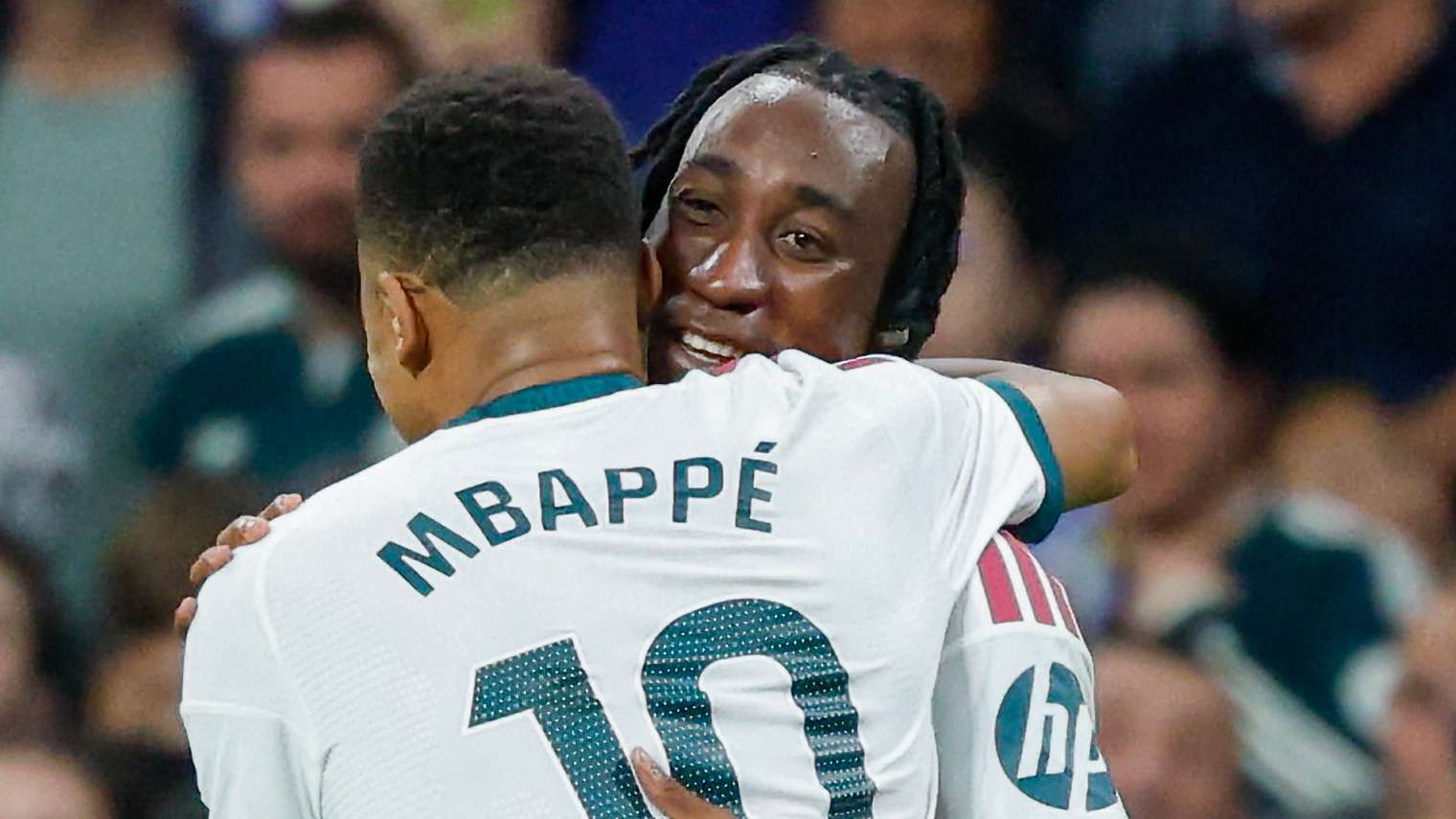
The decisive moment arrived in the 62nd minute. Valverde drove forward from the flank and supplied the pass that Diomande turned into the match-winning goal. The Ivorian finished with composure, completing a move that rewarded Madrid’s growing pressure and his own ability to find space in a crowded area.
The goal was briefly held up by an offside decision. Referee Díaz de Mera initially ruled it out, but a VAR review showed that Diomande had been onside. The decision was overturned, allowing Madrid to celebrate a breakthrough that had seemed increasingly necessary as the clock ticked on.
Vinícius Red Card Turns the Closing Stages into a Test of Nerve
Madrid appeared to have doubled their lead through a quick attack involving Aurélien Tchouaméni, Jude Bellingham and Vinícius. Tchouaméni won the ball, Bellingham carried it forward and Vinícius finished the move. However, the goal was disallowed after the Brazilian was judged to have pulled Saliba’s hair during the build-up. Vinícius was shown a red card, leaving Madrid with ten players from the 74th minute.
The dismissal changed the character of the contest. Madrid had to protect their advantage with a numerical disadvantage, while Villarreal saw an opportunity to increase the pressure. The visitors pushed forward and tested the home side’s organisation, but they lacked the cutting edge needed to make their late possession count.
Mbappé, who had threatened earlier, became less influential in the penalty area as the match wore on. Bellingham, by contrast, embodied Madrid’s resilience, working hard to help his team compete during a demanding finish. The home side defended as a unit, limiting Villarreal’s chances and refusing to let the red card turn into an equaliser.
What the Result Means for the La Liga Race
Madrid’s victory was not a comfortable one, but its value could be significant. Securing three points after losing a player for the final stretch demonstrated the team’s ability to manage pressure as well as its attacking quality. Diomande supplied the goal, Valverde created it, and Bellingham helped lead the fight to preserve it.
For Villarreal, the performance offered encouragement in terms of courage and attacking intent, but the lack of a decisive finish proved costly. The visitors found areas to exploit and had spells in which they made Madrid work, yet they left the Bernabéu without a point. Improving their efficiency in the final third will be essential if they are to turn competitive displays into results.
Madrid’s next challenge will be to carry this momentum into their upcoming European fixture, while Villarreal will also have to shift attention to continental competition. For fans weighing up a future football prediction, this match offered useful clues: Madrid remain capable of grinding out results under pressure, but their defensive balance can be tested when they commit bodies forward. Villarreal, meanwhile, showed enough attacking ambition to trouble strong opponents—provided they can make their opportunities count.