
Football’s Penalty Puzzle: Why Mbappé Was Awarded a Spot-Kick While Isak Got Nothing
Two penalty decisions in one weekend have revived a familiar football debate: are referees judging the foul, or the way a player reacts to it? Real Madrid’s meeting with Racing Santander and Liverpool’s clash with Arsenal produced sharply contrasting outcomes. Kylian Mbappé was awarded a penalty after contact inside the box, while Alexander Isak received no spot-kick despite being held by Jurriën Timber.
The incidents were not identical, but the difference in how they were assessed was striking. One decision helped Real Madrid take the lead in a 3–0 victory. The other left Liverpool without a penalty in a match Arsenal won 1–0. Together, they have prompted fresh questions about consistency, VAR and what players must do to convince officials that a foul has affected them.
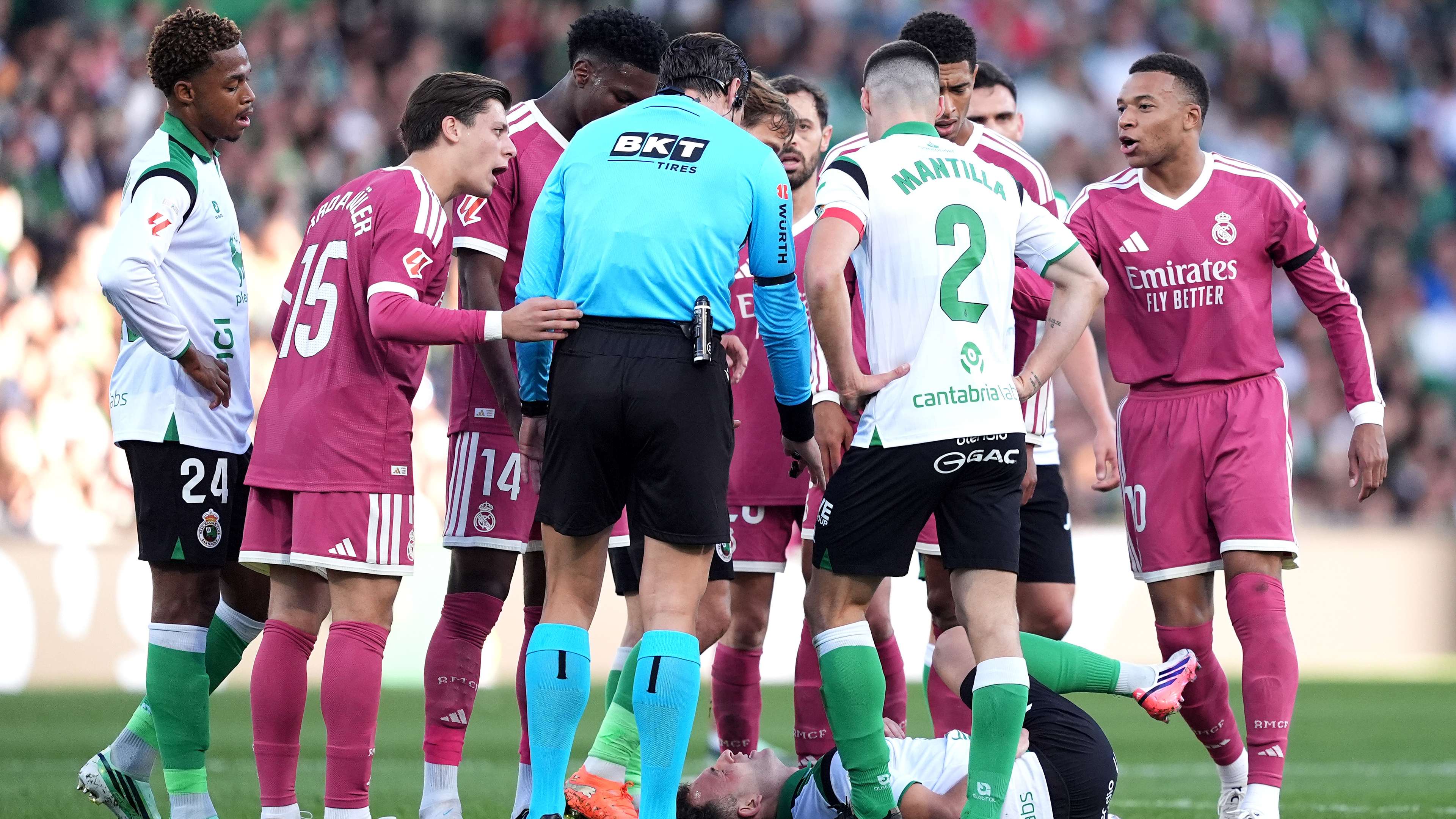
Mbappé’s penalty sparks Racing Santander protest
Real Madrid’s penalty came after Mbappé made contact with Racing Santander defender Mateo Prati. The referee pointed to the spot, and the French forward converted to score the opening goal. Madrid eventually secured a comfortable three-goal win, but the decision remained a major talking point for the hosts.
Racing captain Íñigo Sainz-Maza objected to the call, arguing that the contact was too slight to justify a penalty. Head coach José Alberto also criticised the decision, focusing not only on the incident itself but on what he saw as inconsistency in the use of video technology.
José Alberto said the replays did not show enough to warrant a spot-kick. His argument reflected a wider point about contact in the penalty area: football is a physical game, and not every touch should result in a foul. At the same time, defenders cannot legally bring down or hold an opponent to prevent them from playing the ball. The challenge for officials is deciding where ordinary contact ends and a punishable offence begins.
Timber’s shirt-pull goes unpunished
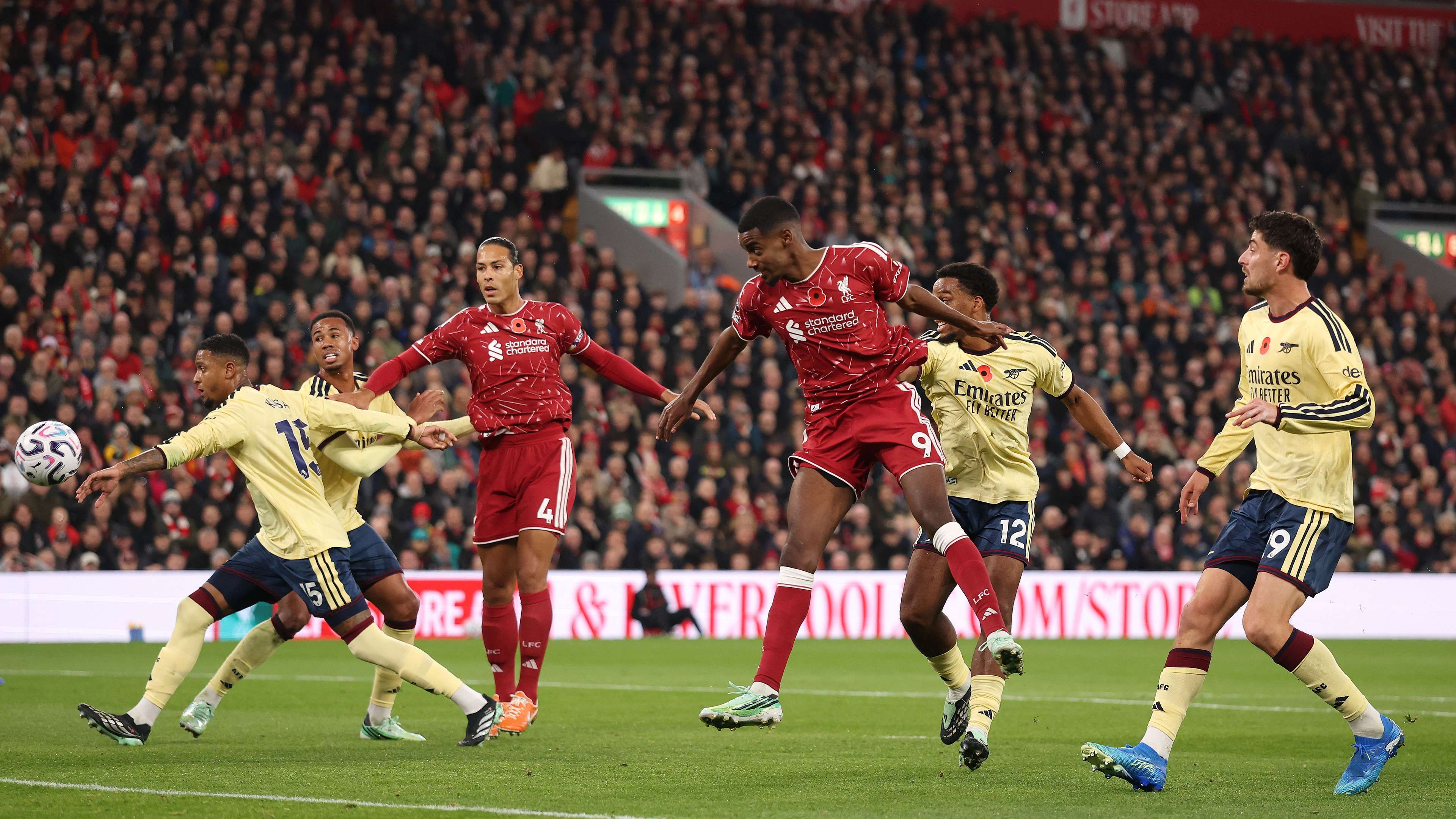
At Anfield, Liverpool had a different kind of complaint. As Alexander Isak moved to meet a cross, Arsenal defender Jurriën Timber grabbed his shirt inside the penalty area. The pull appeared to disrupt the striker’s balance and prevent him from reaching the ball.
Television replays showed the contact, but the referee allowed play to continue. A VAR review did not lead to a penalty either. Arsenal went on to win 1–0, with Kai Havertz scoring in the 16th minute.
For Liverpool, the frustration was not simply that Isak had been touched. Shirt-pulling is a familiar feature of set pieces and crowded penalty areas, but it can still be penalised when it clearly restricts an opponent. The key questions are whether the hold had a meaningful effect, whether the referee saw it, and whether the incident met the threshold for VAR to intervene.
Does a player have to go down to win a penalty?
The contrast between the two decisions quickly became a debate about players’ reactions. Isak did not collapse to the ground or make a dramatic appeal. That restraint prompted a pointed response from Liverpool head coach Andoni Iraola, who joked that players may need to be told to stay down if they want penalties awarded.
The remark captured a common frustration among supporters. When a player remains upright after being fouled, officials may interpret the incident as having little impact. Yet a player’s ability to stay on their feet does not necessarily mean no offence occurred. A shirt tug can impede movement without causing a fall, while a player who does go down may be responding to genuine contact—or exaggerating it.
Ideally, referees assess the action itself rather than the performance that follows. In practice, however, a visible fall can make the effect of contact easier to recognise. That creates a difficult incentive: players may feel they must exaggerate or go to ground to make a foul unmistakable. The result can be less honest football, more appeals and greater pressure on officials.
VAR, consistency and the limits of replay
VAR was introduced to help correct clear and significant errors, not to re-referee every moment of contact. That distinction is important. A video review can show precisely where a hand or shirt made contact, but it cannot always settle how much force was used or whether the contact was enough to affect a player’s ability to continue.
As a result, two incidents can look similar on a screen yet lead to different decisions because officials judge their severity, impact or clarity differently. VAR’s intervention threshold can also make the process feel inconsistent to fans: one decision may be checked and changed, while another appears to receive little attention. Even when the protocol is followed, the outcome can be difficult to explain from the stands or at home.
Clearer communication could help. When a penalty decision is controversial, explaining what the referee or VAR considered—such as the degree of holding, its effect on the attacker, or whether the contact was judged to be careless—would give supporters more than a replay and a final whistle. Consistency does not mean every touch must produce the same outcome; it means similar principles should be applied and communicated in a recognisable way.
What the weekend’s football decisions reveal
Neither incident alone can settle the argument over penalties. The Mbappé decision angered Racing, while Liverpool’s appeal centred on a shirt-pull that appeared to restrict Isak. But the two moments, arriving so close together, underline why penalty decisions remain among football’s most contentious calls.
For fans searching for a football prediction, match analysis or the latest refereeing debate, these incidents offer a reminder that a game can turn on a single interpretation. A penalty can change momentum, alter a team’s approach and shape the final score. Yet the deeper issue is not simply whether Mbappé or Isak should have received a spot-kick. It is whether players can trust that the same standards apply regardless of the club, the stadium or the way they react to contact.
Until that confidence improves, the question will keep returning: should a foul be judged by what the defender did, or by how dramatically the attacker responds? Football’s rules point toward the first answer. The weekend’s contrasting decisions showed why many supporters are not yet convinced.