
October 2026 FIDE Chess Rating List: A Year of Breakthroughs and Rising Stars
The October 2026 FIDE classical rating list offers a fascinating snapshot of the ever-evolving landscape of world chess. Dominated by the giants Magnus Carlsen and Hikaru Nakamura, this month’s rankings highlight impressive performances by emerging talents, seasoned grandmasters, and the dynamic shifts caused by recent major tournaments like the Chess Olympiad in Samarkand. From young prodigies smashing records to seasoned veterans maintaining their dominance, the list underscores the vibrant, competitive spirit that keeps chess at the forefront of mind sports worldwide.
Key Highlights: Giants and Prodigies Shine Bright
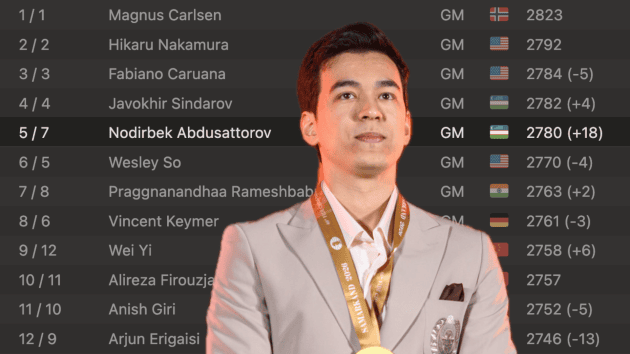
At the pinnacle of the classical rankings, Magnus Carlsen, the former world champion, continues to hold a formidable position with an astounding rating of 2823, maintaining his spot as the world’s top-rated player. Close behind is Hikaru Nakamura, whose strategic mastery keeps him at number two with a rating of 2792. These two giants have been the benchmarks of chess excellence for years, but this month’s ratings reveal a new wave of talented players challenging their dominance.
Notably, Javokhir Sindarov, the young Uzbek sensation born in 2005, has moved into the top ten with a rating of 2782, gaining four points. His recent performances demonstrate a remarkable consistency and growth. Meanwhile, the rising star Nodirbek Abdusattorov has achieved a career milestone, climbing two spots to number five with an 18-point increase, now boasting a rating of 2780. Abdusattorov’s leadership in Uzbekistan’s gold-medal-winning Olympiad team exemplifies how young talent can significantly influence the global chess scene.
Young Prodigies Make Historic Gains
One of the most captivating stories this month revolves around Yagiz Kaan Erdogmus, the 15-year-old Turkish grandmaster who has broken into the world’s top 20 with a rating of 2731—an extraordinary feat for someone so young. His 15-point rating surge, fueled by a silver medal on board one at the Olympiad, has made him the highest-rated 15-year-old in history, surpassing Wei Yi’s previous record of 2721 for that age. Erdogmus’s performances against top-tier opponents, including draws with Abdusattorov and Caruana, showcase a maturity beyond his years.
Similarly, Nodirbek Yakubboev has made a significant leap, crossing the 2700 barrier for the first time with a 27-point gain, reaching 2712. His rapid ascent underlines the increasing strength of Uzbek chess on the world stage. These feats demonstrate how the influx of young talent is reshaping the competitive hierarchy, with more teenagers entering the elite rank than ever before.
Performance of the Month: Uzbekistan’s Olympiad Triumph
The Olympiad in Samarkand was a showcase for Uzbekistan’s rising stars. Abdusattorov led Uzbekistan to team gold by delivering critical wins over top grandmasters, including notable victories that earned him 18 rating points. His performance on board one was instrumental, and his ability to hold draws against elite players like GMs Caruana and Giri exemplifies his resilience under pressure. Despite missing a chance to secure the individual gold in the final round, his contribution solidified his position as a top five player globally.
Teammate Javokhir Sindarov also shone brightly, collecting individual bronze on board two and achieving a performance rating of 2797—just one point shy of the top performances. His 2797 performance rating underscores his potential as one of the brightest prospects in chess today. The Uzbek team’s success signals a new chapter for Asian chess powerhouses, with young players now competing at the highest levels.
Women’s Chess: Strong Performances and Emerging Talent
The women’s top 100 list remains fiercely competitive, with Hou Yifan maintaining her dominance at number one with a rating of 2596. However, this month’s standout performance belongs to Zhu Jiner, who surged to number two after a stellar Olympiad showing that included team gold for China and individual gold on board one. Her nine-point rating increase reflects her rising influence in women’s chess.
Another notable success story is Polina Shuvalova, who gained nine points and remains in the top ten at number ten. Her consistent performance demonstrates the strength of Russia’s emerging female talents. Meanwhile, 16-year-old Mariam Mkrtchyan achieved a massive 47-point boost, crossing the 2400 mark and solidifying her status as one of the most promising young women in chess.
Up-and-Coming Stars: Juniors and Future Champions
The junior rankings reveal an exciting future for chess, with the top spot held comfortably by Yagiz Kaan Erdogmus. The 2011-born prodigy continues to extend his lead, with his rating now at 2731. Close behind are GMs Gukesh Dommaraju (2710) and Pranav Venkatesh (2677). These young players are not just breaking records—they are redefining what’s possible for teenage chess prodigies.
Gukesh, born in 2006, has also made a significant jump, gaining seven points and pushing past the 2700 mark, which signifies his arrival among the world’s elite. Meanwhile, Denis Lazavik and Abhimanyu Mishra, both born in 2006 and 2009 respectively, continue to impress with steady gains, indicating a deep talent pool among players born in the mid-2000s.
Impacts and Future Outlook
The ratings and performances from the October 2026 list are more than just numbers; they are indicators of a shifting chess landscape. The rise of young stars like Erdogmus and Yakubboev signifies a new era where age is no longer a barrier to competing at the highest levels. Their achievements inspire a new generation of players worldwide, eager to emulate their success.
Moreover, the continued dominance of established giants like Carlsen and Nakamura underscores the importance of experience and strategic mastery, even as the younger generation gains confidence and skills. The upcoming World Championship cycle promises to be more competitive than ever, with new contenders challenging the old guard.
Conclusion: A Dynamic Year for Chess
The October 2026 FIDE rating list underscores the vibrant, dynamic nature of modern chess. From record-breaking teenagers to seasoned champions, the sport continues to evolve, attracting new talent and inspiring millions worldwide. As these young prodigies climb the ranks and veterans maintain their dominance, chess remains a fascinating blend of tradition and innovation—a game that continually reinvents itself with each new generation.
Stay tuned for further updates and in-depth analysis on how these ratings influence upcoming tournaments and the future of world chess. The journey of these talented players promises many more thrilling chapters in the story of chess.