
PSV Secures Convincing 4-1 Victory Over Sparta Rotterdam Amid Controversial Officiating
On Sunday evening, fans of Dutch football witnessed an exhilarating match as PSV Eindhoven delivered a dominant 4-1 victory against Sparta Rotterdam. While the result was clear-cut, the game was marred by ongoing debates surrounding refereeing decisions, particularly concerning the consistency of penalty calls during physical duels. Central to this controversy was PSV defender Armando Obispo, whose outspoken remarks shed light on the ongoing frustrations players face with officiating standards in the Eredivisie.
Match Recap: A Thrilling Encounter with Controversial Moments
The fixture between PSV and Sparta Rotterdam was characterized by intense competition, tactical brilliance, and a flurry of goal-scoring opportunities. PSV’s offensive prowess was on full display as they netted four goals, showcasing their attacking depth and clinical finishing. Sparta, despite the defeat, pressed vigorously and created moments of danger, but ultimately couldn’t contain PSV’s firepower.
However, beneath the excitement lay a cloud of controversy. Several contentious decisions, particularly regarding fouls and penalties, sparked debate among fans, pundits, and players alike. The most heated discussions centered around physical challenges in set-piece situations—areas where referees are often expected to be decisive but sometimes appear inconsistent.
Armando Obispo’s Bold Critique of Refereeing Standards
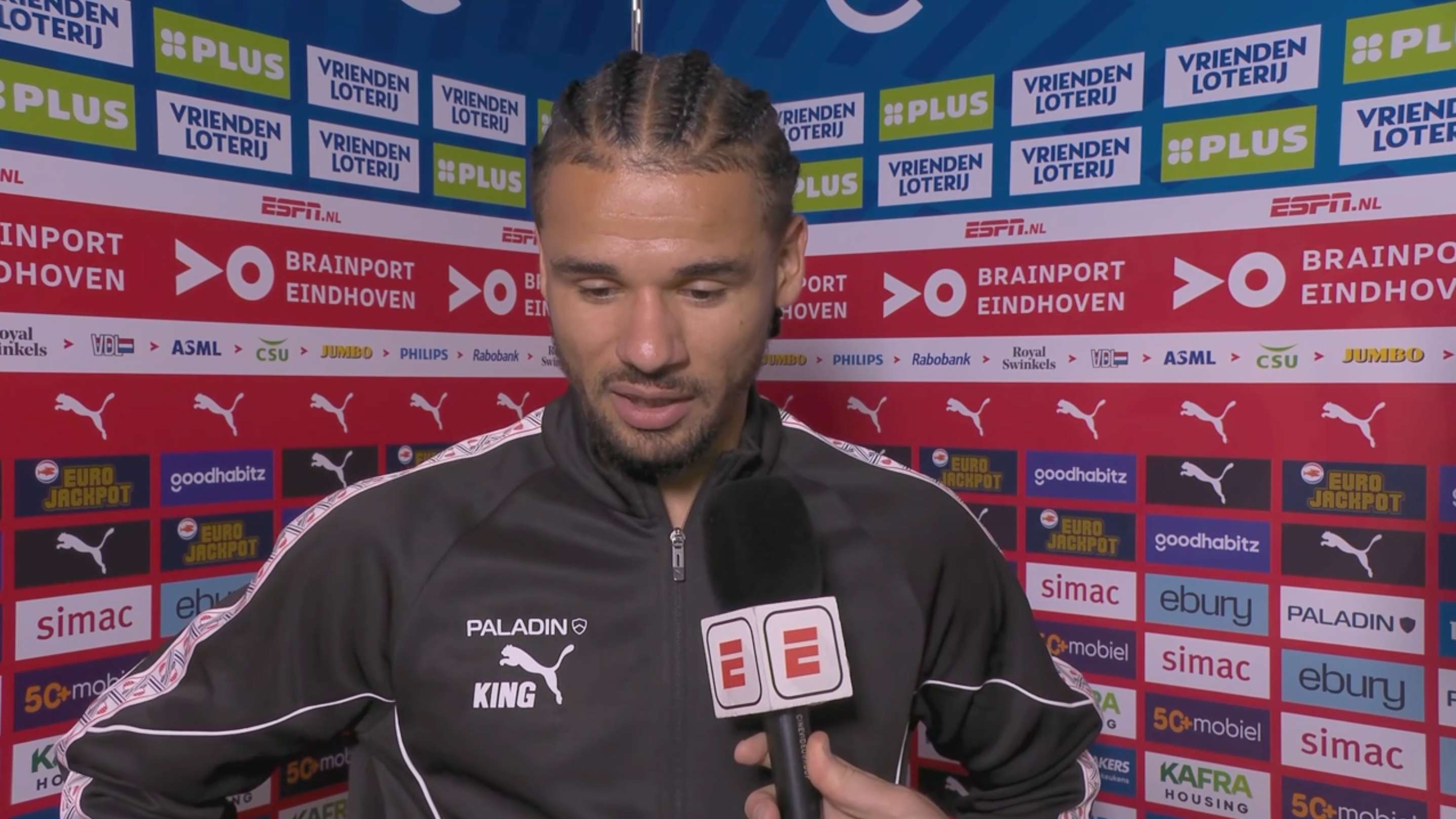
Following the match, PSV’s commanding center-back Armando Obispo expressed his frustration with the refereeing in the Eredivisie, specifically highlighting the perceived inconsistency in awarding penalties for holding or fouls in the box. Speaking candidly to ESPN, Obispo questioned the clarity of officiating standards and shared his bewilderment over recent decisions that seemed to contradict preseason guidelines.
“I understand little of the refereeing in the Eredivisie,” Obispo remarked, his tone reflecting genuine disappointment. When asked whether he approached Sunday’s game more like a football match or a wrestling bout, the defender burst into laughter, indicating the physicality he faced on the pitch. “A bit of both,” he quipped. “But yes, it was not something that came unexpectedly.”
The footage shown to ESPN revealed moments where Obispo was repeatedly held by Sparta’s Nick Verschuren during set-piece situations. Despite being visibly impeded—sometimes multiple times—the referee’s decisions did not always favor PSV, prompting the defender to question the consistency of officiating calls in the league.
The Rules and Reality of Penalty Decisions in the Eredivisie
Obispo recounted a preseason briefing where referees emphasized that if a defender’s focus is solely on the attacker rather than the ball—especially when holding occurs—it should be considered a penalty. “The referees came to visit at the start of the season and said that when a defender only has eyes for the man and does not look at the ball and he holds on, it is a penalty,” he explained.
Yet, in practice, the execution of these guidelines often seems inconsistent. Obispo expressed his disappointment, suggesting that similar situations in other matches are sometimes overlooked or not penalized, leading to confusion among players about what constitutes a foul.
Half-Time Discussions and the Role of the Referee
Obispo shared that during halftime, he approached referee Danny Makkelie—a respected figure in Dutch football—to seek clarity on the decision-making process. “I asked Danny Makkelie at half-time,” he revealed. “You come with a whole presentation at the start of the season, so it is important that it is carried out that way.”
Makkelie’s response was nuanced. While he did not comment directly on the specific incident, he indicated that such fouls could indeed be penalized if the foul occurs within the ‘danger zone’ of the penalty area, provided the ball is in the vicinity of the foul. “In that case, it could well be a penalty,” he said, emphasizing the importance of the ball’s position in judging fouls.
Obispo acknowledged that referees have a challenging job, especially when the line between a fair challenge and a foul is razor-thin. “It was pretty much on the edge today,” he concluded, reflecting the fine margins that often decide matches in football.
Implications for Future Predictions and Refereeing Standards
This incident raises broader questions about the standards of officiating in the Eredivisie and the potential impact on future predictions of match outcomes. Accurate and consistent refereeing is vital for fair predictions, especially for bettors and fans analyzing upcoming fixtures. If referees continue to interpret fouls differently, it could lead to unpredictable results, affecting the credibility of predictions and betting markets.
Moreover, the controversy underscores the importance of transparent and rigorous referee training. With the league’s officials being the final arbiters of fairness on the pitch, their decisions significantly influence the flow and outcome of matches. The Eredivisie might need to revisit its referee training protocols and possibly incorporate more technology-assisted reviews—such as VAR—to enhance decision accuracy and consistency.
The Broader Context: Challenges in Modern Football Officiating
Officiating controversies are not unique to Dutch football; they are a global phenomenon affecting leagues worldwide. As football has evolved into a faster, more physical game, referees face increased pressure to make split-second decisions. The use of Video Assistant Referee (VAR) technology has been a game-changer, yet it still faces criticism for inconsistencies and subjective interpretations.
In the context of the Eredivisie, where passionate fans and competitive teams demand fairness, these debates about penalties and fouls are especially critical. They influence predictions for upcoming fixtures, betting odds, and even team strategies, as players become more aware of how referees interpret their challenges.
Looking Ahead: The Future of Football Predictions and Officiating Reforms
As the season progresses, stakeholders—fans, pundits, and betting companies—will closely monitor how refereeing standards evolve. The key to restoring confidence lies in transparent decision-making, consistent application of rules, and possibly leveraging technological advancements to assist referees.
For bettors and football enthusiasts interested in predictions, understanding the nuances of officiating can provide a competitive edge. Recognizing that refereeing inconsistencies can sway match outcomes allows for more nuanced predictions—taking into account not just team form and tactics, but also the likelihood of controversial decisions impacting the game.
Final Thoughts: A Call for Fair Play and Clarity
The 4-1 victory for PSV was a showcase of their strength and skill, but the accompanying refereeing controversies highlight the ongoing challenges facing modern football officiating. As Armando Obispo and many other players voice their frustrations, the league must consider reforms to ensure fairness, consistency, and transparency in decision-making. Only then can fans and pundits confidently make predictions based on the game’s true flow, free from the shadows of uncertainty.
Football remains the beautiful game, but for it to truly thrive, fair play and clear officiating standards are paramount—both for accurate predictions and for maintaining the integrity of the sport.