
Intense Debate Erupts Between Gary Neville and Jamie Carragher Over Kai Havertz’s Potential to Replicate Roberto Firmino’s Liverpool Legacy
The world of football is no stranger to passionate debates, especially when it comes to analyzing player performances and predicting future contributions on the pitch. Recently, a heated exchange between two renowned football pundits, Gary Neville and Jamie Carragher, has captured the attention of fans and analysts alike. The focal point of their debate centers around Arsenal’s new signing, Kai Havertz, and whether he possesses the qualities necessary to emulate the pivotal role that Roberto Firmino played during his tenure at Liverpool.
Background: The Significance of Roberto Firmino at Liverpool
Before diving into the nuances of this debate, it’s essential to understand the significance of Roberto Firmino in Liverpool’s recent success. The Brazilian forward was more than just a goal scorer; he was the tactical heartbeat of Jurgen Klopp’s attacking system. Firmino’s unique ability to link play, press aggressively, and create space for teammates made him a cornerstone of Liverpool’s high-intensity football philosophy.
His versatility allowed him to operate as a false nine, dropping deep to orchestrate attacks, while also contributing crucial goals and assists. Over the years, Firmino’s influence was instrumental in Liverpool securing Premier League titles, Champions League glory, and other domestic trophies. His role was so vital that many football prediction models highlight his contribution as a key factor in Liverpool’s tactical success.
Kai Havertz: The Arsenal Investment and Expectations
In contrast, Kai Havertz arrived at Arsenal with high expectations. Once heralded as one of Bundesliga’s brightest talents during his stint at Bayer Leverkusen, Havertz’s move to the Premier League was seen as a significant step forward in his career. Fans and pundits alike are eager to see if he can adapt to the rigors of English football and fulfill the potential that made him a hot commodity in the transfer market.
Havertz’s playing style is marked by technical finesse, intelligence in movement, and the ability to operate across multiple attacking roles. However, questions remain about whether he can bring the same level of tactical influence and work rate that Firmino consistently demonstrated for Liverpool. Football prediction experts are closely analyzing his early performances to gauge his impact and potential to become a linchpin in Arsenal’s attacking setup.
The Core of the Debate: Can Havertz Mirror Firmino’s Role?
Gary Neville’s Perspective: Skepticism and Critique
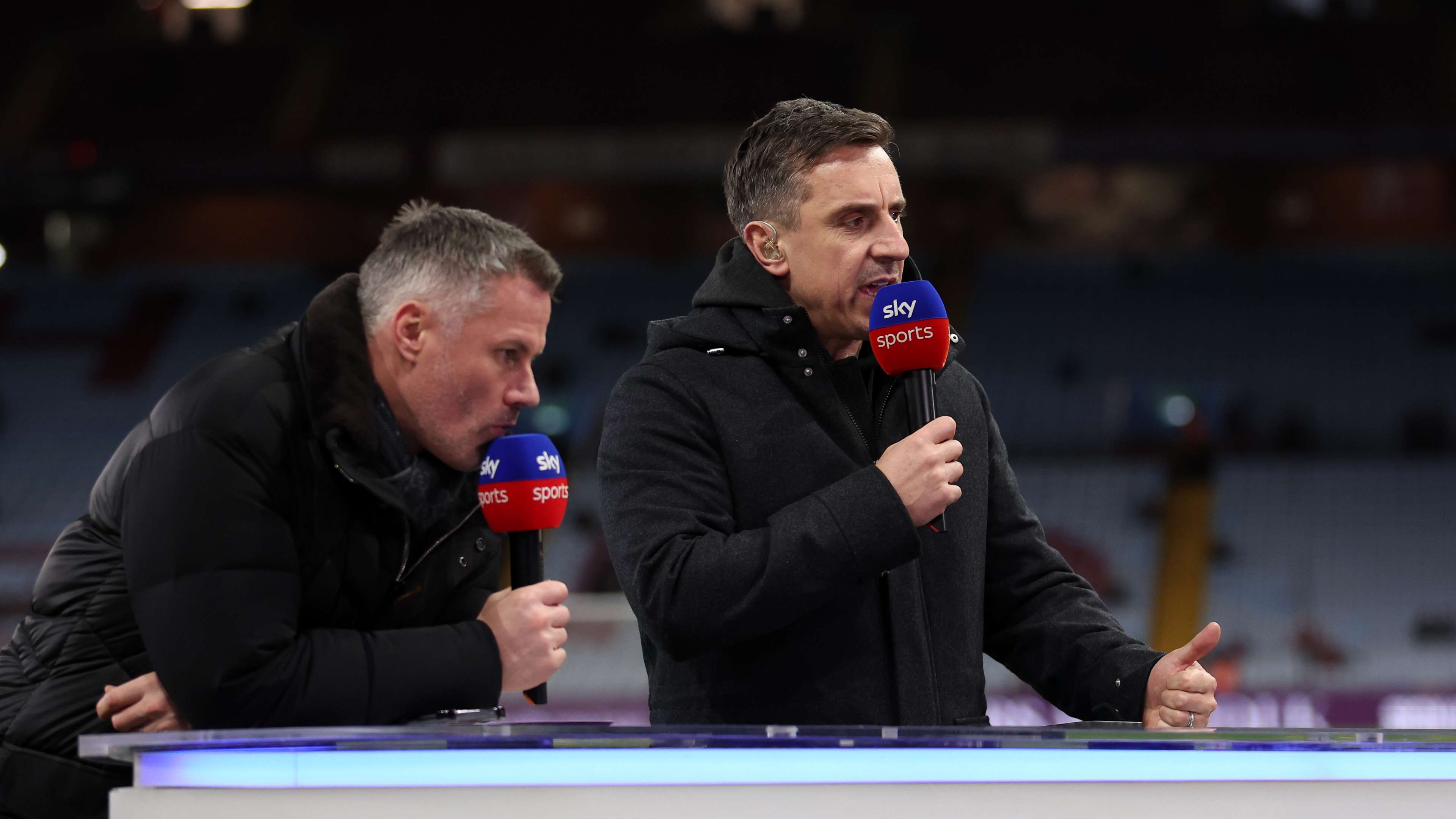
Former Manchester United defender and renowned football pundit Gary Neville expressed skepticism about the idea that Havertz could replicate Firmino’s influence. During a recent broadcast, Neville emphasized the unique qualities that made Firmino a standout player. He pointed out Firmino’s exceptional work rate, tactical intelligence, and ability to perform under pressure—traits that are not easily transferable.
Neville argued, “Havertz is a talented player, no doubt, but comparing him to Firmino is a different level altogether. Firmino was not just about scoring goals; he was the engine of Liverpool’s attack, the one who linked everything together. That’s a rare quality, and I’m yet to see Havertz display that consistently.”
Adding to his critique, Neville suggested that while Havertz’s technical skills are impressive, his commitment to pressing and defensive duties—integral aspects of Klopp’s system—remain uncertain. This skepticism has fueled discussions among fans and experts about whether the prediction of Havertz becoming Liverpool’s next Firmino is overly optimistic.
Jamie Carragher’s Defense: Optimism and Potential
On the other hand, Jamie Carragher, a former Liverpool defender and football analyst, offered a more optimistic outlook. Carragher acknowledged that Havertz’s style differs from Firmino’s but emphasized that adaptability and growth are part of a player’s development. He pointed out that Havertz’s versatility could be an asset in Arsenal’s tactical setup.
“Havertz may not be a carbon copy of Firmino,” Carragher admitted, “but he has the technical ability, intelligence, and physical attributes to develop into a key player for Arsenal. It’s unfair to dismiss his potential based solely on initial performances. With the right guidance and system, he could evolve into a player who influences games in a manner similar to Firmino.”
Carragher’s perspective aligns with the broader football prediction trend that emphasizes player development and tactical adaptability over immediate comparisons. He highlighted that many football prediction models consider the trajectory of a player’s growth and the team’s tactical fit when assessing future impact.
Contextualizing the Debate: The Broader Impact on Football Predictions and Tactics
This debate underscores a fundamental aspect of football analysis: the challenge of predicting a player’s future contribution based on current form and past reputation. Football prediction models often incorporate a mixture of statistical data, tactical analysis, and expert judgment to forecast whether a new signing can fill a particular role effectively.
In this case, the question revolves around whether Havertz can fulfill the multifaceted role that Firmino played—serving as a creative hub, pressing relentlessly, and contributing crucial goals. The outcome of this comparison will influence future football predictions regarding Arsenal’s attacking potency, their chances in domestic and European competitions, and even their prospects for the upcoming season.
Additional Factors Influencing Havertz’s Potential Impact
While the debate primarily focuses on individual qualities, several external factors could determine Havertz’s success at Arsenal. These include:
- Team Tactics: Arsenal’s tactical setup under Mikel Arteta plays a significant role. If the system emphasizes possession, pressing, and fluid attacking transitions, Havertz’s versatility could be maximized.
- Player Development: Continuous coaching and adaptation are crucial. Havertz’s willingness to embrace a demanding work ethic could elevate his contribution to match or even surpass expectations.
- Support from Teammates: The quality of service from wingers and midfielders, along with the tactical understanding within the squad, will influence his ability to impact games consistently.
What the Future Holds: Predictions and Fan Expectations
As football prediction models continue to evolve, fans eagerly await Havertz’s development in the Premier League. The initial assessments suggest that while he might not immediately emulate Firmino’s all-encompassing role, with time and tactical adjustment, he could carve out a significant niche at Arsenal.
Many experts believe that the key to success lies in patience and tactical flexibility. Predictions indicate that if Havertz adapts well, he could become a vital cog in Arsenal’s machine, contributing both creatively and defensively. Conversely, if he struggles to adapt, the debate about his long-term impact will persist, fueling ongoing discussions about player predictions in football.
Conclusion: The Ongoing Narrative of Football Prediction and Player Impact
The dialogue between Gary Neville and Jamie Carragher exemplifies the dynamic nature of football analysis. While Neville remains cautious about elevating Havertz to Firmino’s level, Carragher sees potential and growth. Ultimately, the prediction of Havertz’s future influence at Arsenal will unfold over time, shaped by his performances, tactical fit, and the broader team strategy.
This debate not only highlights the complexities involved in football prediction but also underscores the importance of patience and nuanced analysis when evaluating a player’s potential. As Arsenal fans and football enthusiasts watch keenly, the story of Kai Havertz’s adaptation promises to be a compelling chapter in the ongoing evolution of football tactics and predictions.