
Andrej Kostic’s Sparta Rotterdam Loan Offers a Test of Milan’s Long-Term Striker Plan
AC Milan moved early to secure the services of Andrej Kostic, the Montenegro-born striker who was born in 2007 and was viewed as a promising prospect at Partizan Belgrade. Yet the young forward is now facing a demanding first test away from Italy: establishing himself at Sparta Rotterdam in the Eredivisie. His progress in the Netherlands will be closely watched by Milan supporters, as the club weighs how best to develop a player whose potential attracted an early investment.
Kostic’s situation is a reminder that a promising transfer is only the beginning of a player’s journey. Moving from youth football into a competitive senior league can involve a steep learning curve, particularly for a teenage striker expected to adapt to different tactics, physical demands and expectations. At Sparta, regular involvement and steady improvement may matter more than headline statistics in the short term.
How Milan Secured Kostic’s Transfer
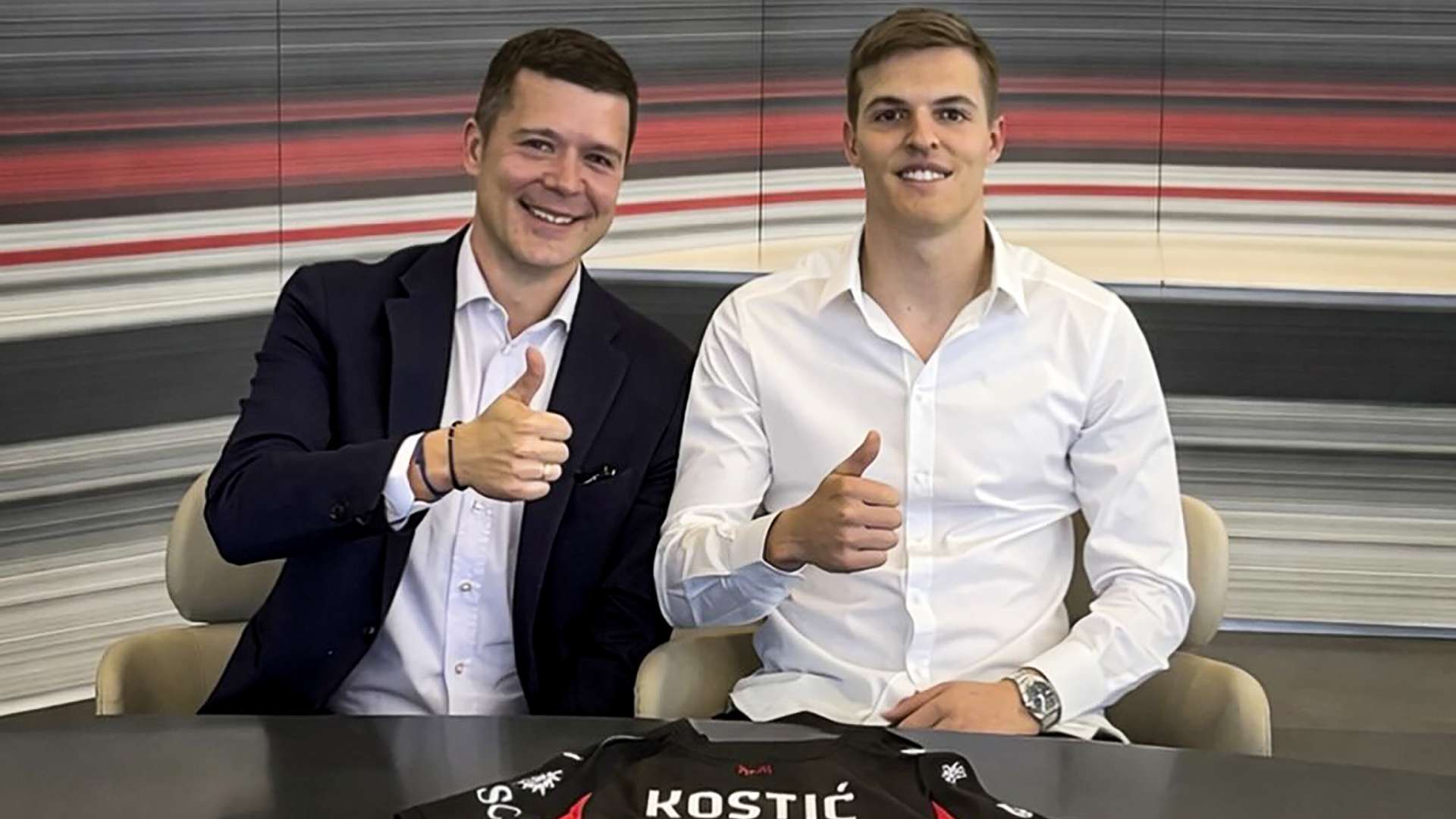
Milan’s interest in Kostic took shape well before the summer transfer window reopened. The club’s former sporting director, Igli Tare, was involved in the initial work, while Jovan Kirovski later helped complete the agreement with Partizan Belgrade. The deal was reported to be worth around €3 million, with additional bonuses and a percentage of any future resale fee due to the Serbian club.
Kostic also underwent a medical in Milan on March 30, an early step in a transfer process that reflected the Rossoneri’s desire to act before competition for the youngster intensified. For Partizan, the agreement offered an immediate fee alongside the possibility of further income if the striker’s career develops and Milan later sells him. For Milan, the structure limited the initial outlay while securing a player the club believed could grow into a valuable asset.
That kind of investment is increasingly common in modern football. Clubs often recruit young players before they are ready for a first-team role, aiming to shape their development through carefully chosen loans and training environments. The strategy can bring significant rewards, but it also requires patience: a teenager’s progress is rarely linear, and a difficult spell at one club does not necessarily define his long-term prospects.
Why Sparta Rotterdam Matters to Milan’s Prediction
Sparta Rotterdam provides Kostic with an opportunity to gain experience in the Eredivisie, a league known for giving young players meaningful exposure. However, a move abroad does not automatically guarantee regular minutes. The striker must compete for a place, adapt to the team’s style and show that he can contribute against senior defenders who are stronger and more experienced than the opponents he faced in youth football.
For Milan, the key prediction is not simply whether Kostic will score immediately. A more useful assessment will consider how often he features, whether he earns starts, and how effectively he performs the less visible parts of the centre-forward role. Pressing, movement away from the ball, link-up play and the ability to hold possession can all help a young striker remain involved while his finishing develops.
His physical and tactical adaptation will also be important. Strikers moving into senior football often need time to adjust to the speed of decision-making and the limited space available near goal. Coaches may ask them to contribute defensively, make runs that create room for teammates or play with their back to goal. Kostic’s ability to absorb those demands could influence whether Sparta sees him as a regular option or a longer-term project.
The Vlahovic Connection and Milan’s Changing Plans
When Milan pursued Kostic, the move also drew attention because he shares an agent, Darko Ristic, with Dusan Vlahovic. That connection prompted speculation that the young striker’s arrival might be linked to a broader plan involving the former Juventus forward. In the end, however, Milan’s senior-striker plans took a different direction.
The Rossoneri opted for Gonçalo Ramos, while Vlahovic joined Besiktas. Kostic’s transfer therefore should not be treated as evidence that Milan had secured a pathway to Vlahovic. The shared representation may have encouraged discussion, but the available outcome points to separate decisions: one concerning Milan’s immediate needs and another concerning the development of a teenage prospect.
The distinction matters when judging Kostic’s role. He was not brought in as a ready-made answer to Milan’s first-team attacking requirements. Instead, the transfer appears to fit a longer-term recruitment strategy, in which the club identifies young talent and seeks to build value through development. That approach can sit alongside the signing of established forwards, rather than replacing it.
What a Successful Loan Could Look Like
A productive spell at Sparta would not necessarily require Kostic to become the club’s leading scorer straight away. For a player of his age, a successful season could mean earning consistent opportunities, improving his physical resilience and demonstrating that he can handle the pace of senior football. Even substitute appearances can be valuable if they provide clear lessons and lead to greater responsibility over time.
Milan will also need to assess whether Sparta’s environment suits his development. The quality of coaching, the role assigned to him and the club’s willingness to give young players a genuine chance can all shape the outcome of a loan. If Kostic is used in a position that matches his strengths and receives a clear development plan, the experience may help him return to Milan better prepared for the next step.
There are risks, too. Limited playing time can slow momentum, while pressure to produce goals may encourage a young forward to force difficult chances. Milan’s challenge will be to judge the full picture rather than react to short-term fluctuations. Training progress, tactical understanding and confidence may reveal as much as a goals tally.
A Long-Term Milan Prediction, Not a Quick Verdict
Kostic’s current struggle to establish himself at Sparta Rotterdam is a concern worth monitoring, but it is not yet a final verdict on his potential. The transfer was made with development in mind, and the next phase depends on whether he can turn the opportunity in the Netherlands into meaningful senior experience. For now, patience and regular assessment are likely to be more useful than demanding an immediate breakthrough.
For Milan fans, the central question is whether the club can create a clear route from promising recruitment to first-team readiness. Kostic’s progress will offer an early indication of how effectively that strategy works. If he adapts, earns trust and improves across the season, the investment could look increasingly well judged. If opportunities remain scarce, Milan may need to reconsider his loan situation and find an environment better suited to his needs.
The most balanced prediction is that Kostic remains a project rather than an immediate solution. His talent convinced Milan to move early and invest in his future, but his spell at Sparta will determine how quickly that promise can become tangible progress. The next steps—not the transfer fee or the speculation surrounding Vlahovic—will ultimately shape his prospects in Milan’s long-term plans.