
Manchester United Fans Mock City With “51 Years” Banner at Old Trafford
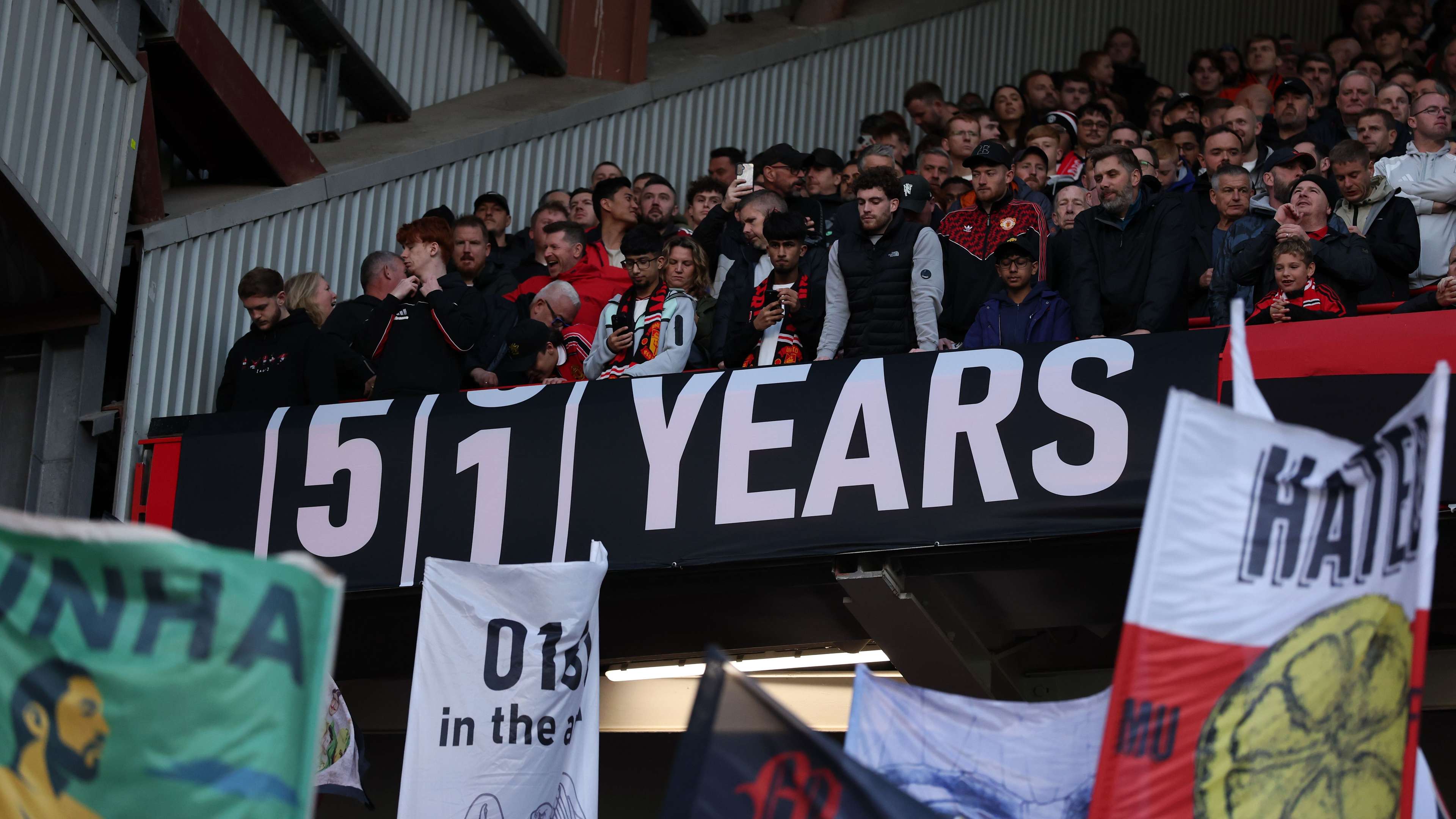
Manchester United supporters have taken aim at their neighbours’ ongoing Premier League case, unveiling a pointed “51 YEARS” banner at Old Trafford. Displayed at the Stretford End, the message turns Manchester City’s unresolved financial allegations into a fresh chapter in the rivalry between English football’s two most prominent Manchester clubs.
The banner’s wording suggests that, in the eyes of some United fans, City’s recent success should not count if the club is ultimately found to have breached league rules. It is a provocative piece of terrace humour rather than an official ruling: the Premier League has not stripped City of trophies, and the allegations remain subject to the league’s legal process.
Why the “51 Years” message has stirred debate
The number on the banner appears to recast the length of City’s wait for major silverware by excluding achievements that United fans believe could be affected by the case. That interpretation gives the display its sting, but it should not be mistaken for a factual update to the clubs’ honours records. Until the proceedings conclude and any consequences are confirmed, City’s trophies remain part of the club’s official history.
That distinction matters because the dispute is not a simple question of whether a rival club’s supporters approve of its success. The Premier League has brought a large set of charges concerning alleged financial and reporting breaches over a number of seasons. City have denied wrongdoing and have said they welcome the opportunity to present their case. The allegations have not, by themselves, established guilt.
For football fans, the case has become one of the most closely watched off-field stories in the sport. Its outcome could carry consequences beyond the immediate rivalry, potentially influencing how clubs, regulators and supporters view financial rules, competitive balance and the enforcement of league regulations.
A rivalry that thrives on more than results
Manchester United and Manchester City share a city, a stadium divide and a long history of competitive tension. Their rivalry has intensified as City have become a dominant force in English football, collecting domestic honours and establishing themselves among Europe’s leading teams. United, meanwhile, remain one of the most decorated clubs in the country, even as supporters wait for a sustained return to the top of the Premier League.
In that environment, a banner can do more than celebrate a win or needle an opponent. It can express a wider argument about legitimacy, sporting history and what success means when a club is facing serious allegations. United fans have used the “51 YEARS” line to challenge the way City’s modern achievements are viewed, while City supporters are likely to regard the display as an attempt to diminish trophies earned on the pitch.
The exchange also reflects a familiar feature of football culture: supporters often turn complex legal and financial matters into short, memorable slogans. A few words can capture frustration, confidence or rivalry far more quickly than a detailed explanation of the charges. But slogans simplify. The facts, evidence and any eventual decision will be determined through the formal process, not by a banner in the stands.
What the Premier League case could mean
The Premier League’s allegations relate to a range of matters, including the provision of accurate financial information and compliance with competition rules. The process is separate from match-day judgments and does not automatically invalidate results or titles. Any sanction would depend on the findings and the rules applied after the case is heard.
Possible outcomes could vary in seriousness, and no specific punishment should be treated as inevitable. In principle, a disciplinary process may lead to measures such as a financial penalty or points deduction, while more severe consequences could also be discussed depending on the findings. The final decision, if one is reached, would need to follow the relevant procedures and could be subject to further legal steps.
That uncertainty is why predictions about the case remain speculative. Some observers expect the matter to have a major impact on the league; others caution that the scale and complexity of the proceedings make it difficult to forecast an outcome. For now, the most responsible prediction is that the debate will continue until the evidence is assessed and an official decision is announced.
How the story affects supporters and the wider game
For United fans, the banner provides an opportunity to turn City’s legal troubles into a moment of rivalry. For neutral followers, it is a reminder that the dispute has become part of the wider conversation around the Premier League’s credibility and its ability to enforce rules consistently. The case has also prompted questions about whether financial regulations can keep pace with the resources available to elite clubs.
There is a broader issue at stake than which side of Manchester gets the last word. Financial rules are intended to support the long-term health of clubs and protect a degree of competitive fairness. If regulations are applied inconsistently, confidence in the system may suffer. If enforcement is transparent and supported by clear evidence, the league may strengthen its authority—even if the eventual outcome disappoints some supporters.
The case also illustrates how modern football is increasingly shaped by events beyond the pitch. Transfer spending, sponsorship arrangements, accounting practices and regulatory oversight now feature prominently in discussions that once centred mainly on tactics and results. For clubs and fans alike, the challenge is to distinguish proven facts from claims that are still being tested.
Rivalry, humour and the wait for a verdict
The “51 YEARS” banner is likely to remain a talking point because it combines a familiar rivalry with a question that has no settled answer yet. It is a sharp piece of supporter banter, but it does not change the official record or determine the Premier League case. City continue to dispute the allegations, and the outcome will depend on the formal proceedings.
Until then, Manchester’s football rivalry will continue to play out in the stands, online and on the pitch. United supporters have made their prediction about how they view City’s recent era; City will point to their achievements and await the case’s conclusion. For the wider football audience, the key question is not what a banner declares, but what the evidence and the league’s process ultimately establish.