
Real Betis’ Disallowed Goal Against Barcelona Reignites La Liga VAR Debate
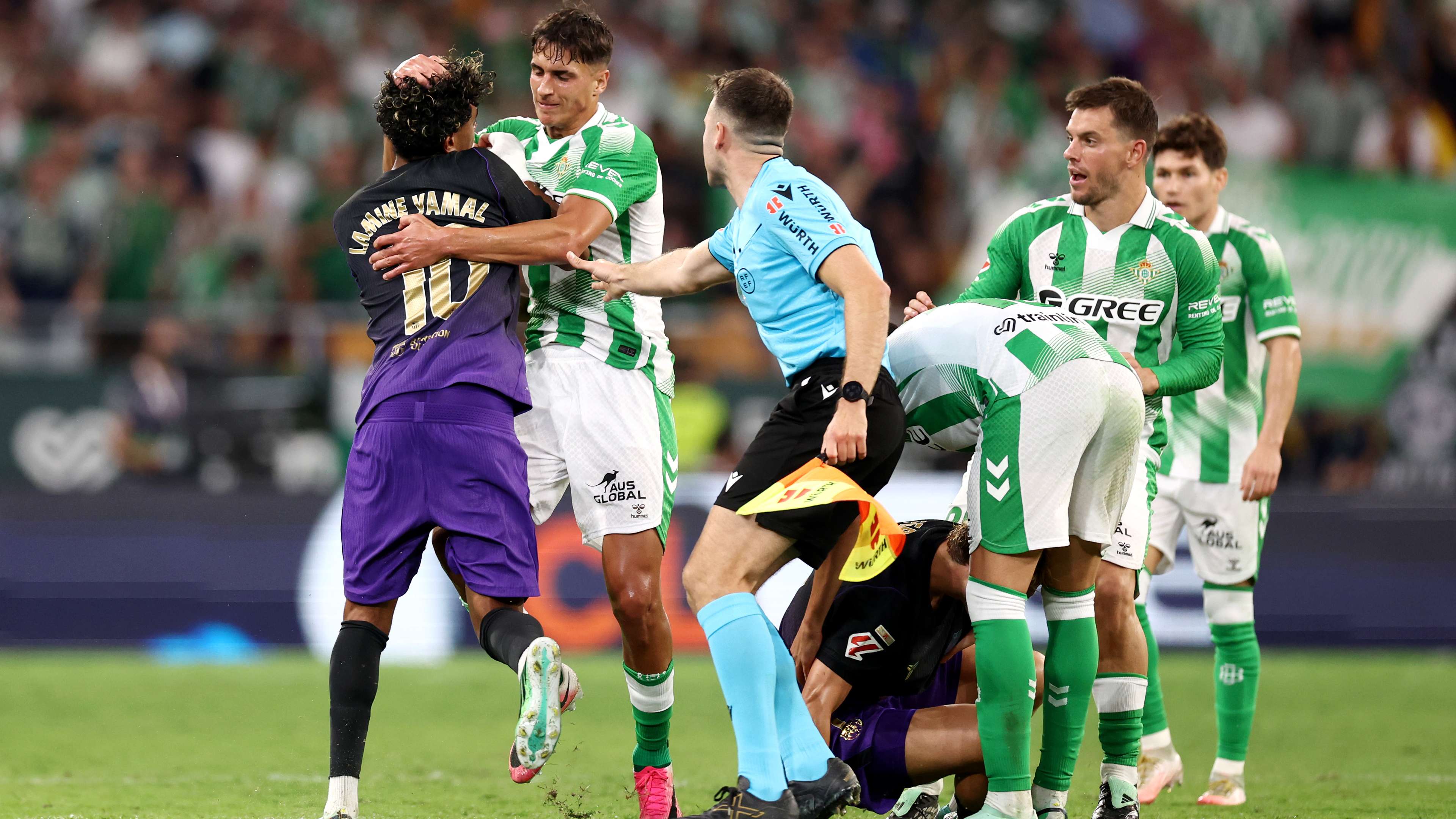
Real Betis have found themselves at the centre of another Spanish football refereeing controversy after Giovani Lo Celso’s goal against Barcelona was ruled out following a VAR review. Referee Ricardo de Burgos Bengoetxea overturned the initial decision, citing an earlier handball by Betis forward Cucho Hernández in the build-up.
The ruling quickly prompted debate among supporters and commentators. Critics questioned whether the handball was sufficiently connected to the goal to justify cancelling it, particularly because the incident occurred several seconds before Lo Celso’s finish. The discussion also revived memories of a similar episode involving Barcelona and Real Madrid, with some arguing that the two situations appeared to receive different interpretations.
What happened in the Betis–Barcelona incident?
Betis had worked the ball forward through a flowing attacking move before Lo Celso struck a superb finish. However, the goal did not stand. After reviewing the sequence, the referee decided that Hernández had handled the ball earlier in the move and disallowed the effort.
The precise nature of the contact became a major part of the argument. According to the account published by Defensa Central, a website known for its close links to Real Madrid, Hernández had been pushed and the ball struck his arm rather than his chest. That detail led critics to question whether the contact should be treated in the same way as a deliberate handball.
The timing also drew scrutiny. Around 15 seconds passed between Hernández’s contact with the ball and Lo Celso’s strike. Barcelona players touched the ball twice during that interval, raising a broader question about how much time and how many actions can separate an offence from a goal before VAR should stop the move.
Comparison with Barcelona’s Clasico goal
The controversy has been linked to a previous Clasico between Barcelona and Real Madrid. In that match, Frenkie de Jong was accused of handling the ball shortly before Lamine Yamal scored for Barcelona. Defensa Central claims the handball and goal were separated by roughly 30 seconds, with Real Madrid not touching the ball in between.
That comparison has become central to the criticism. In the Betis incident, the delay was shorter, but Barcelona players made two touches before Lo Celso scored. In the earlier Clasico sequence, the reported gap was longer, yet Yamal’s goal was allowed to stand. For those questioning the decisions, the difference in outcomes raises concerns about whether the same standard was applied in both cases.
There are, however, details that make the incidents difficult to treat as identical. Referees may consider whether a handball was deliberate, how the ball reached the arm, and whether the action directly enabled the scoring opportunity. The force of contact on Hernández and the circumstances surrounding De Jong’s alleged handball could therefore influence how each episode is assessed.
Why VAR decisions remain contentious
VAR is designed to help officials correct clear and significant errors, but its use in handball situations continues to divide opinion. The rules distinguish between different types of contact, while the practical question of whether an offence is part of the same attacking phase can be open to interpretation. That combination can leave fans feeling that similar incidents have been judged inconsistently.
For clubs, the consequences are immediate. A disallowed goal can change the rhythm of a match, alter tactical decisions and affect the final result. In a tightly contested La Liga season, a single decision may also shape the wider conversation around the title race, even if it does not determine the championship by itself.
The Betis–Barcelona incident is particularly frustrating for Betis because Lo Celso’s strike came at the end of a promising attack and appeared to reward the team’s build-up play. Once the goal was removed, attention shifted from the quality of the finish to the referee’s interpretation of an earlier moment.
Claims of unequal treatment
Defensa Central argues that the contrasting outcomes reinforce doubts about consistency in Spanish refereeing. The outlet has suggested that Barcelona have benefited from favourable decisions on more than one occasion, a view that reflects longstanding tensions between Spain’s biggest clubs and the officials overseeing their matches.
Its most provocative claim is that the decisions might have been reversed if the teams involved had been different. In that interpretation, a Betis goal would have stood against Real Madrid, while Madrid’s goal in the Clasico would have been disallowed. The suggestion is an accusation, not established evidence, but it illustrates how quickly refereeing debates can become entangled with club rivalries.
Real Madrid supporters have previously expressed concern that Barcelona receive a greater margin of protection from officials. Such beliefs are difficult to prove through isolated incidents, and each decision must be judged against the rules and the full match footage. Still, when comparable situations produce different outcomes, confidence in the process can suffer unless the reasoning is explained clearly.
What the controversy means for the title race
For Betis, the immediate issue is the loss of a goal that could have influenced the contest. For Barcelona, the decision adds another chapter to a season in which VAR calls are likely to be discussed alongside performances and results. For neutral followers of Spanish football, the key question is whether officials can offer a consistent explanation for decisions that appear similar on the surface.
As the season develops, every controversial call will be assessed through the lens of the title race. That makes transparent communication especially important: supporters are more likely to accept a difficult ruling when they understand which rule was applied and why the earlier handball was considered directly relevant to the goal.
Defensa Central ended its criticism with a reference to José Mourinho’s famous phrase, “The truth has been exposed,” framing the episode as further evidence of a deeper problem. Whether that conclusion is justified remains disputed. What is clear is that Lo Celso’s disallowed goal has renewed scrutiny of VAR, handball interpretations and the consistency of refereeing in La Liga—and ensured that the debate will continue well beyond the final whistle.