
James Anderson’s Lancashire Career Set to End After 25 Years
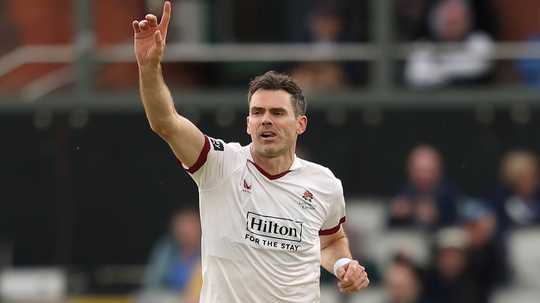
James Anderson will not represent Lancashire again after the county decided against renewing his contract for the 2027 season, bringing a remarkable 25-year playing association to a close. The announcement ends a major chapter in the career of one of cricket’s most celebrated fast bowlers, although Anderson has not said that he is retiring from the game.
The 44-year-old confirmed the news in a message on Instagram on Sunday, October 25. While expressing gratitude for the opportunity to play for his boyhood county, he made clear that he would have preferred a different outcome.
“I’ve supported Lancashire since I was [a] kid, and so to get to play for them for 25 years was a dream come true,” Anderson wrote. He recalled the special feeling of walking out at Old Trafford and highlighted the honour of serving as captain. “If it was up to me it wouldn’t have ended like this,” he added, while wishing the county’s players and supporters well.
Why Lancashire Has Decided to Move On
Lancashire said Anderson’s playing career with the club would finish when his current contract expires. He was informed of the decision during a meeting at Emirates Old Trafford on October 19 with Paul Farbrace, the incoming director of cricket, and chief executive Richard Kenyon.
Farbrace described the decision as part of a wider plan to reshape Lancashire’s men’s cricket operation. The county is currently in Division Two of the County Championship and wants to build a squad capable of winning promotion before challenging for the Division One title.
“We are keen to begin that rebuild now, both in terms of the playing squad and the wider professional cricket set-up,” Farbrace said. He explained that Lancashire wants to make progress over the coming months and that, as part of those plans, the club had decided not to extend Anderson’s playing contract for 2027.
Farbrace also paid tribute to the departing bowler, calling him “without doubt the greatest bowler Lancashire and England have produced.” The statement recognised the scale of Anderson’s contribution even as the club prepares to move into a new phase.
A Lancashire Journey That Began in 2001
Born in Burnley, Anderson made his Lancashire debut in 2001 and went on to become one of the county’s defining players of the modern era. Across 112 first-class matches for Lancashire, he took 443 wickets. His county record also includes 83 wickets in 61 List A appearances and 50 wickets in 40 T20 matches.
Anderson was part of Lancashire’s County Championship-winning side in 2011, a landmark achievement in a career closely tied to the club’s history. Another milestone came in 2019, when he claimed his 1,000th first-class wicket in a match against Kent at Old Trafford. The ground had already recognised his standing: the Pavilion End was renamed in his honour two years earlier.
His appointment as Lancashire’s red-ball captain for the 2026 season added a new dimension to his county career. It was the first time Anderson had held the role, making the decision not to renew his contract particularly striking. The club’s rebuild now means his period as captain will be brief, but the appointment reflected the experience and authority he continued to bring to the dressing room.
England Records and an Uncertain Next Chapter
Anderson’s achievements for England place him among the most influential bowlers in international cricket. He played 188 Test matches, taking 704 wickets before his final appearance in 2024. That total remains the highest by a fast bowler in Test history, a record built through exceptional skill, fitness and longevity.
He also claimed 269 wickets in 194 One-Day Internationals and 18 in 19 T20 Internationals. His international career spanned multiple generations of players and changes in the game, from the rise of modern limited-overs cricket to the growing demands placed on fast bowlers across formats.
Anderson’s Test career ended in 2024 after England opted to plan for the future, a decision widely viewed as the conclusion of his international playing days. However, the Lancashire announcement does not itself confirm retirement. His own message focused on the end of his county connection, leaving open the question of whether he might continue playing elsewhere or take on a different role in cricket.
What the Decision Means for Lancashire
For Lancashire, the choice reflects a difficult balance between honouring a club legend and making decisions intended to strengthen the team over the next several seasons. Rebuilding a Championship squad involves more than replacing individual performances: it requires developing depth, managing workloads and creating a group capable of competing consistently across a long season.
That context is especially important for a fast bowler of Anderson’s age and experience. His knowledge remains valuable, but the county’s stated ambition is to construct a side for a multi-year promotion and title challenge. The club has signalled that it wants to begin that process immediately rather than delay changes.
For supporters, the news is likely to prompt reflection on a career that has been woven into Lancashire cricket for a quarter of a century. Anderson’s figures tell only part of the story. His connection to Old Trafford, his role in the 2011 Championship triumph and his historic wicket milestones have made him a central figure in the county’s identity.
As the contract decision takes effect, attention will turn to Anderson’s next move and Lancashire’s efforts to rebuild. Any prediction about what comes next remains uncertain: Anderson has not announced retirement, while the county has made clear that his playing days with Lancashire are ending. Whatever the future holds, his legacy in English cricket—and at Old Trafford—is secure.