
Australia’s Kingsmead Triumph Leaves South Africa Searching for Answers
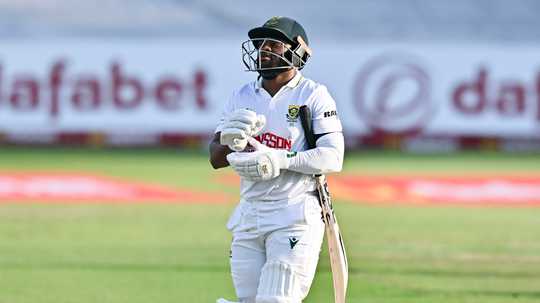
South Africa captain Temba Bavuma took seven quiet minutes after his team’s heavy defeat to Australia at Kingsmead. The visitors had won by 214 runs, ending the match shortly after lunch on Tuesday. The handshakes were over, the crowd’s reaction had faded, and Bavuma slipped away from the field to sit alone in the dugout.
It was a brief pause after a demanding Test match—and a rare glimpse of a captain taking time to gather his thoughts before facing questions. Bavuma has generally avoided public displays of frustration, even when results have brought intense scrutiny. This defeat, however, demanded an explanation. It was the first time in 13 Tests as South Africa captain that he had led his side to a loss.
A Promising Start Slips Away
South Africa had reason to believe they could control the match early. Their bowlers reduced Australia to 124 for six on the opening day, putting the home side in a strong position to restrict the visitors to a modest total. Instead, Matt Renshaw produced the innings of the match, scoring a career-best 190 and helping Australia recover to 390.
For Bavuma, that recovery was a turning point. He acknowledged that South Africa had expected to finish Australia’s innings for fewer than 250 runs once the top order was under pressure. Renshaw’s resistance changed the mood of the contest and, in the captain’s assessment, took a mental toll on the bowling group.
Australia’s lower-order resilience was only part of the story. South Africa then struggled to make the most of a pitch that offered favourable batting conditions. Their first innings stalled at 99 for four, a collapse that left them chasing the match rather than dictating it. They eventually made 284, avoiding the follow-on, but the innings had already handed Australia a significant advantage.
Renshaw and Hazlewood Set the Tone
Australia extended their lead to 420 in the second innings, with Renshaw adding 82 before the declaration. South Africa ended Monday at 102 for four, facing a steep challenge on the final day. Aiden Markram and Wiaan Mulder showed patience through a prolonged morning partnership, keeping hopes of survival alive for nearly two hours.
That resistance ended abruptly. South Africa lost six wickets for 51 runs, turning a difficult position into defeat just over an hour after lunch. Markram was the last major obstacle for Australia, departing for a determined 75. Josh Hazlewood finished with career-best figures of six for 49, repeatedly finding ways to break through the home side’s defence.
The final scoreline reflected Australia’s control, but the match had been more competitive than the margin suggested during its early stages. South Africa’s inability to convert a strong start with the ball—and their failure to build a substantial first-innings total—proved costly. In Test cricket, momentum can shift quickly, and Australia made the most of each opening.
Bavuma Rejects Lack of Match Practice as an Excuse
The Kingsmead match was South Africa’s first Test in almost 11 months. Australia, by contrast, had played six Tests during that period before arriving in Durban. The difference in recent red-ball experience was an obvious talking point, but Bavuma refused to use it to explain the defeat.
He noted that the team had known about the gap in its Test schedule and had prepared as well as possible. Still, he acknowledged that practice cannot fully reproduce the demands of international Test cricket. His main concern was not simply rustiness, but the quality of the decisions South Africa made under pressure.
That distinction matters ahead of the next match. Limited preparation may affect timing and rhythm, but avoidable errors can be addressed through clearer plans and better execution. Bavuma said some of South Africa’s mistakes were mental, suggesting the team must improve its concentration as much as its technique.
Shot Selection Under Pressure
South Africa’s first-innings batting attracted particular criticism. Several dismissals came from loose or poorly judged shots, despite conditions that rewarded patience. Bavuma said the team’s approach had not changed from its established plan: assess the pitch and respond to what it offers. Yet the players did not apply that approach consistently.
The captain included himself among those responsible for soft dismissals. He also argued that South Africa had not simply thrown caution aside or attacked recklessly. Rather, the pressure of facing a high-quality Australian side exposed players who may not have been accustomed to those conditions and demands.
That is an important challenge for a team preparing to respond quickly. Australia’s attack combined discipline with patience, while Hazlewood’s final-day spell showed how sustained pressure can turn a stable partnership into a collapse. South Africa will need to make Australia work harder for every wicket and avoid gifting chances through hurried decisions.
Four Days to Reset Before St George’s Park
There is little time for South Africa to dwell on the result. The second Test at St George’s Park begins on Sunday, leaving Bavuma and his players only four days between matches to review what went wrong and prepare a response.
The key questions are straightforward: Can South Africa turn promising bowling positions into complete innings? Can the batters show greater discipline when the opposition applies pressure? And can the team carry confidence from its stronger passages into the next Test rather than allowing setbacks to dictate the contest?
For supporters following the series, those questions will shape the build-up and inform any cricket prediction about the next match. Australia will arrive with confidence after a commanding win, but one result does not settle a Test series. South Africa have the opportunity to respond at home, provided they learn quickly from the lapses that proved decisive at Kingsmead.
Bavuma’s quiet moment in the dugout offered no public answers, and perhaps that was the point. The captain waited before speaking, then accepted responsibility and identified areas for improvement. Now the challenge is to turn those reflections into action. South Africa’s next performance will show whether the Kingsmead defeat was a damaging setback—or a lesson they can use to make the contest more competitive.