
Who Is Telling the Truth? The Clash Between Morocco and FIFA Over 2030 World Cup Hosting Rights
The recent controversy surrounding the hosting rights for the 2030 FIFA World Cup has ignited a fierce debate within the football community and beyond. At the heart of this dispute lies a bold announcement from Morocco, claiming that it will host the prestigious World Cup final, a statement that FIFA swiftly denied. This conflicting narrative has not only stirred passions among football fans worldwide but also raised serious questions about transparency, credibility, and the political undercurrents influencing international football decisions.
The Moroccan Declaration and FIFA’s Immediate Denial
Morocco, a nation with a rich football heritage and a passionate fan base, made headlines when its officials announced that Casablanca would host the 2030 World Cup final. The statement was seen as a significant development, signaling Morocco’s ambition to position itself as a major player on the global football stage and to showcase its capacity to host a tournament of such magnitude.
However, the international governing body, FIFA, quickly dismissed these claims. In an official statement, FIFA categorically denied that any decision had been made regarding the final’s location, asserting that discussions about the tournament’s specifics were still ongoing and that no official final venue had been determined. The swift denial, however, did little to quell the storm of speculation and skepticism among football analysts and fans alike.
The Role of Key Figures and the Political Underpinnings
The controversy deepened with comments from prominent football figures, notably Javier Tebas, president of La Liga in Spain. Tebas voiced his criticism on social media, accusing FIFA of a pattern of denial that he described as a “semi-official policy.” His pointed remarks highlighted the disconnect between what Moroccan officials claimed and FIFA’s official stance, questioning the credibility of both sides.
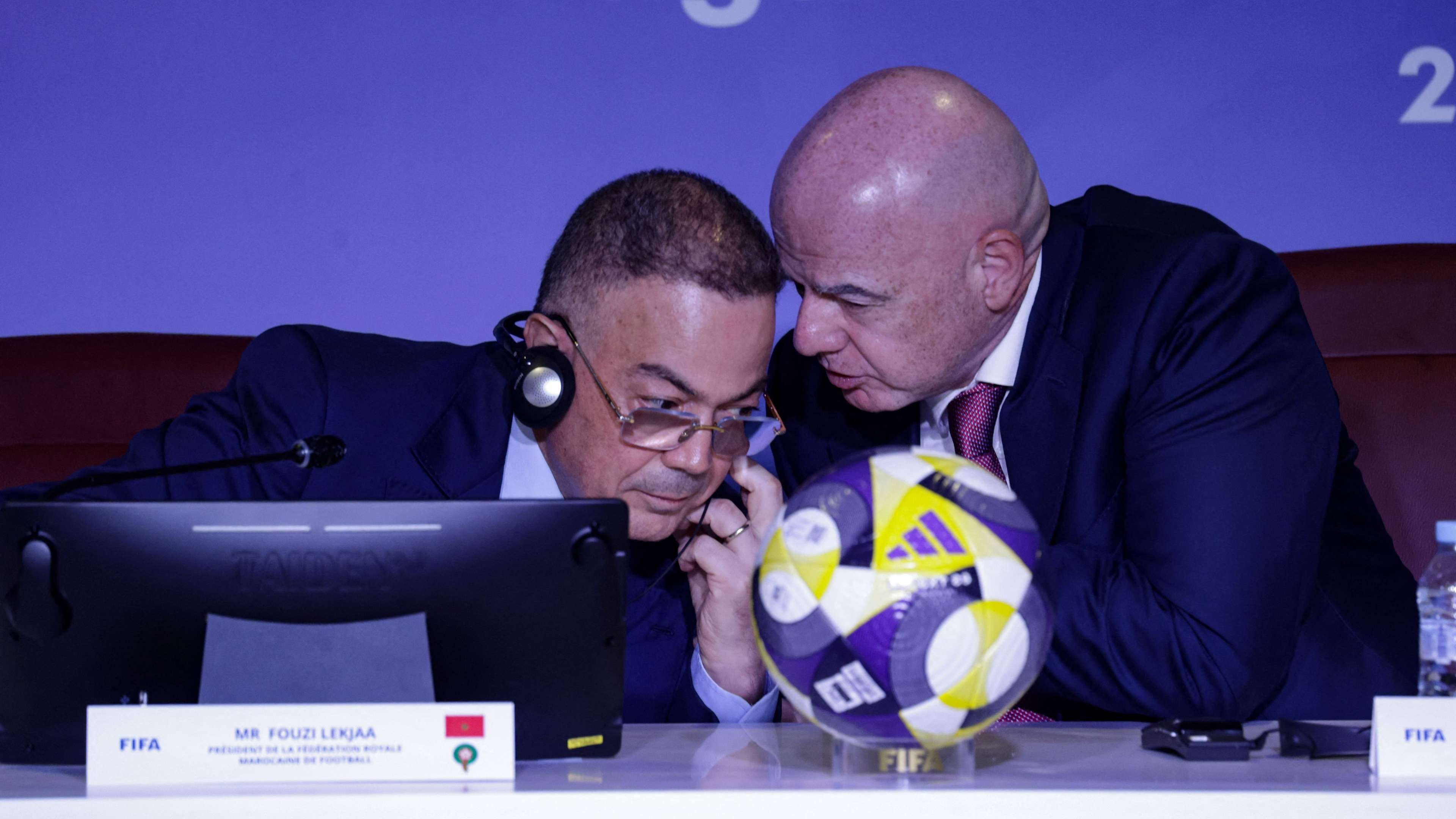
In a particularly pointed remark, Tebas emphasized the importance of source credibility in such high-stakes announcements. He stated, “The problem lies in the identity of the person who said it. He’s not a journalist, nor is it merely a rumour on social media. It’s Fouzi Lekjaa, president of the Royal Moroccan Football Federation, a member of the FIFA Council itself, and the minister delegate to the Moroccan government responsible for the budget.” This statement underscores the significance of the source—an influential football administrator and government official—whose claim contradicts FIFA’s denial, adding layers of complexity to the unfolding saga.
The Broader Implications for International Football
This dispute is more than just a matter of venue selection; it reflects broader issues within FIFA and international football governance. The organization has faced criticism over transparency, decision-making processes, and the influence of politics and economics. The Moroccan claim, if true, could signify a shift in FIFA’s traditional host selection process, which has historically been shrouded in secrecy.
Moreover, the conflict taps into regional ambitions and geopolitical dynamics. Morocco’s bid to host the 2030 World Cup final could be seen as part of a broader strategy to elevate its status on the global stage. Conversely, FIFA’s denial might be rooted in internal processes, logistical considerations, or diplomatic sensitivities that are not immediately apparent to the public.
The Historical Context and Previous Controversies
This isn’t the first time FIFA has found itself embroiled in controversy over tournament hosting rights. Past incidents, such as the contentious selection of Qatar for the 2022 World Cup and the alleged behind-the-scenes negotiations, have cast a shadow over FIFA’s integrity. Tebas’s references to past incidents, like the Palhinha red card scandal during the FIFA Club World Cup, serve to reinforce his skepticism about FIFA’s transparency and consistency in handling such matters.
During that incident, FIFA claimed that a controversial red card was unrelated to any external influence, only for the suspension to be mysteriously lifted. Tebas’s pointed critique suggests a pattern of inconsistent or opaque decision-making that undermines public trust.
The Future of the 2030 World Cup and What’s at Stake
The controversy underscores the importance of clarity and transparency as FIFA moves forward with planning the 2030 World Cup. The tournament, marking its centenary, is expected to be a milestone event, with bids from multiple countries across Africa, Europe, and South America. Morocco’s ambition to host the final, especially in Casablanca, aligns with its vision to boost tourism, infrastructure development, and national prestige.
Football prediction enthusiasts and industry insiders are closely watching these developments, as the final venue decisions will impact everything from match logistics to fan experience and economic outcomes. The debate over Morocco’s claim also raises questions about how FIFA will manage regional interests and political pressures in the lead-up to the tournament.
The Political and Economic Dimensions of Hosting Rights
Hosting a World Cup final is not just a sporting milestone; it is also a significant political and economic event. Countries often see the tournament as an opportunity to showcase their development, attract investment, and enhance their international reputation. Morocco’s bid reflects a desire to leverage football’s global appeal to foster national pride and economic growth.
Yet, the process is fraught with challenges. Infrastructure readiness, security concerns, and diplomatic relations all play crucial roles in the decision-making process. The ongoing controversy illustrates how deeply intertwined sports, politics, and economics are in shaping major international events.
What’s Next? Navigating Uncertainty and Ensuring Fair Play
As FIFA continues its deliberations, the football community remains divided. Fans, analysts, and stakeholders are calling for greater transparency and open communication. The key questions persist: Who is telling the truth—the Moroccan federation or FIFA? And what will be the ultimate decision regarding the venue for the 2030 World Cup final?
Meanwhile, regional football associations and national federations are preparing for a range of scenarios, with predictions varying from Morocco hosting a historic final to the possibility of a different venue altogether. The situation emphasizes the importance of credible information sources and the need for FIFA to restore trust through transparency and consistent communication.
Conclusion: The Road Ahead for Football Prediction and Global Trust
The unfolding saga over the 2030 World Cup final illustrates the complexities and high stakes involved in hosting one of the world’s most watched sporting events. It also highlights the importance of integrity, transparency, and credibility in global football. As the story develops, football prediction experts and fans alike will be eager to see how FIFA navigates these turbulent waters and whether Morocco’s bold claims will be validated on the world stage.
Ultimately, this controversy serves as a reminder that football is more than just a game—it is a reflection of cultural identity, political ambitions, and economic aspirations. The decisions made today will shape the future of international football and its ability to unite people worldwide through the beautiful game.