
Ishan Kishan Ruled Out of Second T20I Against New Zealand With Groin Strain
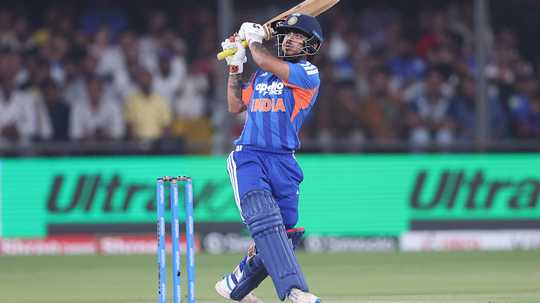
India will be without wicketkeeper-batter Ishan Kishan for the second T20I against New Zealand after he sustained a right adductor strain during the opening match. The fixture is scheduled to take place at Hagley Oval in Christchurch on Saturday, October 24, with the injury prompting questions about India’s batting order and possible changes to the playing XI.
The Board of Control for Cricket in India (BCCI) confirmed that Kishan’s injury involves the groin area. India won the first T20I by four wickets, but the batter is now expected to miss at least the next game while the team’s medical staff assess his recovery. His absence creates an opportunity for a squad replacement, although the final decision will depend on his fitness and India’s balance requirements.
India Confirm Kishan’s Injury, With Selection Decision Pending
India batting coach Sitanshu Kotak addressed Kishan’s condition at a press conference on Friday, clarifying that the batter’s position in the first match had not been changed for tactical reasons. Speculation had followed a shift in the batting order, but Kotak said the adjustment was linked to Kishan’s discomfort.
“Ishan Kishan has a niggle in his groin,” Kotak said. He added that the issue appeared to make Kishan unlikely to feature in the second T20I, while leaving the door open for a return if the player recovers completely. The team’s medical staff will have the final say on his availability.
Adductor strains can affect movement when a player accelerates, changes direction or stretches to reach the ball. For a wicketkeeper-batter, that can be particularly challenging: batting involves quick running between the wickets, while keeping demands repeated crouching and lateral movement. India are therefore likely to take a cautious approach rather than risk aggravating the injury during a short-format match.
Vaibhav Sooryavanshi in Contention for India Debut
Kishan’s absence could bring Vaibhav Sooryavanshi into the selection conversation. The young batter is the only other specialist top-order option in the squad, according to Kotak, and has not appeared in the XI since the Asian Games. His inclusion would give India an opportunity to assess a fresh batting option, though a call-up would also place him under immediate pressure in a competitive series.
Kotak indicated that Sooryavanshi would be considered if Kishan is unavailable, describing him as one of the strongest candidates to play. The decision may depend on the role India want to fill. If the team prefers a direct batting replacement, Sooryavanshi is a natural option. If it prioritises all-round balance, another player could be considered instead.
India’s established openers have been in strong form, which had made a place in the starting XI difficult for Sooryavanshi before Kishan’s injury. That form gives the selectors some flexibility: they can avoid disrupting the opening combination and use the available spot to strengthen another part of the lineup. Alternatively, they could promote a new batter and maintain the team’s preferred structure.
Shivam Dube Offers an Alternative Combination
India also have Shivam Dube as a potential option. Unlike a specialist batter, Dube can contribute with medium pace, giving the team an extra bowling resource alongside his power-hitting. Including him could provide greater depth, particularly if conditions at Hagley Oval encourage seam movement or if India want additional coverage across the bowling innings.
The choice between Sooryavanshi and Dube would reflect different priorities. Selecting Sooryavanshi would add a specialist batting option and could help preserve the team’s top-order shape. Dube, by contrast, could improve the side’s flexibility, allowing India to manage workloads among the frontline bowlers. Neither option is automatically preferable; the pitch, match conditions and planned batting order are likely to influence the call.
That tactical decision is one of the key storylines ahead of the second T20I. India will want to maintain the momentum earned through their four-wicket win in the opener, while avoiding unnecessary disruption to a lineup that has already shown it can chase successfully. The team must also balance short-term results with the opportunity to give squad players valuable international experience.
Christchurch Match Begins a Busy T20I Schedule
The second match at Hagley Oval is the next step in a five-game T20I series. After Christchurch, India and New Zealand are scheduled to travel to Wellington, Auckland and Hamilton for the remaining fixtures. With matches coming in quick succession, fitness management will be important for both teams, particularly for players carrying minor injuries.
For India, Kishan’s recovery will be watched closely beyond Saturday’s game. A groin strain can vary in severity, and the team may prefer to assess him day by day rather than commit to a return date. His availability could become increasingly important as the series progresses, especially if India need to adjust their batting combinations or rotate players during the tour.
What to Watch in the Second T20I
The main selection question is whether India choose a like-for-like batting replacement or use Kishan’s absence to reshape the XI. Sooryavanshi’s potential inclusion would attract attention as a chance for the young batter to make an impression, while Dube’s all-round contribution could strengthen the side’s depth. India’s final choice will likely reflect both the conditions and the team’s assessment of its batting and bowling balance.
Any cricket prediction for the Christchurch contest should account for the uncertainty around India’s lineup. The first match showed that the visitors can handle a close chase, but the second game may test their adaptability without Kishan. New Zealand, meanwhile, will look to respond after losing the opener and could target any disruption caused by India’s selection changes.
For now, the clearest update is that Kishan is expected to miss the second T20I, with the medical team monitoring his condition. India’s final XI will reveal whether Sooryavanshi gets an opportunity, whether Dube is brought in for added all-round value, or whether the team opts for another combination. The decision could shape not only Saturday’s match but also India’s approach to the remainder of the series.