
Inter vs Club Brugge: Player Ratings After a Chaotic Champions League Night at San Siro
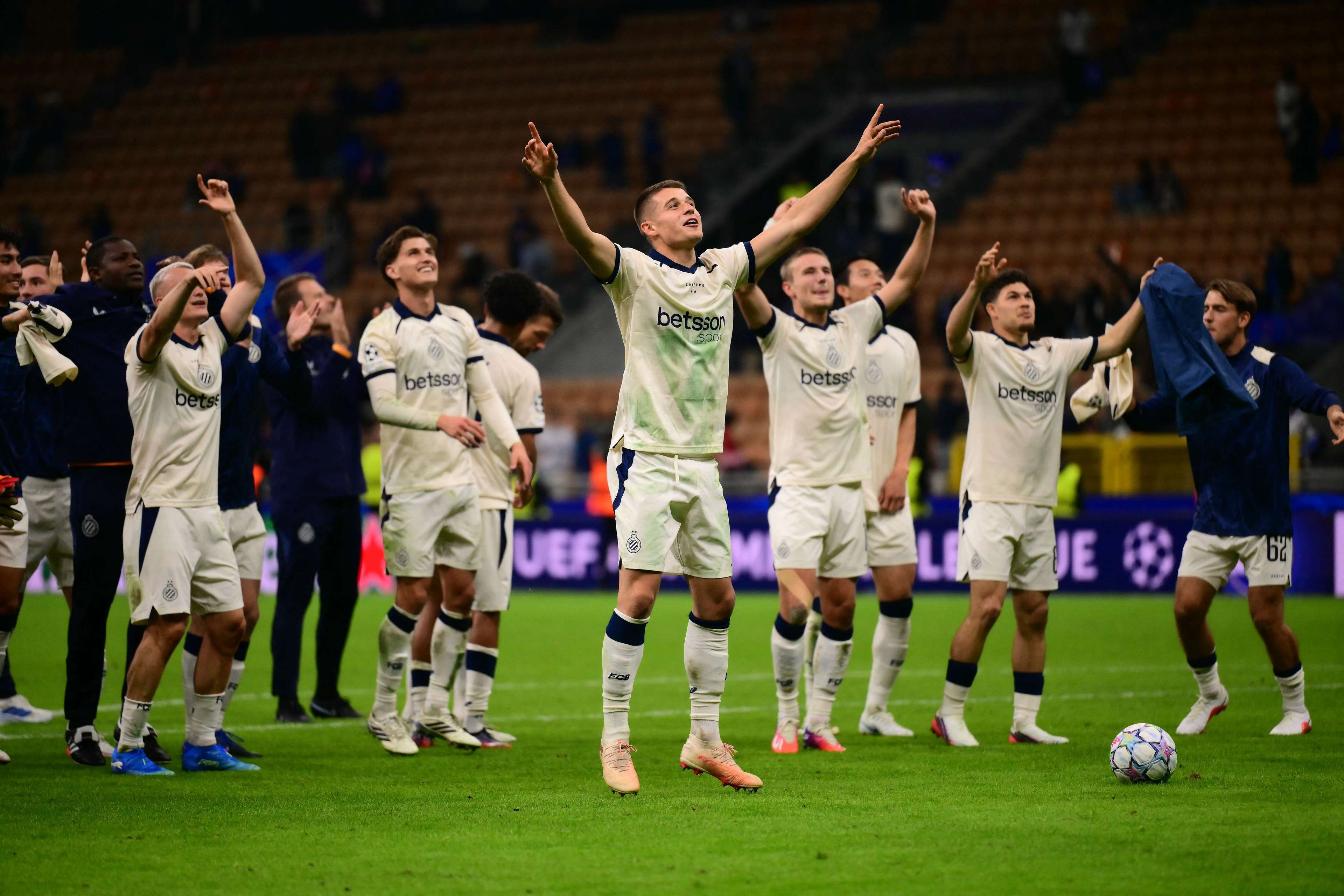
Inter’s Champions League meeting with Club Brugge delivered the kind of football that keeps supporters watching until the final whistle: goals, momentum swings and individual moments of brilliance. But the drama came at a cost for the Italian side, whose defensive weaknesses were exposed as the visitors repeatedly exploited space and pace on the counterattack.
Lautaro Martínez led Inter’s response with a pair of goals and a determined display, while substitute Ange-Yoan Bonny made an immediate impression. Yet the Nerazzurri’s attacking threat could not disguise an unsettled back line and a performance that raised questions about their current balance. Here are the player ratings and key talking points from a difficult night at San Siro.
Inter Player Ratings
Goalkeeper and Defence
J. Martínez – 4.5: There was little he could do to prevent Tresoldi’s penalty, but the goalkeeper’s later decisions proved costly. He rushed far from his goal to confront an attack that did not require such an intervention, leaving the net exposed for the Belgian striker’s second goal. He then parried another effort into the path of the opponent, who converted the rebound. Martínez has produced strong moments between the posts, but repeated errors are becoming a serious concern for Inter. After previous warning signs, this performance makes the goalkeeping question harder to ignore.
Bisseck – 5: Asked to help start attacks from the back, Bisseck showed some ambition in possession but was not consistently alert to danger. Brugge’s fast wide players targeted the spaces around him, and the speed mismatch became increasingly clear. He struggled to contain their runs and was unable to provide the defensive stability Inter needed.
Akanji – 4.5: A difficult evening for the centre-back. He was too loose in his marking of Tresoldi, who frequently reacted more quickly and found ways to get around him. Akanji’s physical approach earned him a yellow card, while his attempts to build play were slow and laboured. The display added to the impression that he has not yet found his best form this season.
Bastoni – 5.5: The most composed member of Inter’s back three, Bastoni held his position and took responsibility for moving the ball forward. Even so, he could not prevent the defence from being stretched. As the match wore on, he appeared to tire while trying to deal with the pace of Potts and Forbs.
Diouf – 5.5: Diouf offered a useful attacking outlet and caused Brugge some problems when moving forward. His defensive work was less convincing. When the visitors ran directly at him, his difficulties tracking and containing quick opponents became apparent.
Midfield and Wing-Backs
Barella – 5: Barella found it hard to influence the contest, caught between protecting the defence and creating attacks. He did not make enough of an impact in either role, and Brugge’s rapid transitions repeatedly drew him out of position. Bonny – 6.5: Introduced in the 78th minute, Bonny brought energy and direct running. He attacked the space behind the defence and scored a fine goal, dribbling into position before curling his finish. His contribution suggested he might have been useful earlier.
Çalhanoğlu – 5: His passing lacked its usual precision, and he struggled to provide cover when Brugge broke forward. A foul on Forbs as the winger advanced towards goal resulted in the penalty. Çalhanoğlu came close to a spectacular response with a long-range shot that struck the crossbar, but he had to leave the pitch with a physical problem before Inter’s late defensive collapse. Sucic – 5.5: His effort helped create the opportunity for Martínez’s second goal. However, while Inter needed attacking intent, Sucic was not always diligent enough in his defensive responsibilities.
Zielinski – 5: He worked to connect Inter’s midfield and attack and came close to scoring, but one costly moment overshadowed much of his effort. His turnover helped launch the Forbs counterattack that led to the penalty. He struggled to recover his influence after that sequence. Stankovic: Came on in the 88th minute and did not play long enough to receive a rating.
Dimarco – 5: The left-sided player has not yet rediscovered the attacking influence that made him such a threat last season. He made several untidy errors, although his left foot remained dangerous, particularly with a promising second-half delivery. Defending against Forbs’ pace was a much tougher assignment. Spence: Replaced Dimarco in the 78th minute; not rated.
Forwards
Lautaro Martínez – 7: Inter’s standout performer and their most reliable source of attacking quality. His first goal was ruled out, but he responded with a sharp equaliser, using a quick toe-poke to finish like a natural centre-forward. He later missed a major one-on-one opportunity against Sommer, then gave Inter renewed hope with a close-range finish to make it 2–3. Martínez kept fighting until the end, even as the defeat became increasingly difficult to prevent.
Thuram – 6: His strength and speed gave Inter a useful outlet against Brugge’s central defenders, and he was willing to test the goalkeeper from distance. His substitution was debatable: he still looked capable of troubling a defence that had shown signs of losing concentration. P. Esposito – 5.5: He worked hard after coming on but saw little of the ball. A one-on-one chance against Sommer offered an opportunity to make a bigger impact, but he could not convert it.
Manager Rating
Chivu – 5: Inter showed enough attacking ambition to make the match entertaining, but their defensive organisation was not convincing. The side appeared vulnerable whenever Brugge moved the ball quickly into wide areas, particularly because the back line struggled to cover large spaces against fast attackers. A team that commits players forward must be especially disciplined when possession is lost; Inter were not. Chivu’s approach produced goals and moments of promise, but the balance between attack and defence remained a major problem.
What the Result Says About Inter
The match offered a clear contrast between Inter’s ability to create danger and their capacity to control it. Martínez’s finishing and Bonny’s lively cameo showed that the team still has the quality to hurt opponents. However, the repeated openings conceded to Brugge pointed to deeper issues than one isolated mistake. Defensive positioning, recovery speed and decision-making all came under pressure.
For supporters looking ahead to Inter’s next European fixture, the key question is whether the team can preserve its attacking edge while becoming more compact without the ball. In the Champions League, opponents are quick to punish gaps, and the Belgian side demonstrated how effective direct transitions can be. Inter’s comeback efforts kept the contest alive, but the player ratings underline why entertainment alone is not enough at this level.
This result also complicates any confident football prediction about Inter’s European prospects. The Nerazzurri have the firepower to score against strong opposition, yet their defensive form makes outcomes difficult to forecast. Unless they improve their coordination at the back and receive more dependable goalkeeping, even an impressive attack may not be sufficient to turn chaotic nights into Champions League victories.