
Opposition Against FIFA President Gianni Infantino Grows Ahead of Decisive Meeting in Morocco
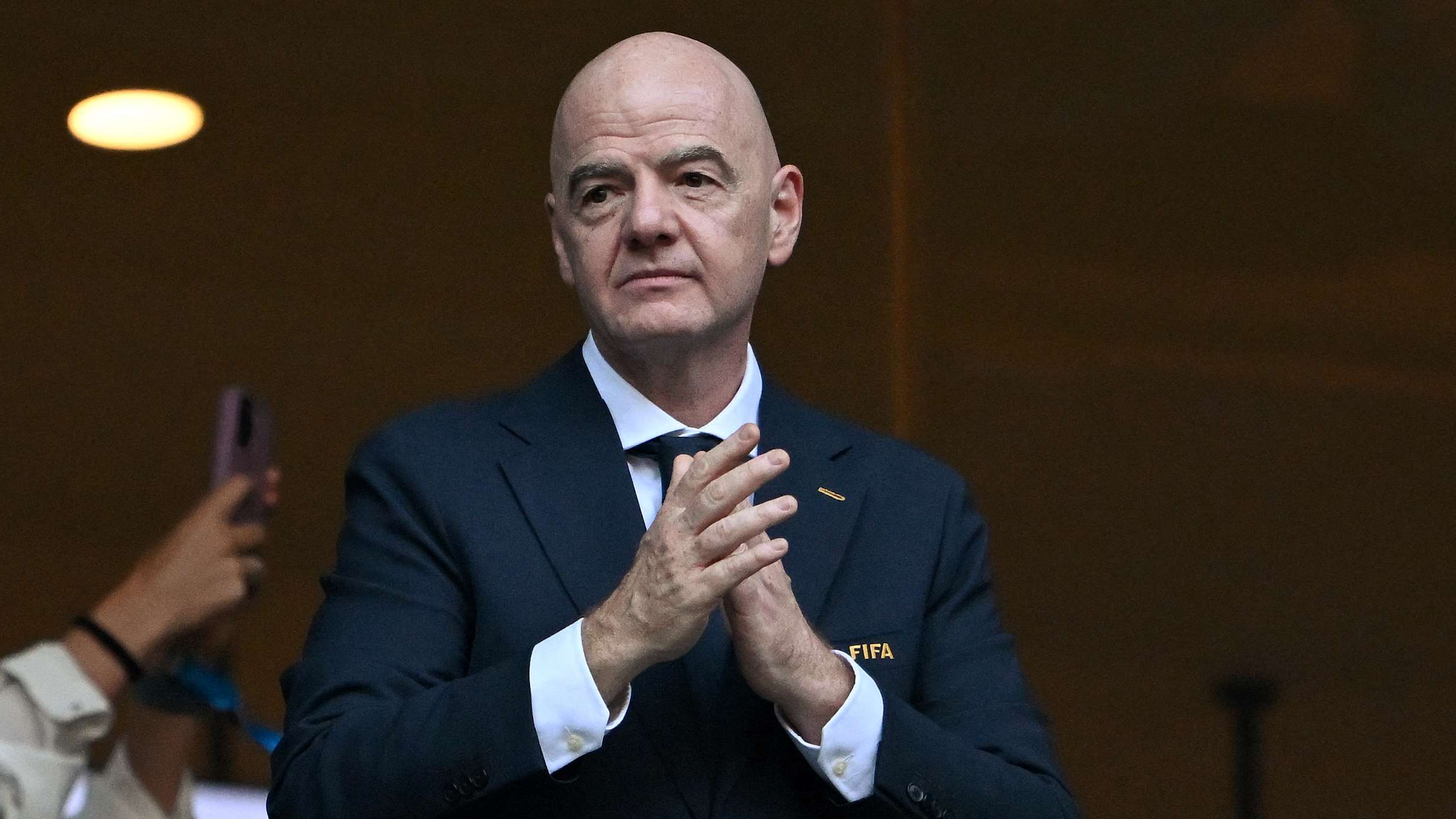
Gianni Infantino, the president of the International Federation of Association Football (FIFA), is facing increasing pressure from opponents as he arrives in Morocco for a crucial meeting. The latest prominent figure to demand his resignation is Portuguese football legend Luis Figo.
Mounting Pressure on Infantino
Infantino had called for a crisis meeting with senior FIFA officials in the Moroccan city of Salé following the leak of plans to sell stakes in the World Cup worth 3.1 billion pounds sterling. The backlash against these proposals forced Infantino to backtrack, with opposition coming from within FIFA’s own ranks.
Both the Union of European Football Associations (UEFA) and the Confederation of North, Central America and Caribbean Association Football (CONCACAF) have expressed a desire for Infantino to step down. UEFA officially announced the withdrawal of their confidence in the FIFA president, further complicating his position.
International Support and Opposition
Arab and African support has bolstered Infantino’s hopes of maintaining his position amidst the European campaign against him. However, the pressure intensified when Prince Ali bin Al Hussein, president of the Jordan Football Association, accused Infantino of practising blackmail. Jordan’s stance marks the first Asian country to rebel against the FIFA president.
Jordan’s opposition adds to the 91 member countries moving against Infantino, with the need for 106 national associations to support his removal from office. As Infantino arrived in Salé for the meeting, reports from “Daily Mail” and “The Times” indicated unsuccessful attempts by his associates to secure public support from the “FIFA Legends” group.
Implications for Infantino’s Future
The “FIFA Legends” group comprises former international football stars who are involved in FIFA’s official events and activities. Their refusal to publicly declare support for Infantino underscores the growing discontent surrounding his leadership.
As pressure continues to mount on Infantino, the outcome of the decisive meeting in Morocco remains uncertain. With opposition from multiple confederations and individual countries, the FIFA president faces a significant challenge in maintaining his position amidst calls for his resignation.
Infantino’s future at the helm of FIFA hangs in the balance, with stakeholders closely watching the developments in Morocco for potential shifts in the leadership of the international football governing body.
Challenges Facing Infantino
One of the key issues that have fueled opposition against Gianni Infantino is the lack of transparency in FIFA’s decision-making processes. The leaked plans to sell stakes in the World Cup without proper consultation with member associations raised concerns about financial motives overshadowing the interests of the football community.
Moreover, critics argue that Infantino’s leadership style has been characterized by a top-down approach, marginalizing the voices of national football associations and confederations. The growing discontent within FIFA reflects a broader dissatisfaction with the governance and accountability of the organization under Infantino’s tenure.
Global Response to the Crisis
The international football community is closely monitoring the developments surrounding Gianni Infantino’s leadership crisis. The outcome of the meeting in Morocco could have far-reaching implications for the future of FIFA and the integrity of the sport.
While some regions have expressed support for Infantino, especially from Arab and African nations, the majority of opposition comes from Europe and now Asia. The diverse reactions highlight the complex dynamics at play within FIFA and the varied interests of its member associations.
Potential Repercussions for World Football
If Gianni Infantino were to step down or be removed from his position as FIFA president, it could lead to a period of transition and restructuring within the organization. The selection of a new leader would be critical in restoring trust and credibility in FIFA, especially in the wake of recent controversies and allegations of corruption.
Furthermore, the power struggle within FIFA could impact the governance of global football competitions, including the World Cup. The decisions made by the next president will shape the direction of the sport and determine how FIFA addresses pressing issues such as financial transparency, ethical standards, and the distribution of resources.
Conclusion
The opposition against Gianni Infantino signals a pivotal moment for FIFA and the future of international football governance. As stakeholders gather in Morocco for a decisive meeting, the world is watching to see how the leadership crisis unfolds and what implications it may have for the sport as a whole.
Regardless of the outcome, the challenges facing FIFA underscore the importance of upholding integrity, accountability, and fair play in football administration. The resolution of the current crisis will set a precedent for how FIFA navigates internal conflicts and strives to regain the trust of its global audience.
By delving into the intricacies of the opposition against Gianni Infantino and the potential impact on FIFA’s future, it becomes evident that the leadership crisis transcends individual personalities and speaks to the broader issues of governance and ethics in world football.