
India Crowned First Men’s Commonwealth Kabaddi Champions After Dominant Final
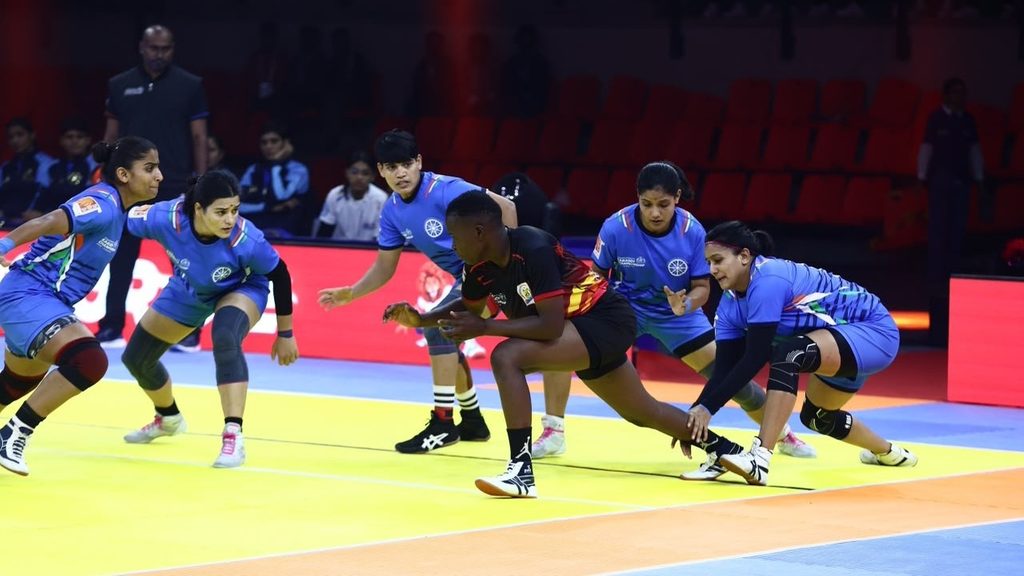
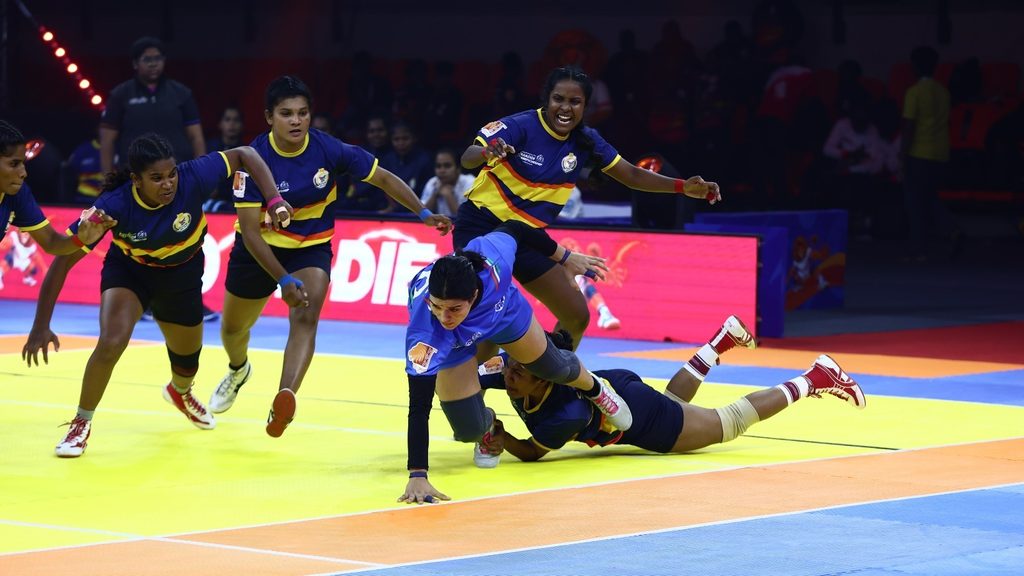
India made history at the inaugural Commonwealth Kabaddi Championship 2026, defeating Sri Lanka 54-20 in the men’s final on Day 9 to become the competition’s first champions. The emphatic victory completed a golden double for the hosts, following India Women’s 35-15 win over Uganda earlier in the evening.
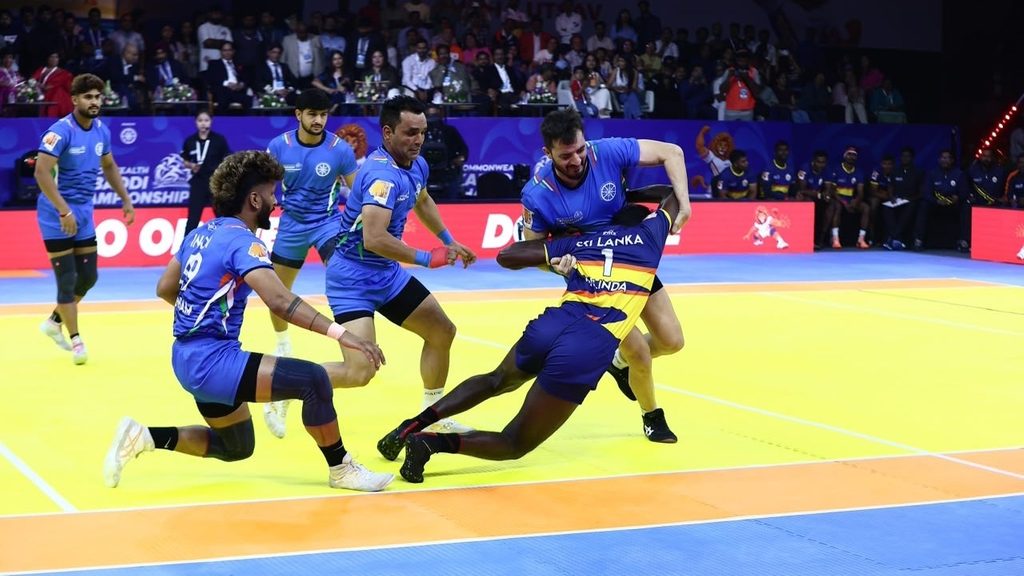
In front of a supportive Ahmedabad crowd, India combined sharp raiding with disciplined defence to control the final from the opening exchanges. The champions scored 30 raid points and 14 tackle points, forced Sri Lanka into four all-outs and were never all-out themselves. Their performance capped a remarkable tournament campaign in which they won all eight matches.
Shinde leads India’s raiding effort
Aditya Shinde was India’s top scorer, earning a Super 10 with 10 raid points from 14 attempts. His total included four bonus points, reflecting his ability to find scoring opportunities while avoiding Sri Lanka’s defensive traps. Bharat Hooda provided another important attacking contribution, collecting eight raid points in the second half without being tackled in any of his seven raids.
Pankaj Mohite added six points, while vice-captain Naveen Kumar contributed five. India’s raiders repeatedly put pressure on the Sri Lankan defence, mixing safe bonus-point attempts with well-timed raids that helped build an increasingly difficult lead to overcome.
The team’s attacking efficiency was clear in the final statistics. India completed 24 successful raids from 40 attempts, while Sri Lanka managed only seven successful raids from 41. The difference was not simply the number of opportunities created: India converted far more of them into points and kept the opposition from gaining momentum.
Yogesh Dahiya anchors a formidable defence
India’s defensive unit was just as decisive. Yogesh Dahiya produced a High 5, making five successful tackles from five attempts—all in the first half. His flawless start helped restrict Sri Lanka’s raiders and gave India the platform to turn early pressure into a commanding advantage.
Shubham Shinde, captain Surjeet Singh, Pravesh Malik and Deepak Sankar each added two tackle points. Together, the defenders repeatedly closed down Sri Lankan raids, limiting the space available to their opponents and making it difficult for them to score in clusters.
Sri Lanka’s Maduwantha was a notable presence at the other end of the court, finishing with six tackle points, including two Super Tackles. Ansaf and Viduranga added three points apiece. However, those individual efforts could not offset the team’s struggles in attack.
Sri Lanka’s raiders unable to repeat semi-final form
Sri Lanka had reached the final after a semi-final victory over Kenya, with Sabihan, Milinda Chathuranga and Viduranga among the leading contributors. Against India, however, the trio found scoring opportunities scarce. Together, they managed just five raid points from 31 raids, as India’s defence consistently disrupted their attempts.
The challenge was particularly severe in high-pressure situations. Sri Lanka failed in seven of its nine do-or-die raids and finished the match with 11 raid points and nine tackle points. The team also struggled to make successful raids in the first half, completing only two from 21 attempts.
Four all-outs put the final beyond reach
India’s control became unmistakable before the interval. With 10 minutes remaining in the first half, the hosts led 15-8 and had already inflicted one all-out. They then surged ahead, outscoring Sri Lanka 15-2 in the closing stages to take a 30-10 lead into half-time. A second all-out in the final five minutes of the half underlined the gap between the teams.
India’s defenders completed nine successful tackles from 10 attempts before the break, while Sri Lanka’s attack struggled to get going. The second half followed a similar pattern, with India winning it 24-10 and inflicting two further all-outs. The last came in the final five minutes, sealing the scale of the victory and leaving Sri Lanka with too much to recover.
Across the match, India’s balance was central to the result: effective raids generated a steady flow of points, while the defence prevented Sri Lanka from building a response. In kabaddi, where a single successful raid or all-out can quickly shift momentum, India managed those turning points with composure and precision.
Shinde praises Ahmedabad supporters
After the final, top scorer Aditya Shinde praised the crowd’s backing and welcomed the opportunity to compete in front of local fans. “With more and more tournaments being held, it’s great for the people of Ahmedabad too, and we received so much support from them,” he said. He added that the team hoped supporters would continue to attend future competitions and said a major celebration was already under way.
The support in Ahmedabad provided a fitting backdrop to a landmark result. The inaugural championship gave teams from across the Commonwealth a platform to compete, while India’s title win offered home fans a memorable conclusion to the tournament.
India’s unbeaten championship campaign
India’s final victory was the culmination of a perfect eight-match run. The team topped Group A with wins over England, Uganda, Malaysia, Nigeria, Tanzania and Sri Lanka, before overpowering Bangladesh 56-27 in the semi-final. They then returned to defeat Sri Lanka 54-20 in the title match.
India scored 380 points across the tournament and conceded 193. No opponent managed more than 30 points against them, a record that highlights the consistency of their defence as well as the depth of their raiding options. The men’s championship, combined with the women’s victory, made the inaugural Commonwealth Kabaddi Championship a standout event for Indian kabaddi.
By lifting the first men’s trophy, India set an early benchmark for future editions. Their final performance showed how coordinated defence, confident raiding and sustained pressure can turn a championship match into a decisive statement—and gave the hosts a historic double to celebrate.