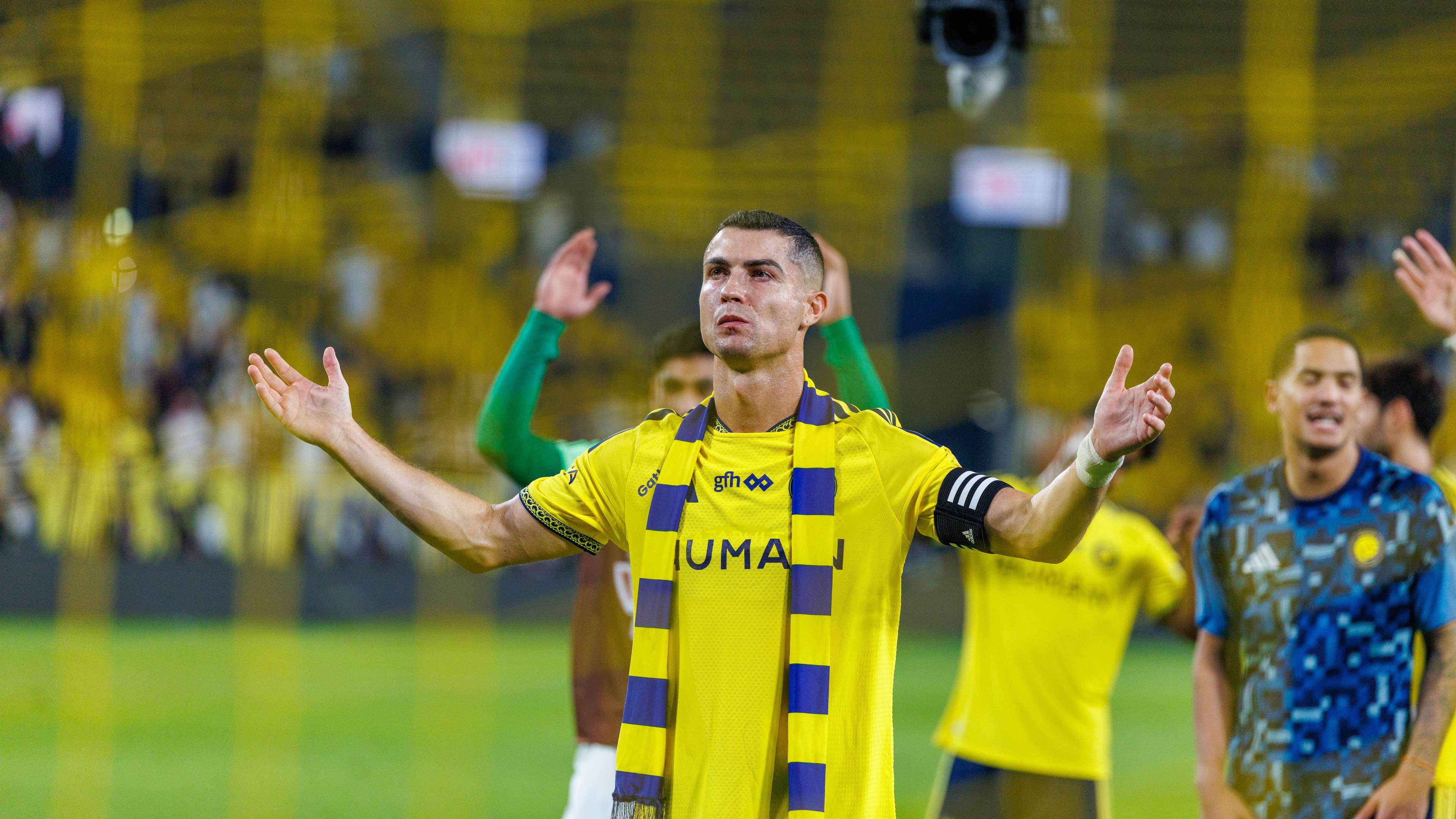

Hussein Abdulghani Questions Al-Nassr’s Decision to Keep Cristiano Ronaldo on the Pitch
Saudi football great Hussein Abdulghani has criticised Al-Nassr coach Ange Postecoglou for leaving Cristiano Ronaldo on the field during a tense 1-0 win over Neom, arguing that the team’s needs should have taken priority over its captain’s status.
Al-Nassr claimed all three points at Al-Awwal Park in Riyadh on Tuesday, in the 10th round of the Saudi Roshn League. But the narrow victory prompted debate about Postecoglou’s substitutions after Ronaldo endured a difficult evening, including missing a penalty just before half-time, yet remained on the pitch until the final whistle.
Abdulghani: The team should come first
Speaking on the television programme Nadeena on MBC 1, Abdulghani questioned the coach’s second-half decisions. He said the match was complicated and that, with Al-Nassr protecting a one-goal lead, the priority should have been to manage the result rather than keep any individual player on the field.
Abdulghani argued that substituting Ronaldo would not have been an unreasonable decision. In his view, the forward was not at his best, and his missed penalty added to the case for making a change. The former defender said a coach must assess what the team needs in the moment, regardless of a player’s reputation or standing.
Asked whether Postecoglou had effectively pampered the Portuguese star, Abdulghani said the decision suggested that was the case. He added that Ronaldo is mentally strong and would not necessarily be unsettled by being substituted after missing a spot-kick. The implication was clear: a high-profile player should be treated according to performance and tactical circumstances, just like the rest of the squad.
A close win shaped by fine margins
Al-Nassr’s victory was valuable, but the scoreline left little room for error. When a team leads by only one goal late in a match, coaches must weigh several competing priorities: preserving attacking threat, adding fresh legs, protecting the defence and reducing the risk of conceding an equaliser. A substitution involving a star forward can therefore become as much a tactical question as a public-relations one.
Ronaldo’s presence can influence opponents even when he is not producing his best performance. Defenders may remain focused on his movement, while his reputation can create space for teammates. At the same time, keeping a tiring or out-of-form attacker on the pitch may limit a coach’s options, particularly if the team needs to press, track runners or hold possession under pressure.
That balance is likely to fuel discussion among Al-Nassr supporters. Some may see Ronaldo’s experience and ability to decide matches as reasons to keep him involved until the end. Others may agree with Abdulghani that a coach should make changes based on the match itself, especially when the team is defending a narrow advantage.
Postecoglou’s choices under scrutiny
Abdulghani’s comments place Postecoglou in an awkward position because decisions involving Ronaldo attract attention well beyond the normal analysis of substitutions. The coach must manage a squad built around major expectations while maintaining a clear tactical approach. If a leading player stays on despite a quiet display, questions may follow; if he is withdrawn, the move can also become a headline.
There is no single rule that determines the right call. A coach might keep a forward on because of his finishing ability, leadership or threat from a late set-piece. Alternatively, a fresh substitute could help the team close down space and protect a lead. The effectiveness of either choice depends on the players available, the state of the match and the opponent’s response.
In this case, Al-Nassr ultimately secured the result, which gives Postecoglou’s decision a positive outcome on the scoreboard. Abdulghani acknowledged that the club achieved its immediate objective and collected three points. His criticism was directed less at the final result than at the process, and at whether the team’s collective interests were given enough weight.
Saudi Pro League title race remains tight
The win lifted Al-Nassr to 22 points and third place in the Saudi Pro League standings. They are three points behind leaders Al-Qadisiyah, who have played one more match, and two points behind second-placed Al-Hilal. That position keeps the Riyadh club firmly in the title conversation, but it also leaves little margin for dropped points as the campaign develops.
In a competitive league race, narrow victories can matter as much as emphatic performances. Al-Nassr will be encouraged by taking maximum points from a difficult fixture, while the debate over Ronaldo’s role offers a reminder that results and performances are not always judged in the same way. Supporters will want to see the team maintain its momentum, but they will also expect the coaching staff to make bold decisions when circumstances demand them.
The wider prediction for Al-Nassr is that squad management will remain a major talking point as the season progresses. Ronaldo’s goals and influence make him central to the club’s ambitions, yet the challenge for Postecoglou is to ensure that every selection and substitution serves the team’s tactical needs. Whether Abdulghani’s criticism changes the conversation inside the club remains to be seen; for now, Al-Nassr have the points, and their next performances will offer the clearest response.