
Mike Penders’ costly own goal puts Chelsea under pressure against Tottenham
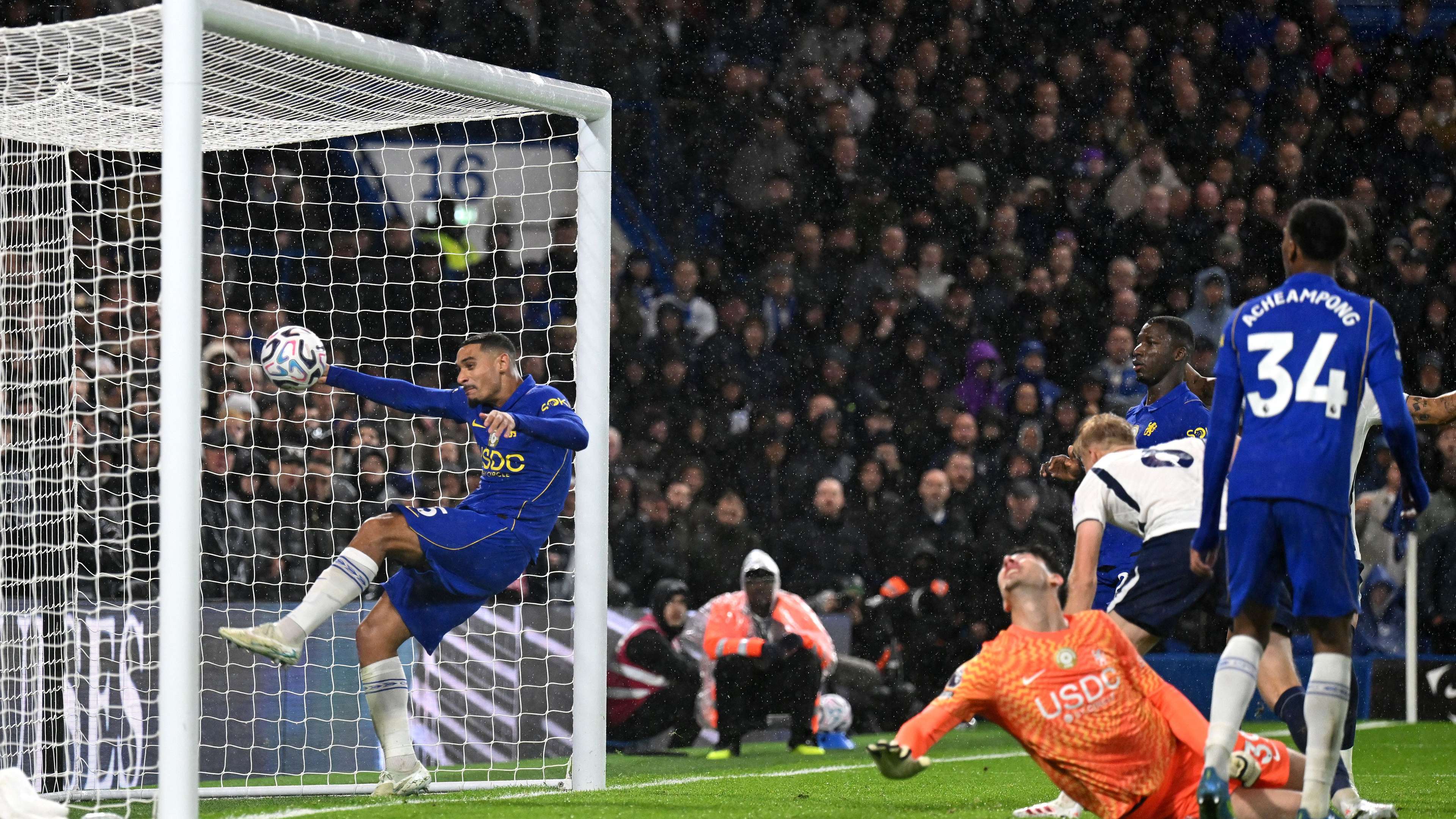
Chelsea goalkeeper Mike Penders endured a difficult moment in the London derby after turning a Tottenham corner into his own net in the 77th minute. The mistake gave Spurs a 1-0 lead at Stamford Bridge and became a defining incident in a fiercely contested Premier League match.
The error came as Penders attempted to punch the ball clear from a corner. Instead of sending it away from danger, the young Belgian misjudged his contact, directing the ball back towards the Chelsea goal. It crossed the line before a defender could intervene, leaving the home side facing a late deficit.
For Chelsea, the goal was particularly frustrating because it followed a spell in which the team had worked to keep Tottenham at bay. For Penders, it was a high-pressure lesson in the fine margins of elite football: one uncertain decision at a set piece can quickly change the course of a derby.
Why Penders was in Chelsea’s starting lineup
Penders was given the opportunity to start after first-choice goalkeeper Emiliano Martinez suffered a jaw injury during Chelsea’s previous meeting with Everton. Martinez underwent surgery and is expected to miss several weeks, creating an opening for the young goalkeeper to take on a larger role.
The Belgian had already made his Premier League debut as a substitute against Everton on 17 October, after Martinez was forced off. At 21 years and 78 days old, Penders became the youngest goalkeeper to appear for Chelsea in the Premier League. His start against Tottenham represented a significant step up, placing him in the spotlight of one of English football’s most closely watched rivalries.
Replacing an established goalkeeper is challenging under any circumstances. Doing so in a London derby adds another layer of pressure, with the pace of the match, the noise inside Stamford Bridge and the importance of the result all demanding composure. Penders’ mistake was costly, but it also came during an early chapter in his senior career.
From Genk to Chelsea: the young goalkeeper’s route
Born on 31 July 2005, Penders stands around two metres tall and developed through the youth system at Belgian club Genk. He made his first-team debut in July 2024, beginning a rapid progression that attracted attention from Chelsea.
Chelsea agreed a deal for the goalkeeper a year before he moved to the club in the summer of 2025. Rather than immediately placing him in the first-team picture, the club sent him on loan to Strasbourg in France for the 2025–26 season. The spell offered valuable experience in senior football and gave him the chance to face a range of opponents and match situations.
During his time at Strasbourg, Penders played 52 matches across competitions and recorded 12 clean sheets. Those appearances helped build his experience, although returning to Chelsea meant entering a different environment, where scrutiny is intense and every performance can attract widespread attention.
What the mistake means for Chelsea and Penders
A goalkeeper’s performance is often judged by a handful of decisive moments, even when the rest of the match includes strong saves, accurate distribution and good communication with defenders. Penders’ own goal will inevitably dominate discussion of the Tottenham fixture, but it should be considered alongside the broader context: he was stepping into the side because of an injury to Chelsea’s senior goalkeeper and is still developing at the highest level.
Set pieces are especially demanding for goalkeepers. They must judge the flight of the ball, decide whether to claim or punch, manage traffic in the six-yard area and coordinate with defenders in a split second. A slight miscalculation can turn a routine clearance into a dangerous chance. In this case, the attempted punch produced the opposite result to the one Penders intended.
Chelsea’s response will matter as much as the incident itself. The coaching staff must decide how best to support the young goalkeeper while keeping the team competitive during Martinez’s absence. Confidence can be fragile after a visible error, but consistent backing and clear communication can help a player recover. Penders’ performance in subsequent matches will provide a better indication of how quickly he can move on.
Match prediction and what to watch next
For supporters assessing Chelsea’s prospects in the coming weeks, the key question is how the team adapts without Martinez. A strong defensive structure can reduce the pressure on any goalkeeper, particularly when opponents target corners and crosses. Chelsea will also need to improve their management of set pieces, where concentration and organisation are essential.
Any football prediction about Chelsea’s next fixtures should account for the uncertainty surrounding the goalkeeper position. Penders has shown that he brings size and senior-match experience from his loan spell, but Premier League football presents a different level of pace and pressure. If he responds positively, the setback against Tottenham could become a valuable part of his development rather than a defining moment.
Chelsea’s upcoming schedule includes a Carabao Cup meeting with Liverpool on 29 October, followed by a Premier League fixture against Crystal Palace on 1 November. Those matches will offer Penders and the team an immediate opportunity to reset. The club will be hoping for a composed performance, sharper work at corners and a result that shifts attention away from the derby error.
For now, the Tottenham goal remains a painful moment for Chelsea and their young goalkeeper. Yet Penders’ path from Genk to Strasbourg and then to Stamford Bridge shows why the club invested in his potential. The challenge is to turn a difficult night into experience—and to demonstrate that one mistake does not define a promising career.