
Cristiano Ronaldo’s disputed goal puts 1,000-goal milestone back in focus
Cristiano Ronaldo moved closer to one of football’s most remarkable career milestones during Al-Nassr’s 3-1 away victory over Al-Faisaly. The Saudi Pro League’s official match report credited the Portuguese forward with his team’s second goal, listing it as the 982nd of his senior career. But the decision has sparked debate: several major data providers recorded the incident as an own goal by Al-Faisaly defender Andrei Girotto.
The disagreement has added an unexpected twist to a match that otherwise appeared to offer a straightforward step toward Ronaldo’s much-discussed pursuit of 1,000 career goals. With the 41-year-old still scoring in Saudi Arabia, every goal is scrutinised—not only for its impact on the result, but also for what it means in the record books.
What happened on Al-Nassr’s second goal?
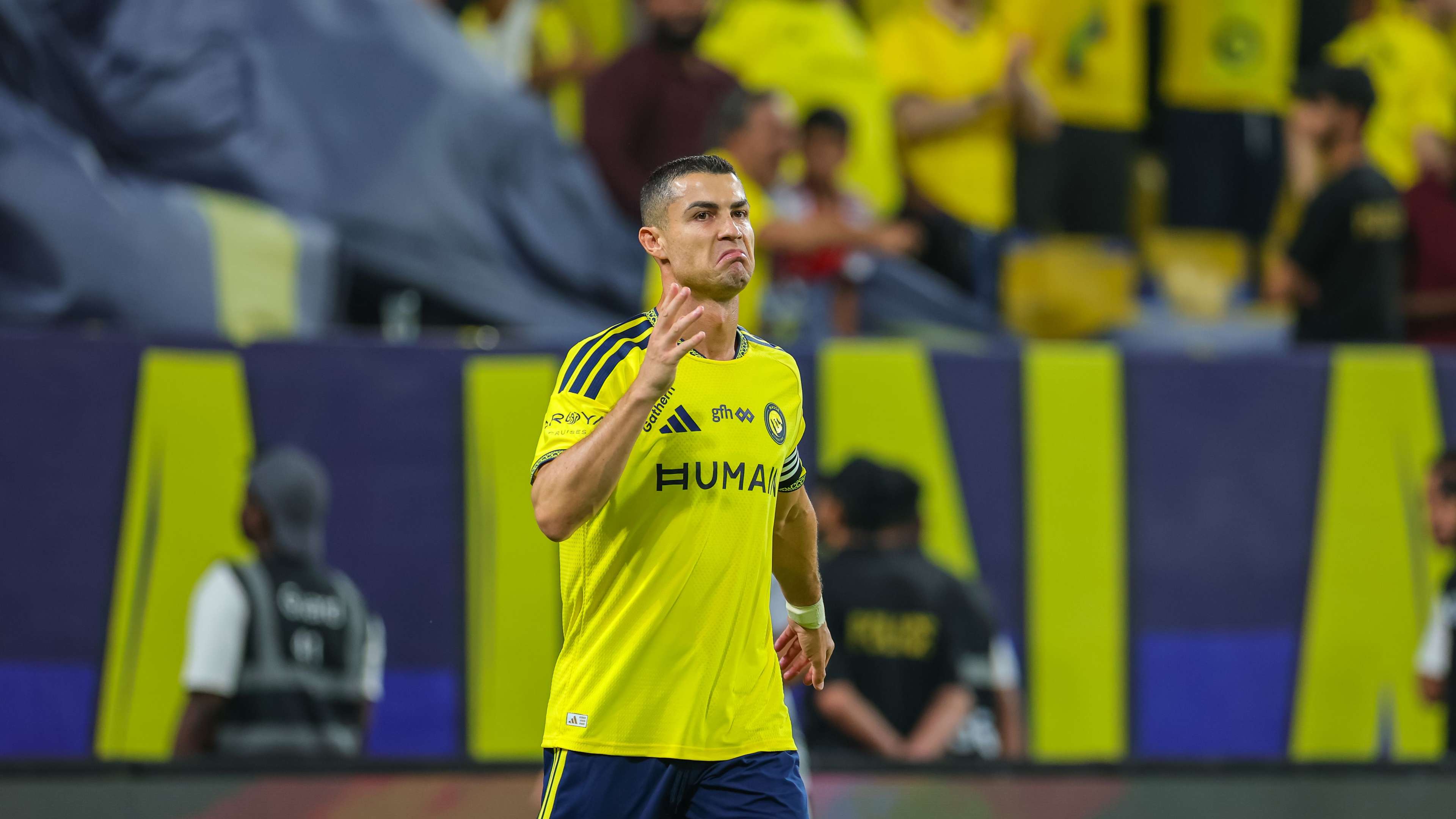
Al-Nassr had taken the lead before the disputed moment. In the 49th minute, compatriot João Félix delivered a well-placed free-kick into the penalty area. Ronaldo rose to challenge for the cross, and the ball travelled into the net to make it 2-0. He immediately performed his familiar “Siu” celebration as teammates gathered around him.
However, the available replays have not settled the question of who made the final touch. The footage, including a clip shared by the Saudi league on social media, appears inconclusive. Ronaldo may have redirected the ball with his head, but Girotto was also close to the play and could have supplied the decisive contact. That uncertainty has turned a routine-looking goal into a talking point for supporters and statisticians alike.
Official credit versus data-provider records
The Saudi Pro League’s match report names Ronaldo as the scorer, making the goal officially his under the league’s record of the game. Opta, by contrast, classified it as an own goal by Girotto. That distinction matters because different organisations may apply their own review processes and criteria when deciding whether an attacker’s touch was clear enough to warrant credit.
For fans tracking Ronaldo’s progress, the competing records create an awkward question: should the goal count toward the 1,000-goal target? The answer depends on which source is used. The league’s official account gives Ronaldo his 982nd career goal, while Opta’s classification would leave the tally unchanged. Until the relevant authorities issue a consistent final ruling—or the footage provides clearer evidence—the disagreement is likely to continue.
Own-goal decisions are often difficult when a cross or shot changes direction in a crowded penalty area. A defender’s touch may be judged an own goal if it is considered the decisive action that sends the ball into the net, while an attacker can receive credit if their attempt was already on target or if their contact is deemed intentional and significant. In this case, the uncertainty over whether Ronaldo touched the ball at all is central to the debate.
Why the 1,000-goal chase attracts so much attention
Ronaldo’s pursuit of 1,000 career goals has become a major storyline in Saudi football. The forward has built his reputation on extraordinary longevity, prolific scoring and a willingness to keep competing at the highest level. Each appearance for Al-Nassr therefore carries added interest, especially when a goal could bring him closer to a milestone few players have approached.
Yet career totals are not always calculated identically. Records can differ according to which competitions are included, how goals in particular matches are classified and which statistical provider is consulted. That makes a disputed goal especially significant: one decision can alter a headline figure, even if it does not change the match result. For supporters, the most reliable approach is to distinguish between the league’s official match record and independent statistical databases rather than treating every published total as interchangeable.
Al-Nassr’s 3-1 win remains the central sporting outcome. The team secured an important away victory, while Ronaldo’s involvement in the second goal helped keep attention on his influence in the attacking area. Whether the strike is ultimately counted as his or Girotto’s, the incident illustrates how closely the forward’s every contribution is watched.
Goal debate unfolds amid off-field tension
The controversy over the goal comes during a turbulent period for Ronaldo away from club football. During the international break, the Portugal captain left the national team after being moved to the bench and becoming embroiled in a disagreement with coach Jorge Jesus. Ronaldo said that agreements between them had not been honoured, adding another layer of tension to an already high-profile situation.
The Portuguese Football Federation responded with a disciplinary sanction. Ronaldo was ordered to pay a €255 fine for breaching regulations, alongside a 30-day suspension. Critics described the punishment as “ridiculous,” arguing that its practical effect would be limited because most of the suspension falls during a period without international fixtures. Ronaldo had previously apologised for his behaviour.
The episode has prompted discussion about the balance between a star player’s status and the authority of a national-team coach. For Portugal, the immediate challenge is to move beyond the dispute and maintain focus on upcoming fixtures. For Ronaldo, the situation is another reminder that his career is shaped not only by goals and records, but also by the expectations attached to his leadership role.
What comes next for Ronaldo and Al-Nassr?
Al-Nassr will now turn its attention to its next fixtures, including a forthcoming AFC Champions League Elite match. The team will hope to carry the confidence of its 3-1 league win into continental competition, while Ronaldo’s fitness, form and place in the starting line-up will remain subjects of interest.
As for the disputed strike, the available evidence has not produced a universally accepted answer. The official Saudi Pro League report credits Ronaldo, while Opta records an own goal, and many fans have sided with Girotto after reviewing the footage. The result is a rare case in which one moment has generated two different statistical accounts.
For now, Ronaldo’s tally depends on the source—and so does any prediction about when he will reach 1,000. If the league’s ruling stands, he is closer to the landmark than Opta’s figures suggest. Either way, the debate shows why every goal in this late-career chapter carries unusual weight: the scoreline may be settled, but the record books are still being contested.