
Irish Football Team Draws 1-1 with Zionist Entity in UEFA Nations League Amid Political Controversy
The recent UEFA Nations League clash between Ireland and the Zionist entity (commonly known as Israel) ended in a 1-1 draw, marking a significant moment not only on the pitch but also in the realm of international politics and football activism. Played behind closed doors at the TSC Arena in Serbia, this encounter was more than just a game—it was a reflection of ongoing tensions surrounding the conflict in Gaza and the broader political stances taken by national teams worldwide.
Match Recap: A Tale of Talent and Tension
On a night that showcased both sporting skill and political sentiment, Ireland’s footballers demonstrated resilience and determination. The Irish team, led by standout striker Troy Parrott, sought to secure a crucial victory in their UEFA Nations League campaign. Parrott, who has been in excellent scoring form, continued his impressive run by netting his third consecutive international goal, opening the scoring just before halftime through a confidently converted penalty.
The goal came after Irish defender Jimmy Dunne was fouled inside the penalty area, prompting the referee to award a spot kick. Parrott calmly dispatched the ball, bringing hope for Ireland’s fans and igniting their pursuit of victory. This goal marked his fourth goal in three international appearances, underscoring his rising prominence in Irish football and his potential to become a key figure for the national team in future competitions.
However, the Zionist entity was quick to respond. Dor Peretz equalized in the second half, capitalizing on a rebound after Oscar Gloukh’s shot struck Liam Scales and fell into his path. Peretz’s precise finish from close range ensured that the match remained finely balanced, with both teams vying for dominance.
Intensity and Controversy Behind Closed Doors
The game, held without spectators at the TSC Arena in Serbia, was marked by intense moments at both ends of the pitch. Irish substitute Chiedozie Ogbene had a golden opportunity to restore Ireland’s lead but was denied by a spectacular save from goalkeeper Assaf Tzur. Conversely, the Zionist side came dangerously close to scoring on multiple occasions, rattling the post and crossbar within minutes of each other, adding to the game’s overall excitement and tension.
Beyond the sporting narrative, the match was enveloped in political controversy. The Irish team, amidst heightened protests and calls for a boycott, chose to proceed with the fixture despite widespread opposition to playing against the Zionist entity amid the ongoing conflict in Gaza. Irish fans and activists had organized the “Stop the Match” campaign, staging protests before and during the game in Dublin against the decision to stage the matches against Israel.
Political Stance and Player Demonstrations
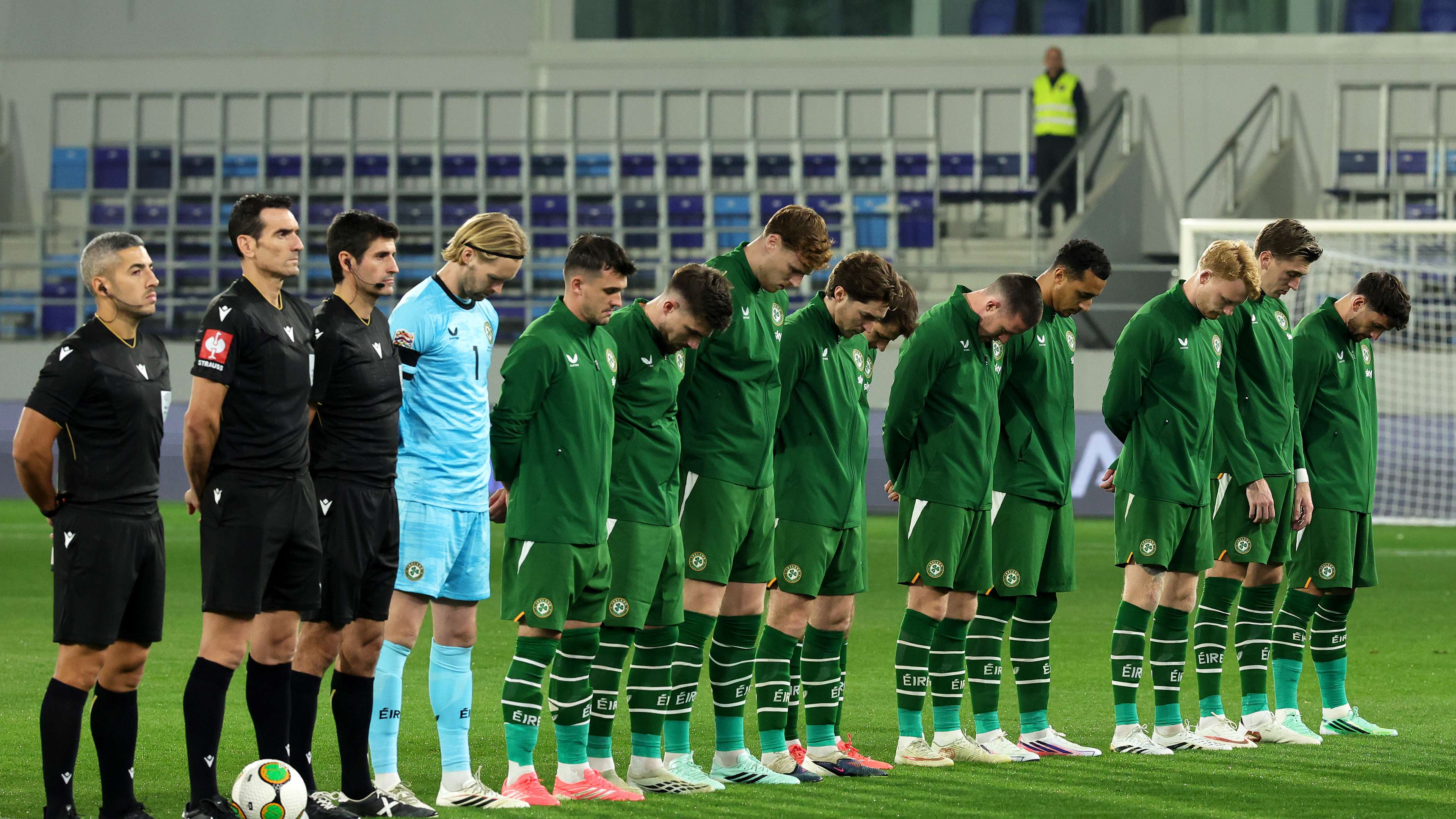
The Irish players showed solidarity with their political beliefs through silent protests and symbolic gestures. During the national anthem, they refused to shake hands with their Israeli opponents and bowed their heads in mourning for the victims of the recent Gaza conflict. They also wore black armbands in memory of all those affected by the violence, emphasizing their stance against the war and advocating for peace.
In a reciprocal gesture, the Israeli players also wore black armbands, commemorating those killed in the attacks on October 7, 2023. These acts highlighted the deep emotional and political undercurrents that overshadowed the game, transforming it into a platform for expressing dissent and raising awareness about the ongoing tragedy in Gaza.
Standings and Future Implications
With this draw, Ireland currently sits third in their UEFA Nations League group, trailing Austria by three points. Austria’s earlier draw with Kosovo kept the standings tight, leaving the Irish team with work to do in upcoming fixtures to secure a place in the next stage of the competition. The result underscores the importance of strategic prediction and analysis for football fans and betting enthusiasts looking ahead to future matches.
The Broader Context: Football as a Political Arena
This match exemplifies the increasingly complex relationship between football and politics. As international conflicts intensify, national teams are often caught in the crossfire, with players and fans alike navigating their cultural, political, and sporting identities. The decision by the Football Association of Ireland to proceed with the matches in Israel, despite protests, reflects the ongoing debate about the role of sports in political activism and diplomacy.
Football predictions for upcoming fixtures now must consider not only team form and player performance but also the political climate surrounding these matches. Such factors can influence team morale, fan support, and even the atmosphere in future encounters, making the sport a reflection of broader societal issues.
Expert Insights and What’s Next
Football analysts suggest that Ireland’s resilience and Parrott’s scoring streak demonstrate promising signs for the team’s future. However, the political backdrop adds a layer of complexity that could impact team preparations and international relations moving forward. As the UEFA Nations League progresses, fans and pundits alike will be watching closely to see how these political tensions influence not only the outcome of matches but also the broader landscape of international football.
Looking ahead, predictions for Ireland’s next fixtures will need to account for potential disruptions and the players’ mental focus amidst ongoing protests and diplomatic debates. The delicate balance between sport and politics continues to define the modern footballing experience, making every match more than just a game—it’s a statement.
Conclusion: A Match that Transcended Football
The 1-1 draw between Ireland and the Zionist entity in Serbia was more than just a result on the scoreboard. It was a vivid illustration of how football remains intertwined with global issues, serving as a platform for political expression and social change. As fans and analysts analyze the prediction models for future matches, one thing is clear: the beautiful game continues to be a reflection of the world’s complexities, inspiring passion, debate, and hope for a better future through sport.