
David O’Leary Challenges Bukayo Saka to Rediscover His Direct Style
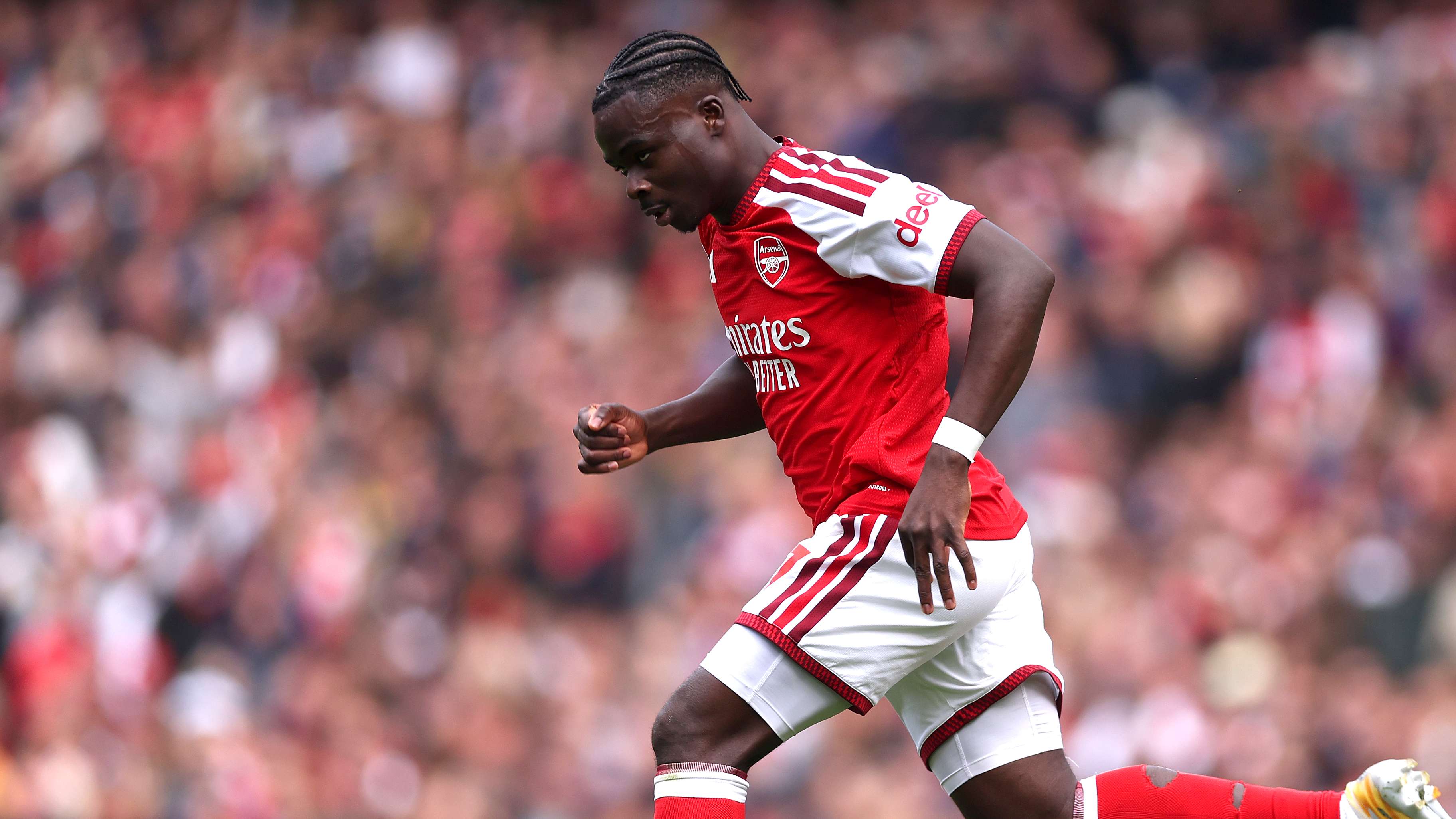
Former Arsenal captain David O’Leary has called on Bukayo Saka to raise his game, arguing that the winger must become more decisive and resilient if he is to meet expectations after signing a major new contract. While Arsenal’s recent win over Leeds United offered a positive result for the team, O’Leary believes Saka’s individual performances remain a subject for scrutiny.
O’Leary’s criticism centres on two connected concerns: Saka’s tendency to go to ground under contact and a perceived loss of the direct, positive approach that has made him one of Arsenal’s most influential attacking players. The former defender’s comments add to the wider debate around how elite footballers respond to physical challenges, pressure and rising expectations.
O’Leary Wants Saka to Stay on His Feet
In O’Leary’s view, Saka can sometimes appear too quick to fall when opponents challenge him. That criticism is not simply about whether a referee awards a foul. It also concerns what happens to an attack when a player loses possession or the opportunity to keep moving forward.
For a winger, balance and persistence can be as valuable as speed. Staying upright through contact may allow a player to reach the penalty area, create space for a teammate or force the opposition defence to retreat. By contrast, stopping play can give defenders time to reorganise—even when the challenge looks capable of drawing a free kick.
However, judging these moments is rarely straightforward. Wingers are frequently targeted by defenders who use their bodies to block routes forward, and contact can disrupt a player’s stride without being obvious at full speed. Whether a player has gone down too easily is therefore a matter of interpretation, shaped by the angle of the incident, the force of the challenge and the referee’s decision.
O’Leary’s remarks reflect a familiar expectation in football: attacking players should be prepared to absorb pressure and continue their runs whenever possible. The challenge for Saka is to balance that resilience with protecting himself from unnecessary injury, especially during a demanding season.
A Big Contract Brings Bigger Expectations
The reference to Saka’s new contract raises another issue: how a long-term agreement can change the way a player’s performances are judged. A significant deal signals the club’s confidence in a footballer and secures his future, but it can also intensify public expectations. Supporters may expect a player with Saka’s standing to influence matches consistently and deliver in decisive moments.
That scrutiny can be particularly sharp for a homegrown star who has grown into a key figure at Arsenal. Saka has become closely associated with the club’s attacking identity, and his performances are often assessed not only by goals and assists but also by how much he contributes to the team’s rhythm, confidence and threat.
Still, a contract should not be treated as a match-by-match scorecard. A player’s value includes reliability, tactical work, availability and the role he performs within the manager’s system. One difficult spell—or a single game in which he is less influential—does not necessarily indicate that a player is failing to justify his importance. The more useful measure is whether he continues to shape games over time.
Why Directness Matters to Arsenal
O’Leary also wants Saka to return to a more positive and direct style. For an Arsenal winger, that can mean attacking a defender early, driving into open space and making decisions that put the opposing back line under immediate pressure. A direct run can lead to a shot or a cross, but it can also draw extra defenders and create room for teammates.
When Saka takes on his marker, Arsenal gain a route to progress the ball quickly. If he instead slows the attack or turns away from a one-on-one, the team may lose an opportunity to exploit a defensive mismatch. That does not mean he should dribble every time: passing, holding possession and choosing the right moment to accelerate are all part of effective decision-making. The key is to keep the opposition uncertain.
Directness can also be measured beyond individual dribbles. A winger can stretch the defence with a run behind, combine quickly with an overlapping full-back or move inside to open a lane for another attacker. These actions help Arsenal maintain variety, making it harder for opponents to predict where the next attack will come from.
What the Leeds Victory Does—and Does Not—Show
Arsenal’s win over Leeds United provides a useful backdrop to the discussion, but a team result does not settle questions about an individual’s form. A victory can build confidence, strengthen a club’s position and give players momentum. At the same time, coaches and former players may still identify areas where a key attacker can improve.
For Saka, the important question is how he responds in the matches that follow. Can he take defenders on with greater conviction? Can he remain effective when opponents close him down physically? And can he turn promising positions into shots, chances or decisive passes? Those details are likely to matter more than any single criticism.
There is also a tactical dimension. Opponents who recognise Saka as a major threat may double up on him, block his preferred route and invite him to play backwards. In those situations, his contribution may come through quick combinations or by drawing defenders away from central areas. A quieter spell on the ball does not always mean a player has stopped helping the team.
Prediction: Saka’s Response Could Shape Arsenal’s Attack
The most compelling prediction is not that Saka will change his game entirely, but that Arsenal will need him to blend patience with greater decisiveness. If he can protect the ball, stay balanced through contact and choose the right moments to attack at speed, he can answer criticism through his performances rather than through words.
His influence is especially important because Arsenal’s attack benefits when its wide players create uncertainty. A confident Saka can stretch a defence, produce chances and give the team another way to break down opponents. If he is closely marked, his movement can still create openings for teammates. The challenge is to make those contributions consistently, even when he is not scoring or assisting.
O’Leary’s comments are therefore best understood as a demand for greater impact, rather than a dismissal of Saka’s ability. The winger remains a major figure for Arsenal, but his status brings attention as well as opportunity. The coming fixtures will show whether he can rediscover the fearless, forward-thinking approach O’Leary wants to see—and help turn the club’s positive result against Leeds into sustained momentum.