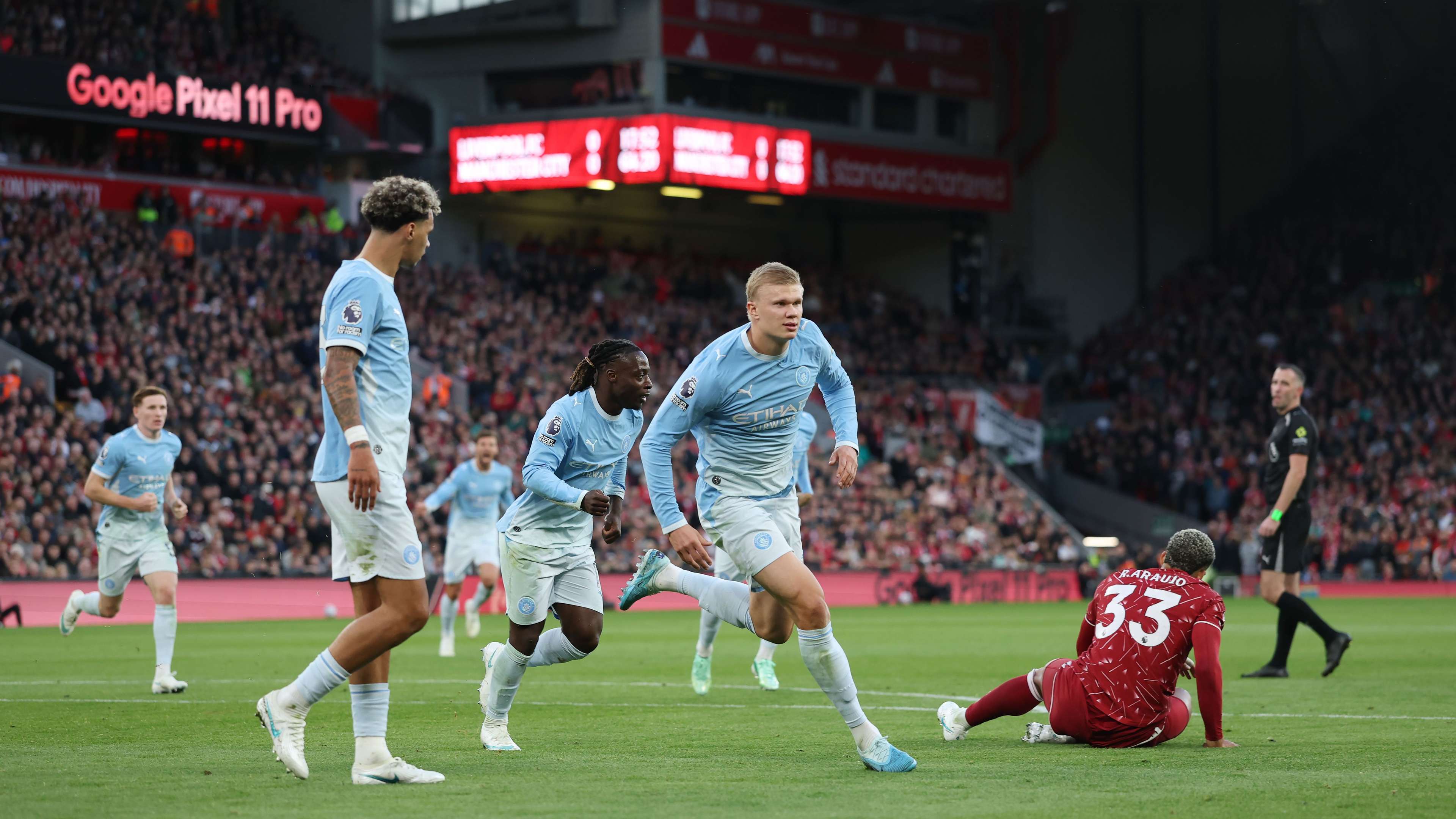

Manchester City’s Anfield triumph overshadowed by financial case
Manchester City’s emphatic 3-0 victory over Liverpool at Anfield should have dominated the football headlines. Instead, discussion quickly shifted from Pep Guardiola’s tactics and the result’s impact on the Premier League title race to the unresolved financial case hanging over the club. The controversy has raised a difficult question for fans and commentators alike: how should City’s achievements be judged while the allegations remain undecided?
The result carried particular weight because of the history between Guardiola and former Liverpool manager Jürgen Klopp, whose rivalry helped define a memorable era in English football. A win at Anfield would normally prompt detailed analysis of City’s control, attacking quality and ability to perform in one of the league’s toughest away fixtures. This time, however, the legal proceedings became a prominent part of the post-match conversation.
What is at the centre of the Manchester City case?
The Premier League has accused Manchester City of 114 alleged breaches of its financial regulations relating to the period from 2009 to 2018. The charges concern matters including financial reporting and the information clubs are required to provide under league rules. City deny the allegations and have consistently said they welcome the opportunity to present their case through the proper legal process.
No final ruling has been issued, leaving the matter unresolved. That uncertainty has fuelled speculation about possible consequences and the wider implications for the club, the Premier League and the competition’s record books. Any outcome will depend on the findings of the independent process; until then, predictions about sanctions or the case’s effect on past results remain just that—predictions.
The delay between the alleged breaches and a final decision has also made the story unusually difficult to separate from the football itself. Every major City result can be discussed in two ways: as a sporting achievement in the present and as part of a period that is under scrutiny. That does not establish guilt, but it does explain why the case continues to shape public debate around the team.
Why the headlines changed after the Liverpool win
French sports newspaper L’Équipe highlighted how the English media’s response to City victories has shifted. In earlier seasons, a decisive win over Liverpool might have led the sports pages, particularly during the intense title battles between Guardiola and Klopp. Now, the scale of the financial allegations means that even a standout performance can be followed by questions about the club’s off-field situation.
The Guardian went further, arguing that football itself had become secondary to the case. Its discussion focused on the perceived value of City’s results while the possibility of future sanctions remains unresolved. The issue is not simply whether a particular win counts on the day; it is whether the eventual ruling could alter the way supporters and historians view the broader period.
The Independent described the atmosphere surrounding the case as “unbearable,” drawing attention to the contrast between watching a high-level match and wondering how much its significance might be affected by legal proceedings. Meanwhile, The Telegraph called the situation a “farce,” reflecting the difficulty of treating the club’s celebrations and sporting success as entirely separate from the continuing controversy.
Commentators and broadcasters join the debate
The argument has moved beyond newspaper coverage. BBC Radio programmes have discussed whether the Premier League’s handling of the situation risks making the competition appear farcical. Such conversations reflect a broader concern: a lengthy, high-profile case can leave supporters, clubs and broadcasters operating in a climate of uncertainty, even while the season continues at full speed.
Former Manchester United midfielder and Sky Sports analyst Gary Neville offered a particularly direct reaction after City’s victory over Liverpool. Neville said he would be happy to be excused from commentating on the club’s matches for the coming months, until the case reaches a conclusion. His remarks captured the frustration felt by some observers who believe that constant debate over the allegations is making it harder to focus on the action on the pitch.
There is also a practical challenge for football coverage. Analysts are expected to assess formations, individual performances and title-race implications, while audiences want clear answers about a case that has not yet been decided. Responsible reporting must distinguish between allegations and proven findings, while avoiding predictions presented as fact.
City’s title challenge continues amid uncertainty
Despite the scrutiny, Manchester City remain active contenders in the Premier League. At the time of the reports, they sat three points ahead of Arsenal, keeping pressure on their closest rivals and maintaining momentum in the title race. The Anfield win therefore mattered in immediate sporting terms, regardless of the continuing legal debate.
City’s next major test was a Champions League meeting with Paris Saint-Germain, offering Guardiola’s side another opportunity to demonstrate its quality against elite opposition. European fixtures bring their own tactical demands, and the team’s ability to maintain focus will be closely watched as attention continues to alternate between its performances and the case.
For supporters, the coming weeks present a familiar football dilemma: celebrating results while waiting for clarity on an issue that could have significant consequences. City’s players can only compete in the matches scheduled, while the independent process follows its own timetable. Until a ruling arrives, every result is likely to carry an extra layer of commentary.
A defining test for the Premier League’s credibility
The case has become bigger than one club’s reputation. Its eventual handling will influence perceptions of how consistently the Premier League applies its financial rules and how effectively it can resolve complex disputes. A clear, well-explained outcome may help restore confidence; prolonged uncertainty, by contrast, risks keeping the controversy at the centre of the football conversation.
For now, Manchester City’s 3-0 win at Anfield remains a significant result in the title race, but it has not been allowed to stand alone. The team’s football continues, the allegations remain contested, and the final decision is still pending. Until the process concludes, debate over City’s victories—and predictions about what the ruling may mean—will likely remain part of every major match discussion.