
Manchester City Seize Control at Anfield After Liverpool Red Card
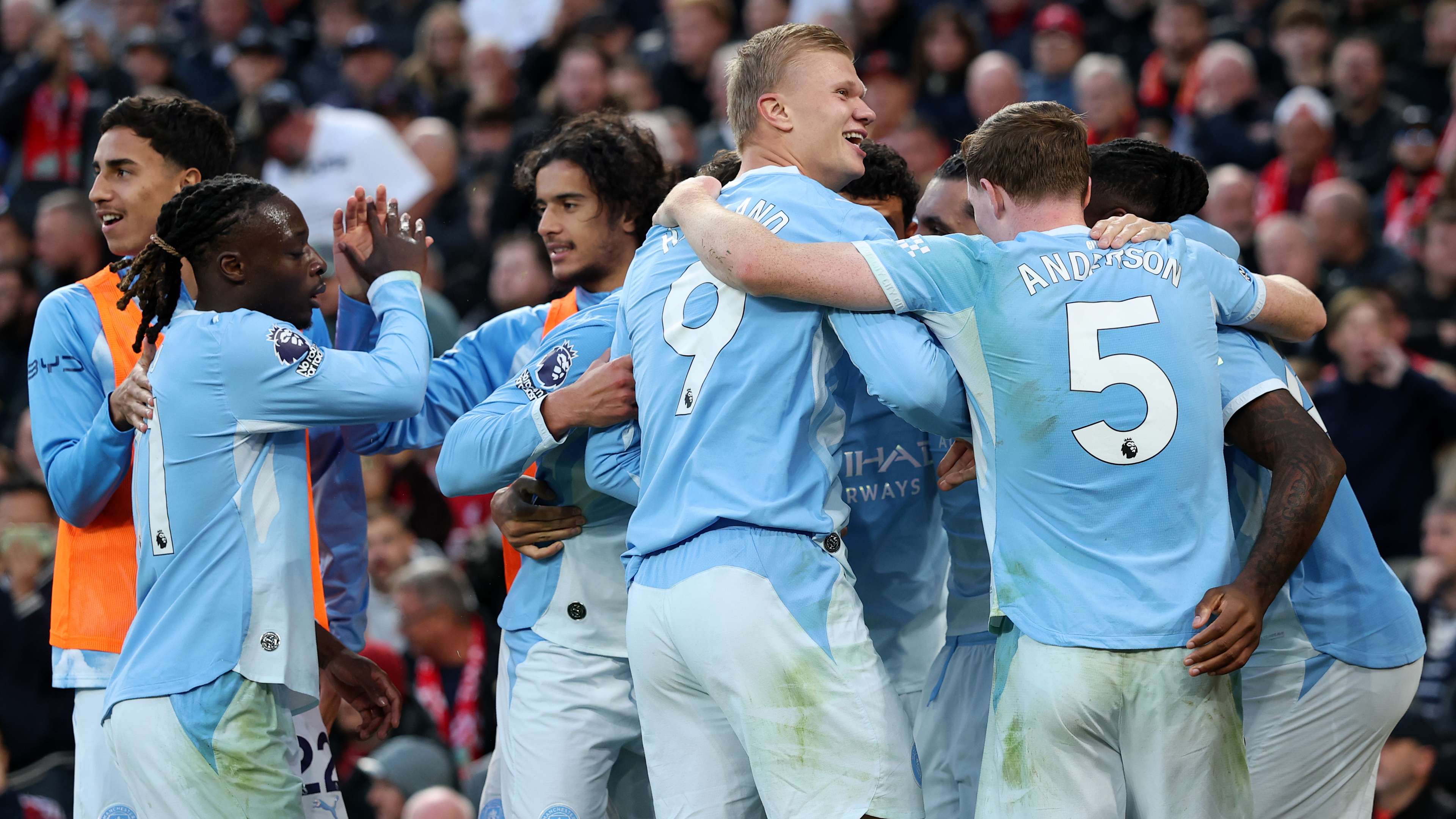
Manchester City took a major step towards a commanding Premier League result at Anfield, turning a tense contest into a three-goal lead with a ruthless second-half burst. Erling Haaland and Jeremy Doku scored within minutes of one another before Rayan Cherki finished a flowing team move, leaving Liverpool with a steep challenge and City firmly in control.
The decisive spell followed a second-half dismissal that left Liverpool a player down. City quickly exploited the extra space, showing the composure and attacking precision that have made them a regular force in the title race. The result puts Pep Guardiola’s side on course to move three points clear at the top of the table, while Liverpool must find an exceptional response to revive their hopes in the match.
A Red Card Changes the Shape of the Match
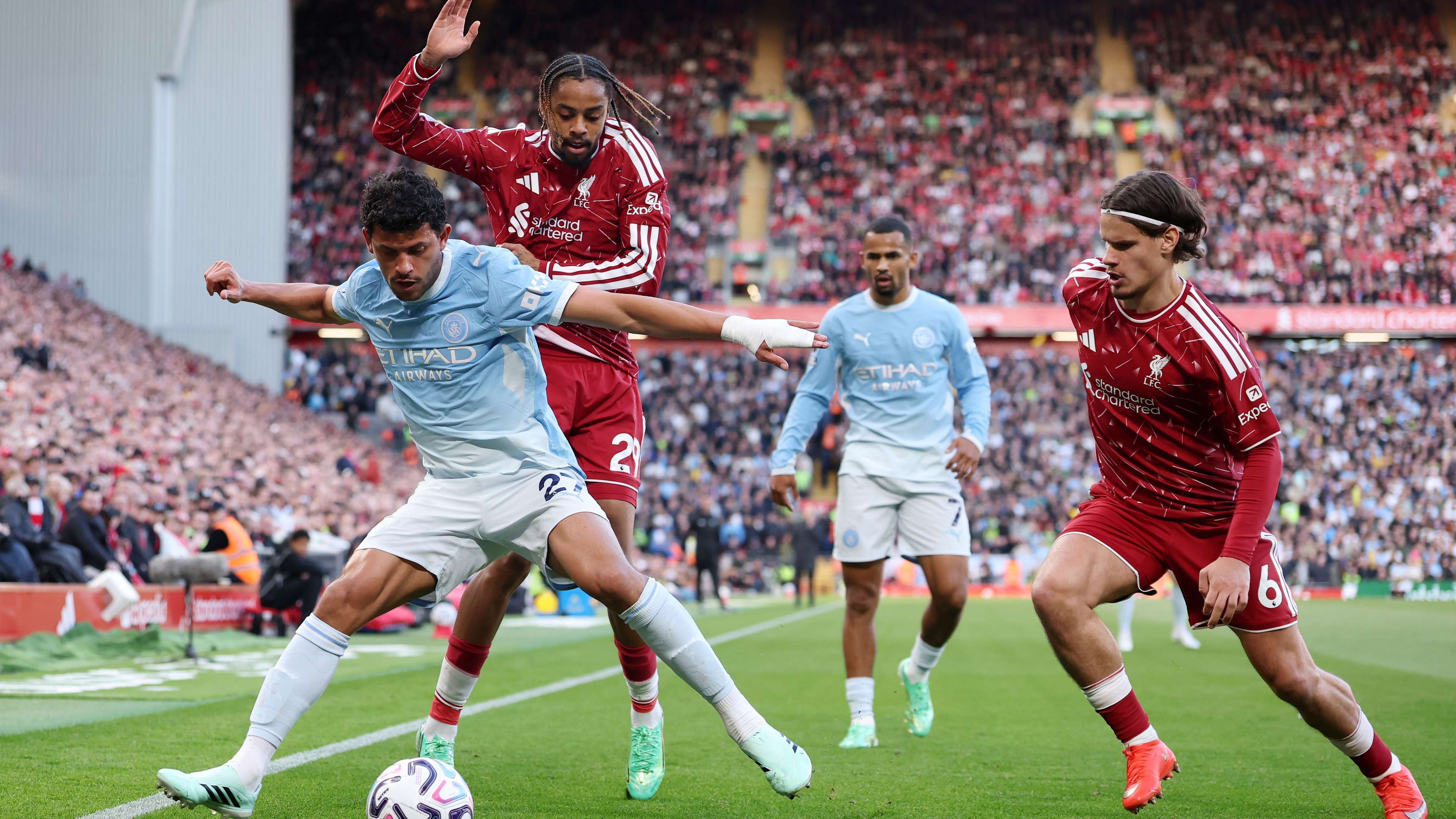
Meetings between Liverpool and Manchester City are often decided by fine margins, with both teams capable of pressing aggressively and creating chances at speed. This encounter followed that familiar pattern until the dismissal shifted the balance. With fewer players available to close passing lanes and track City’s runners, Liverpool faced a difficult task: protect their goal while still trying to threaten at the other end.
City responded by increasing the pressure rather than settling for possession. Their players moved the ball quickly, stretched the home defence and looked for openings between the lines. A numerical advantage does not guarantee goals, especially at Anfield, but City made it count by turning control into direct, decisive attacks.
The timing proved crucial. Rather than allowing Liverpool to reorganise after going down to ten men, City struck in a six-minute spell that transformed the contest. The rapid succession of goals left the home side with little opportunity to regain its shape or build momentum.
Haaland and Doku Deliver a Devastating Double
Erling Haaland provided the first major breakthrough of City’s surge. The striker’s presence in the penalty area gives the visitors a constant target, and his ability to convert opportunities makes him a threat even when Liverpool appear to have limited the space around him. His goal put City in a stronger position and forced the hosts to consider taking greater risks.
Jeremy Doku then added to Liverpool’s problems, scoring soon afterwards to make it 2-0. The winger’s pace and ability to take on defenders offered City a different route to goal from Haaland’s central threat. That contrast is important to the team’s attacking balance: opponents may focus on containing the striker, only to find City can also create danger through quick movement and one-on-one skill out wide.
For Liverpool, the two goals were especially damaging because they arrived so close together. A one-goal deficit can still feel manageable, even with a player missing; conceding again before the defence has settled can quickly alter a team’s confidence and its tactical options. Liverpool were left needing to chase the game while also guarding against further City attacks.
Cherki Completes a Brilliant Team Move
Rayan Cherki’s goal made the score 3-0 and underlined the quality of City’s collective play. Rather than relying solely on an individual moment, the move showcased the visitors’ ability to combine, find space and move the ball through a defence under pressure. Cherki’s finish brought a sharp attacking sequence to a close and gave City an even firmer grip on the match.
That third goal also highlighted why City can be so difficult to contain when they find rhythm. Haaland offers a powerful focal point, Doku can stretch a defence from the flank, and players such as Cherki can benefit from the openings created by both. The variety gives Guardiola’s side several ways to threaten, making it harder for opponents to concentrate their defensive efforts on a single player or area.
Premier League Title Race Implications
The result carries significance beyond the scoreline. City are now on course to move three points clear at the top of the Premier League table, strengthening their position in a title race where every point can have a major impact. A victory at Anfield would also provide a valuable statement of intent, given the difficulty of winning away to one of the club’s most intense rivals.
For Liverpool, the immediate priority is to manage the remainder of the match and limit further damage. The sending-off has made a comeback far more complicated, but the team’s response will still matter. Maintaining organisation, competing for second balls and choosing the right moments to attack could help Liverpool regain some control, even if overturning a three-goal deficit is a formidable task.
The wider lesson is that discipline can be decisive in high-stakes football. Against a side with City’s technical quality, a dismissal can leave gaps that are quickly punished. Once the visitors had numerical superiority, their speed of circulation and movement made it difficult for Liverpool to reset defensively.
Match Prediction: Can Liverpool Find a Way Back?
Based on the match situation, Manchester City are strongly positioned to see out the result. Their three-goal advantage, combined with Liverpool’s reduced numbers, gives the visitors a clear route to control the tempo and protect their lead. City may look to keep possession, draw Liverpool forward and use the space behind the defence if the hosts commit more players to attack.
Liverpool’s best chance of changing the narrative would be to score quickly and give the home crowd something to build on. An early goal could increase pressure on City and create a more open finish, but Liverpool would still need to balance urgency with defensive caution. Against a team capable of counterattacking at pace, that is a difficult calculation.
The prediction, therefore, favours City to secure a significant Premier League win, while Liverpool face an uphill battle to produce an unlikely comeback. The six-minute burst from Haaland, Doku and Cherki has turned a competitive Anfield meeting into a test of City’s game management—and of Liverpool’s resilience after a costly second-half setback.