
Chess world divided over Gukesh–Sindarov World Championship match
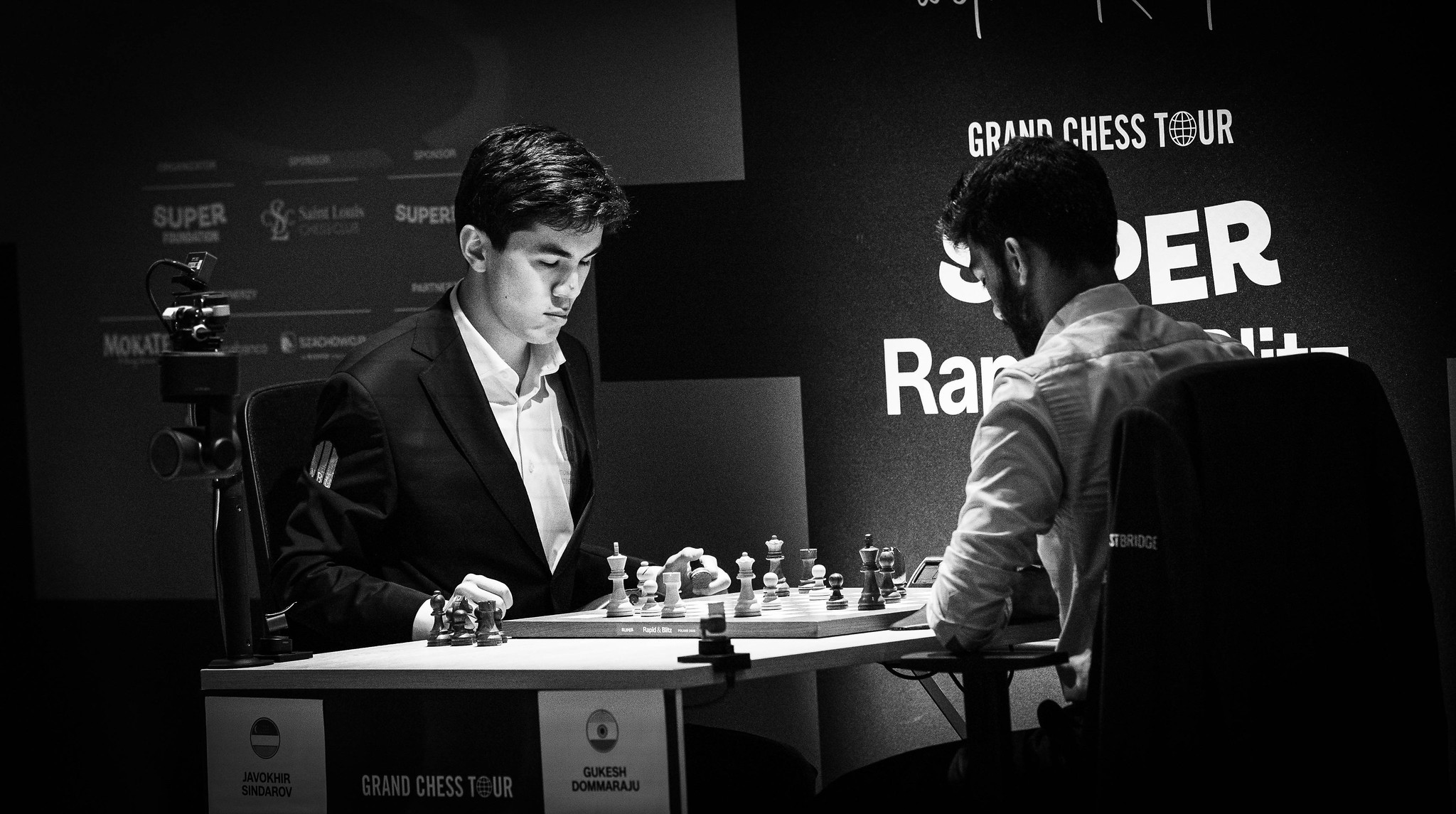
With only two weeks remaining before the World Championship match begins in Geneva, chess fans are weighing two very different stories. Defending champion Gukesh Dommaraju brings the experience of having already won the title, while challenger Javokhir Sindarov arrives with stronger recent form and a substantial rating advantage. Predictions from leading players and commentators range from a narrow edge for Gukesh to a decisive Sindarov victory.
The match is scheduled to start at 15:00 CET on Tuesday, November 24. Its outcome will test more than the players’ opening preparation and calculation: it will also depend on nerves, stamina, match strategy and the ability to recover from setbacks over a long contest.
The numbers favor Sindarov—but history offers no certainty
On the published pre-match ratings, Sindarov is ranked fourth in the world with a rating of 2782. Gukesh is 26th at 2710, leaving a 72-point gap between the two. That is a striking difference for a World Championship match, and Gukesh’s ranking is the lowest recorded for a participant in a title match since the championship was unified in 2008.
Recent history gives the challenger a statistical advantage, but rating gaps have never told the whole story. Magnus Carlsen won matches despite facing challengers with substantial rating deficits, while the 2023 contest between Ian Nepomniachtchi and Ding Liren was separated by only seven points. In 2024, Gukesh overcame Ding despite trailing him by 55 points and 18 places in the rankings.
That previous match is a reminder of how narrow the margins can be. Ding came close to forcing rapid tiebreaks, and a late mistake proved decisive. Gukesh, meanwhile, showed that he could handle the pressure of the biggest stage. Although his results since becoming champion have attracted criticism, he remains a young player with proven match-winning ability.
Kasparov gives the champion a slight edge
Former world champion Garry Kasparov has been critical of Gukesh’s performances since his title win, but he still sees experience as a powerful advantage. Speaking during an appearance in Antwerp, Belgium, Kasparov said Sindarov may offer more entertainment at the board, yet argued that Gukesh’s familiarity with the demands of a title match could matter most.
“It is not important how long you prepare for a match; experience is usually the deciding factor,” Kasparov said, giving Gukesh a slightly better chance. He also cautioned that a match is fundamentally different from a tournament. A player who has struggled in recent events can still perform well when attention narrows to one opponent and one carefully planned contest.
Kasparov did not dismiss Sindarov’s chances. He suggested that if the challenger takes an early lead, the match could quickly become difficult for Gukesh. In a format where momentum can shape decision-making, the first few games may carry significance beyond the points on the scoreboard.
Nakamura expects a convincing Sindarov win
World number two Hikaru Nakamura offered a much stronger prediction. Assessing the match objectively, he said he would find it difficult to predict anything other than a Sindarov victory, and compared the potential result to Carlsen’s commanding win over Viswanathan Anand in 2013.
Nakamura’s view is based largely on recent form. He said Gukesh has not shown enough over the past year and a half to convince him that the champion will suddenly return to his best level. However, Nakamura also acknowledged that a close match could favor Gukesh. His forecast depends on the belief that Sindarov will establish control early and prevent the contest from becoming tight.
That distinction matters: a favorite on paper is not automatically a favorite in every match scenario. If Gukesh keeps the score close, his experience and resilience could become increasingly valuable. If Sindarov builds an early lead, his confidence and current momentum may be harder to contain.
Other grandmasters see a close contest
Not everyone expects a one-sided result. Several grandmasters have described the matchup as close to 50:50, while others give Sindarov only a modest advantage. One experienced former title-match participant said Sindarov deserved to be favored after his Candidates Tournament success, but warned that strong odds against Gukesh would be premature. In his view, the champion’s rough patch does not erase his strength or make the match predictable.
Peter Svidler expressed a similar caution, suggesting a 55:45 advantage for Sindarov rather than a more dramatic split. He noted that even a 60:40 estimate is a large one in a World Championship match. The format is unusually demanding, and a player’s tournament form may not translate directly into match performance.
Svidler also reflected on how modern chess preparation has shaped both players. Young grandmasters grow up analysing with powerful chess engines, which can reveal defensive resources and dynamic possibilities that earlier generations might have judged too risky. Both contenders are versatile, but their willingness to calculate complex positions could produce sharp, ambitious games.
Praggnanandhaa points to pressure and momentum
Indian grandmaster R. Praggnanandhaa, a close friend of Gukesh, sees the match as evenly balanced. He argued that form can change quickly in chess: one strong tournament or even a single well-played game can restore confidence. He has experienced that shift himself, moving from a difficult stretch to a tournament victory in a short period.
Praggnanandhaa also highlighted a possible advantage for Gukesh: Sindarov will be playing his first World Championship match. The challenger’s Candidates victory demonstrates his ability, but the atmosphere of a title match is unlike any other event. The opening games can bring unfamiliar pressure, and neither preparation nor rating can fully reproduce that experience.
Carlsen backs the challenger
Magnus Carlsen, the world’s top-ranked player and a former champion, has been among Sindarov’s most prominent supporters. After the challenger won the Candidates Tournament, Carlsen said it was difficult not to favor him. He described Sindarov as a more rounded player and argued that Gukesh has weaknesses in his understanding of certain positions.
Carlsen has also praised Gukesh’s exceptional 2024, while suggesting that the champion can struggle to change gears. In his view, Gukesh sometimes evaluates positions too optimistically and takes unnecessary risks—an approach that could become costly if his confidence is not at its best. The central question is whether Gukesh will moderate that ambition or use it to create the complications he needs.
A match shaped by more than ratings
The chess world’s predictions reveal a clear divide: Sindarov is the statistical and form-based favorite, while Gukesh has the experience of defending the crown and a record of thriving under pressure. The challenger’s recent momentum may be decisive, but his lack of title-match experience is a genuine unknown. For Gukesh, the challenge is to rediscover his strongest play and avoid allowing a difficult stretch to define his championship.
As the Geneva match approaches, the most compelling question is not simply who is stronger on paper. It is who can adapt first, manage the emotional swings and make the best decisions when the position becomes complicated. In chess, a single mistake can change a game—and a single game can change the story of a World Championship.