
European Football Pays Tribute to Jesús de Miguel After Tragic Death
European football has been left in mourning following the death of Spanish striker Jesús de Miguel, who passed away at the age of 30 after suffering a serious injury during a match between Tenerife and Andorra in Spain’s second division. The fatal incident occurred after a violent collision with Andorra goalkeeper Jesús Owono, prompting an outpouring of grief across the game.
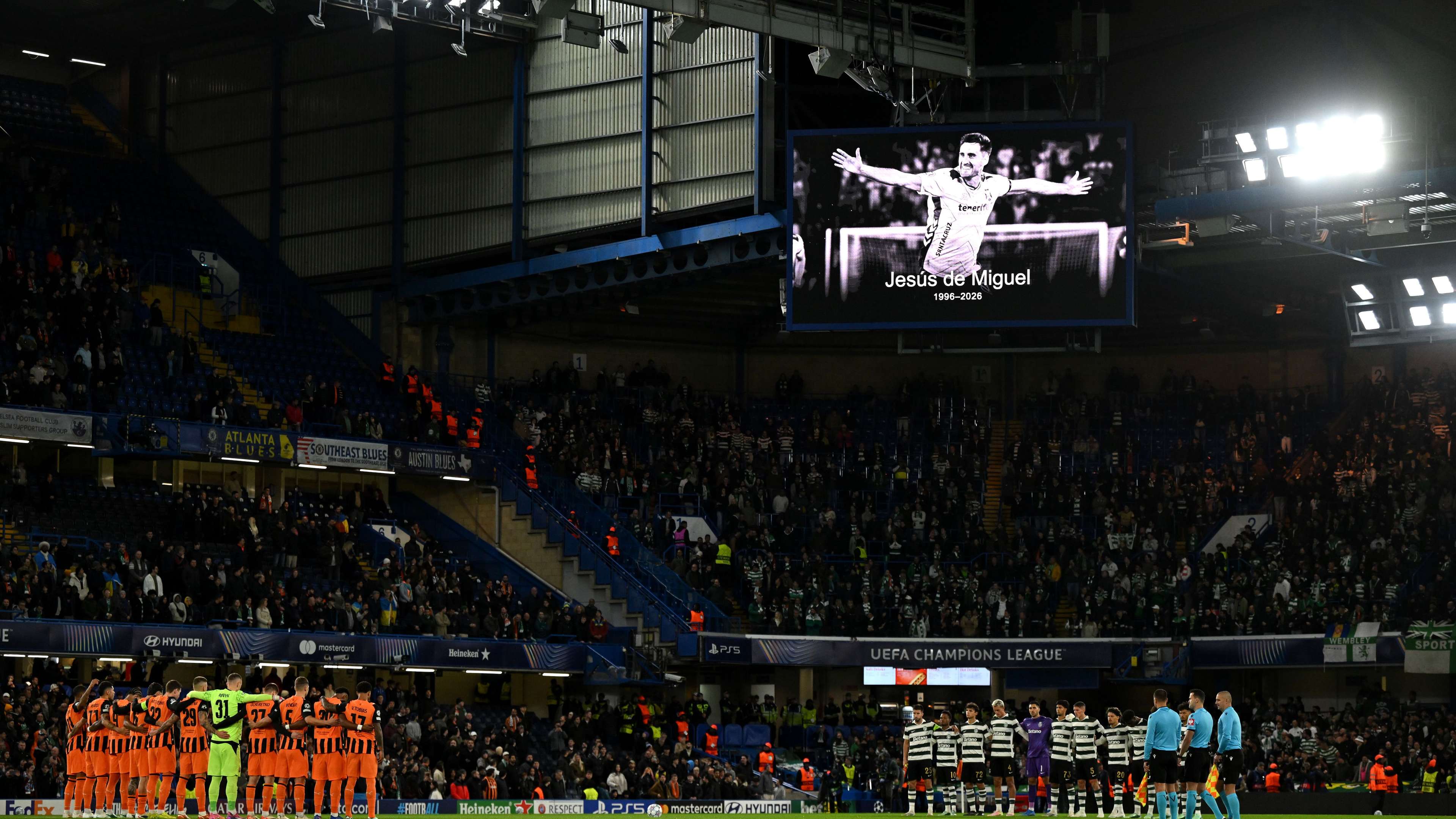
As the news spread, clubs, players and supporters joined in remembering the Tenerife forward. Tributes also reached the Champions League, where UEFA arranged a minute’s silence before two matches in the competition’s fourth round: Galatasaray versus Stuttgart and Shakhtar Donetsk against Sporting Lisbon. The gesture gave players and fans a moment to reflect on de Miguel’s life and the sudden loss felt throughout the football community.
A Tragedy That Resonated Across the Game
De Miguel’s death has brought renewed attention to the risks players face during competitive football. Goalkeepers and attackers can meet at high speed in the penalty area, particularly when chasing a cross or contesting a loose ball. Although such collisions are an accepted part of the sport, an incident with devastating consequences is exceptionally rare.
The circumstances surrounding the collision have also highlighted the importance of immediate medical care at matches. Professional games are supported by trained medical teams and emergency procedures, but the speed and severity of an injury can make outcomes difficult to predict. For players, families and supporters, the tragedy is a painful reminder that football’s excitement and physical intensity exist alongside real risks.
At the time of the tributes, the focus was not on match results, tactics or the latest football prediction. Instead, the sport paused to honour a player whose career and life ended far too soon. The silence before the Champions League fixtures offered a shared expression of condolence, connecting fans across countries and competitions.
UEFA’s Minute of Silence Brings Clubs Together
The minute’s silence before Galatasaray’s meeting with Stuttgart and Shakhtar Donetsk’s match against Sporting Lisbon was a visible sign of solidarity. Though the fixtures featured clubs with different histories, leagues and fan cultures, the tribute united them around a common message of respect for de Miguel and sympathy for those closest to him.
Such gestures are familiar in football, but their meaning is especially powerful when a death is sudden. A stadium falling quiet can communicate grief in a way that crosses language barriers. Players, coaches, officials and supporters are reminded that they belong to a wider sporting community—one that can come together in moments of loss, even when its usual focus is competition.
The tributes also reflected football’s global reach. A tragedy in Spain’s second division quickly became a matter of concern across European competitions, showing how closely connected the modern game has become. News travels rapidly between clubs and leagues, and expressions of support can reach grieving teammates and families from thousands of miles away.
Remembering Jesús de Miguel Beyond the Headlines
In the days following a tragedy, a player can easily become defined by the circumstances of his death. Yet the tribute to de Miguel also serves as a reminder that he was more than the subject of a heartbreaking headline. He was a professional footballer, a teammate and a person with relationships and ambitions beyond the pitch.
For Tenerife, the loss is deeply personal. Teammates who shared training sessions, match-day routines and the demands of a football season are left to process the death of someone who was part of their daily lives. Supporters, meanwhile, may remember the goals, performances and moments that made him part of the club’s story. The impact of such a loss can extend well beyond the immediate aftermath, particularly for those who knew him closely.
Football clubs often play an important role in supporting players and staff through bereavement. Access to counselling, space to grieve and practical support for a player’s family can all matter in the weeks and months that follow. While public tributes provide a meaningful show of solidarity, the quieter work of caring for those most affected is equally important.
Safety, Medical Response and the Reality of Contact Sport
De Miguel’s death is likely to prompt difficult conversations about player welfare, emergency response and safety in professional football. It is important, however, to avoid drawing conclusions about the incident before all relevant details are known. Serious injuries can result from complex circumstances, and each event must be assessed carefully by the appropriate authorities.
Football has developed medical protocols designed to help teams respond quickly when a player is injured. These may include access to qualified medical staff, emergency equipment and procedures for coordinating with hospital services. The effectiveness of those measures depends on preparation, communication and the ability to act immediately. Incidents such as this can lead clubs and governing bodies to review existing arrangements and identify whether any improvements are needed.
Player safety is not only a matter for medical teams. Coaches, referees and governing bodies also have responsibilities in managing the physical demands of the game. Clear rules, consistent officiating and appropriate training can help reduce avoidable danger, even though no system can remove every risk from a contact sport.
A Moment to Reflect Across European Football
The Champions League matches continued, as they must, but their opening moments carried a different weight. The silence before kick-off made clear that football is about more than competition, standings or a football prediction for the next round. It is also a community built around people whose lives and work matter to those who share the game with them.
As tributes continue, Jesús de Miguel will be remembered by Tenerife and by the wider football world. The minute’s silence offered a simple but powerful message: a player’s life is valued beyond the goals he scores or the matches he plays. In a sport that often moves quickly from one fixture to the next, the pause created space for grief, respect and remembrance.
For supporters following the latest football news, this tragedy is a solemn reminder to place the human stories behind the results at the centre of the conversation. The thoughts of the football community remain with de Miguel’s family, friends, teammates and everyone at Tenerife during an extraordinarily difficult time.