
Gautam Gambhir Praises India’s T20I Ruthlessness After Series Win in New Zealand
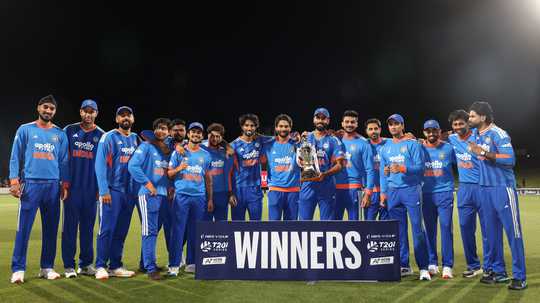
India head coach Gautam Gambhir has praised his side’s composure, adaptability and attacking intent after the team secured a 3-2 T20I series victory in New Zealand. While the final scoreline reflected a competitive contest, Gambhir highlighted India’s decisive start: three wins in the opening matches allowed the visitors to seal the series at the earliest opportunity.
The achievement carried added weight because India had little time to recover or prepare between assignments. The players had recently represented the country at the Asian Games in Japan, where India won gold, before returning to international cricket for a five-match T20I series against the West Indies. That campaign ended on October 17. Just three days later, the squad travelled to New Zealand, trained the following day and began the new series almost immediately.
For Gambhir, the team’s response to that demanding schedule was among the tour’s most impressive features. India had to adjust quickly to different weather, playing surfaces and ground dimensions, while facing a strong New Zealand side on home turf. Several members of the touring group were also experiencing New Zealand conditions for the first time.
India’s fast start set the tone
Gambhir singled out India’s performance across the first three matches, describing the team’s ability to handle pressure and conditions as a major accomplishment. The visitors did not simply edge their way to victories; they produced forceful chases and showed confidence even when the game appeared to be slipping away.
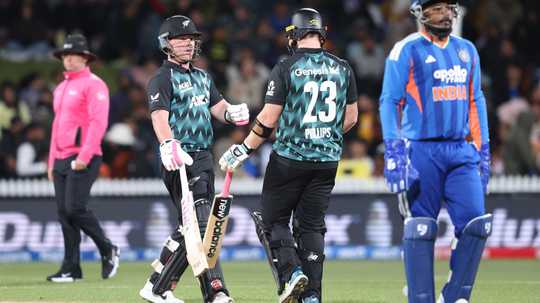
The opening match offered an early test. New Zealand posted a formidable 225, putting India under pressure to maintain a demanding scoring rate. India began aggressively but encountered a difficult middle phase. Shreyas Iyer kept the chase alive with a 28-ball 42, before Naman Dhir changed the momentum with a blistering 15-ball 42. His innings helped India regain control and complete a high-scoring chase.
The second T20I presented a different kind of challenge. Chasing 188, India slipped to 70 for five and were in danger of losing their grip on the contest. Tilak Varma, Dhir and Nitish Reddy then combined to guide the team through the pressure, demonstrating the depth and composure Gambhir wanted to see from the younger players.
India’s third victory was an even more emphatic statement. The team chased 199 in just 13.2 overs, turning a substantial target into a rapid finish. The result reflected the aggressive approach that has become a feature of India’s T20 cricket: rather than allowing a big total to dictate the tempo, the batters looked for scoring opportunities and kept the required rate within reach.
Gambhir said the players could take particular pride in winning the first match after just one training session and then following it with two more victories. He noted that India had aimed to win the remaining games as well, but stressed that the most important lesson was how the squad dealt with pressure and unfamiliar conditions during the series’ opening stretch.
Young players deliver when the pressure rises
The early wins also offered useful evidence of India’s emerging T20 talent. Dhir’s explosive contribution in the first match and the combined effort of Varma, Dhir and Reddy in the second showed that the team could find solutions beyond its most established names.
That flexibility matters in the shortest format, where a single partnership or burst of scoring can reshape a match. India’s ability to recover from a middle-order wobble in the first game and a top-order collapse in the second gave the coaching staff more than a series result to celebrate. It provided valuable experience for younger players asked to perform in demanding situations against an experienced international opponent.
For fans following cricket prediction discussions, the series also offered a reminder of how quickly T20 expectations can change. A large target does not automatically make a chase unlikely, and an early cluster of wickets does not necessarily settle the result. India’s wins showed why match conditions, batting depth and the ability to respond under pressure can be just as important as a team’s pre-match reputation.
Gambhir backs Shreyas Iyer’s leadership
Gambhir also praised captain Shreyas Iyer, whose T20I leadership has developed through a demanding run of fixtures. India’s results have included setbacks as well as progress, but the side has continued to give opportunities to new players while building towards future international challenges.
The head coach pointed to the scale of the task Iyer inherited. India had arrived at the start of the period as reigning T20 world champions and had gone two years without losing a series. Maintaining those standards while introducing less experienced players was never going to be straightforward, particularly on tours to countries such as England and New Zealand.
Gambhir said the team had deliberately used these assignments to give young cricketers exposure on the road. That approach is important for long-term planning: players need to learn how to adapt to unfamiliar conditions before they can be relied upon in major tournaments. The experience gained in New Zealand, he suggested, could help India develop a deeper group as preparations continue for the next World Cup.
Iyer’s leadership was especially tested by an inexperienced bowling attack. Captains depend heavily on their bowlers to execute plans, manage the middle overs and defend totals when conditions shift. Gambhir acknowledged that the job becomes more challenging when a team lacks established international experience, and credited Iyer for guiding the group through those circumstances.
A demanding schedule, and lessons for the road ahead
India’s 3-2 series win was therefore about more than the final result. It followed a packed stretch that included the Asian Games, a full T20I series against the West Indies and a rapid turnaround for New Zealand. The players had to travel, recover and adjust in a short window, yet still produced three commanding victories at the start of the tour.
The closing matches did not go India’s way, but the series had already been secured. More importantly, the tour gave the team a chance to test its depth, assess young batters in high-pressure situations and give its captain experience managing an evolving bowling unit.
Gambhir’s praise focused on those broader gains: adaptability, resilience and the willingness to stay aggressive even when a match became difficult. As India continue to build towards future T20 competitions, the New Zealand series offers encouraging signs. The results underline the team’s attacking potential, while the challenges exposed areas that can be refined. For a side balancing immediate success with long-term development, that combination may prove as valuable as the series trophy itself.